
 Business License
Flexible Coupling: Types, Selection, and Uses
At a water treatment plant outside São Paulo, a vertical turbine pump began rattling every time it started. The maintenance team checked the bearings and the impeller, but the real problem was the coupling between the motor and pump. It was a rigid coupling on a pump that produced small shaft movements with each pressure pulse. Once the team replaced it with a jaw-style flexible coupling, the vibration dropped and bearing life improved.
That small change saved the plant thousands of dollars in bearing replacements and downtime. Flexible couplings are often overlooked until something fails. Yet they're one of the simplest and most effective ways to protect rotating machinery from vibration, misalignment, and shock loads.
In this guide, you'll learn what a flexible coupling does, the main types used in industry, how to select the right one, and when to choose a custom design. By the end, you'll be able to specify a flexible coupling that matches your application instead of simply matching your shaft size.
What a Flexible Coupling Does
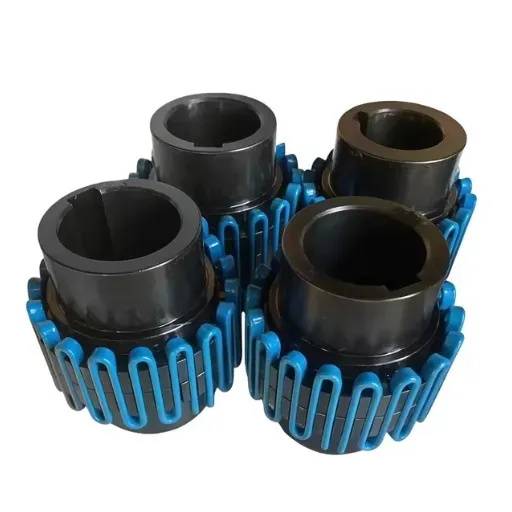
A flexible coupling connects two rotating shafts while allowing some movement between them. Unlike a rigid coupling, it can absorb vibration, compensate for misalignment, and cushion shock loads. This protects motors, gearboxes, pumps, compressors, and driven equipment from forces that shorten service life.
Three types of movement matter in practice:
Angular misalignment: Shaft centerlines meet at an angle.
Radial misalignment: Shaft centerlines are parallel but offset.
Axial movement: Shafts move slightly toward or away from each other.
No installation is perfect. Thermal expansion, foundation settling, bearing wear, and load changes all create movement. A flexible coupling isolates those movements so they don't become destructive forces inside the machine. This vibration damping protects bearings, seals, and gears from premature wear.
Hebei Suju supplies a complete range of flexible couplings for industrial applications, from light-duty motor-pump sets to heavy shock-loading equipment.
Main Industrial Coupling Types
Not every flexible coupling works the same way. Among the main flexible coupling types, the design of the elastic or movable element determines the torque capacity, misalignment tolerance, and maintenance requirements.
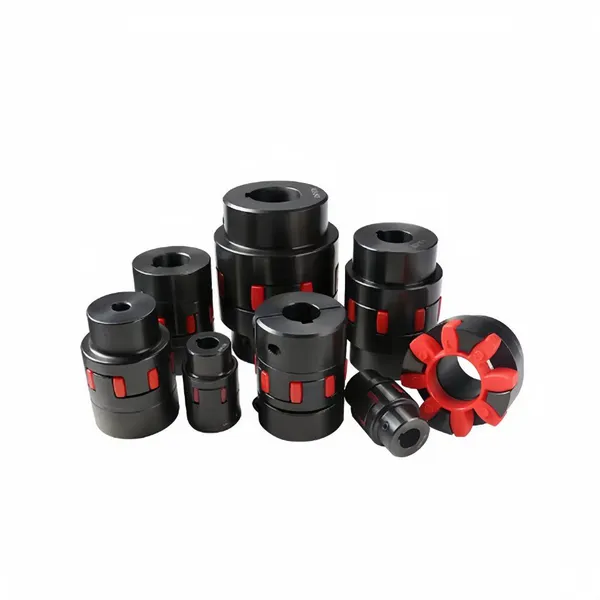
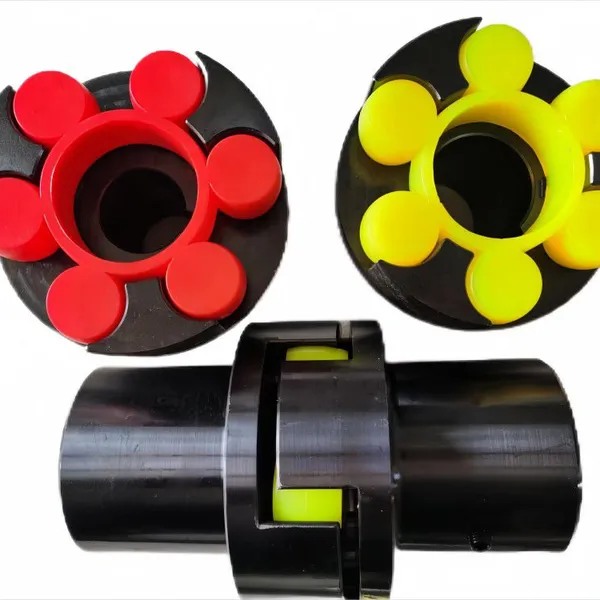
Jaw Couplings (Spider Couplings)
A jaw coupling uses two hubs with interlocking jaws and an elastomer insert called a spider. The spider cushions vibration and allows small amounts of angular and radial misalignment.
Best for: Motor-pump sets, fans, compressors, conveyors, and general machinery.
Advantages: Low cost, easy installation, no lubrication, quick spider replacement.
Limitations: Limited torque and misalignment capacity; elastomer degrades with heat and chemicals.
Jaw couplings are a common first choice for standard machinery because they are reliable and easy to maintain.
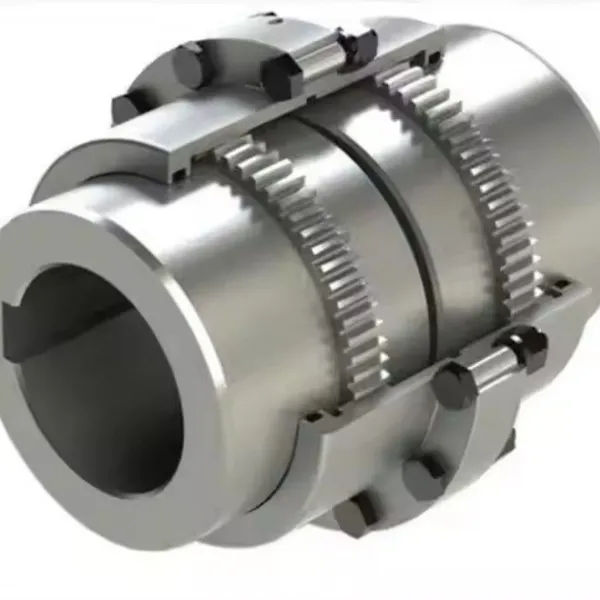
Gear Couplings
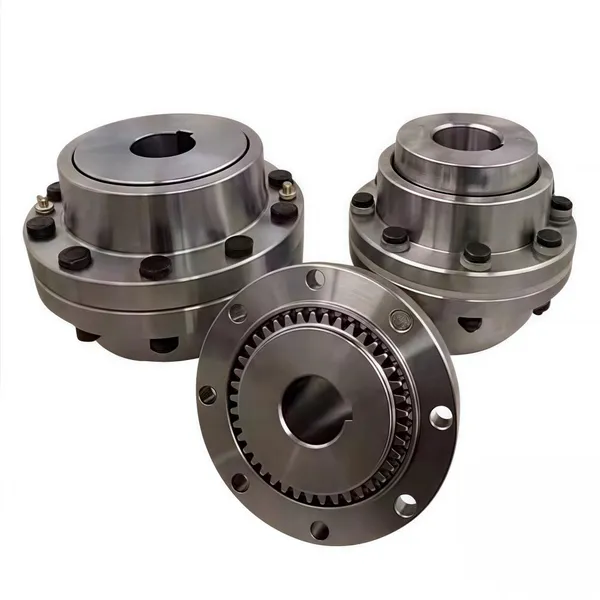
Gear couplings are flexible because the crowned gear teeth allow angular, radial, and axial movement while transmitting torque. They're heavier than elastomer types and need lubrication. They also handle far higher torque.
Best for: Steel mills, mining crushers, cement kilns, cranes, and heavy conveyors.
Advantages: Very high torque capacity, long service life, tolerant of severe misalignment.
Limitations: Heavier, more expensive, and require periodic lubrication and inspection.
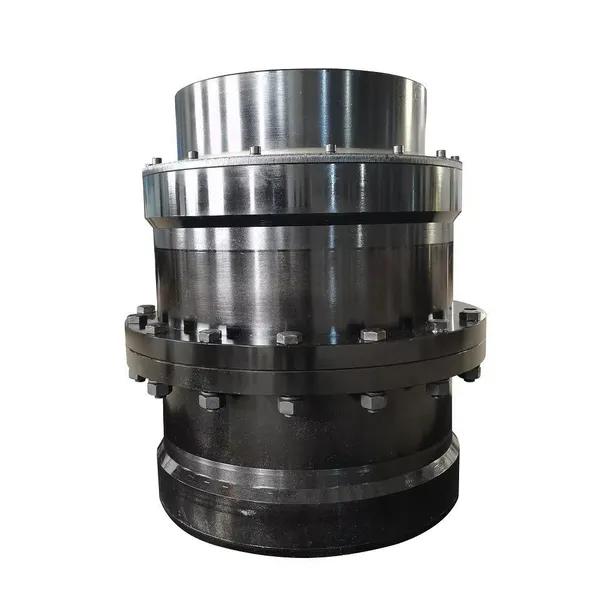
For heavy-duty applications, drum gear couplings are often the standard choice.
Diaphragm Couplings
Diaphragm couplings use thin, flexible metal discs to transmit torque with zero backlash. They are precise and stiff in torsion, making them ideal for high-speed and servo-driven systems.
Best for: Turbines, compressors, high-speed pumps, and precision positioning equipment.
Advantages: No lubrication, zero backlash, high speed capability, long service life.
Limitations: Lower misalignment tolerance than gear or tyre couplings; sensitive to overload.
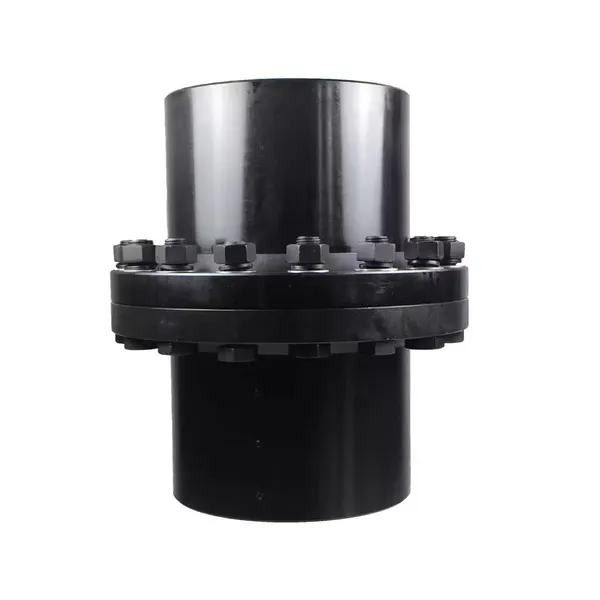
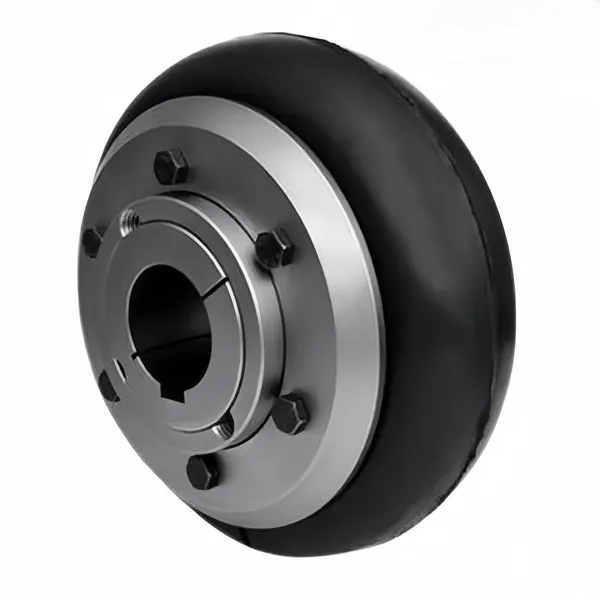
Tyre Couplings
A tyre coupling uses a rubber tyre element between two flanges. It absorbs large shocks and tolerates significant misalignment.
Best for: Crushers, reciprocating pumps, conveyors, and vibrating equipment.
Advantages: High shock absorption, large misalignment tolerance, simple tyre replacement.
Limitations: Bulky, speed limitations, and the tyre element wears over time.
Pin and Bush Couplings
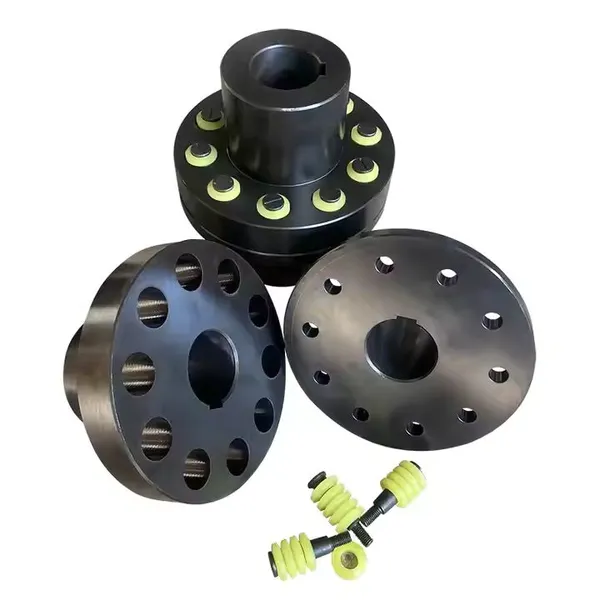
Pin couplings transmit torque through rubber bushes mounted on pins. They are robust, cost-effective, and widely used in medium-duty industrial drives.
Best for: Pumps, compressors, mixers, and general machinery.
Advantages: Durable, good shock absorption, easy to maintain.
Limitations: Moderate torque capacity; bushes need periodic inspection.
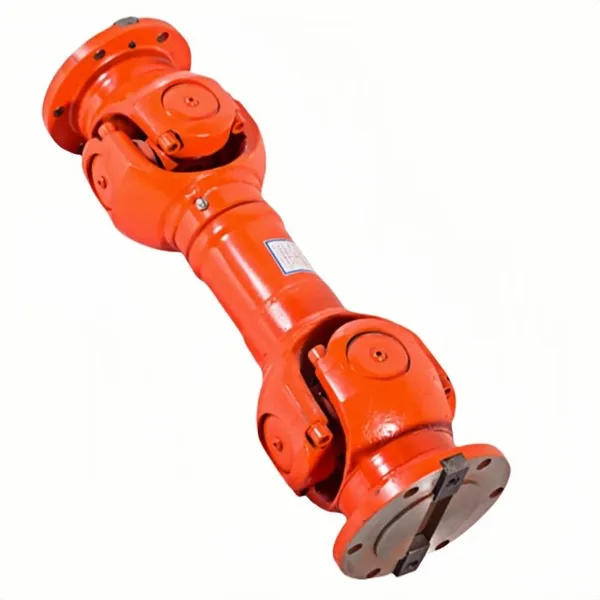
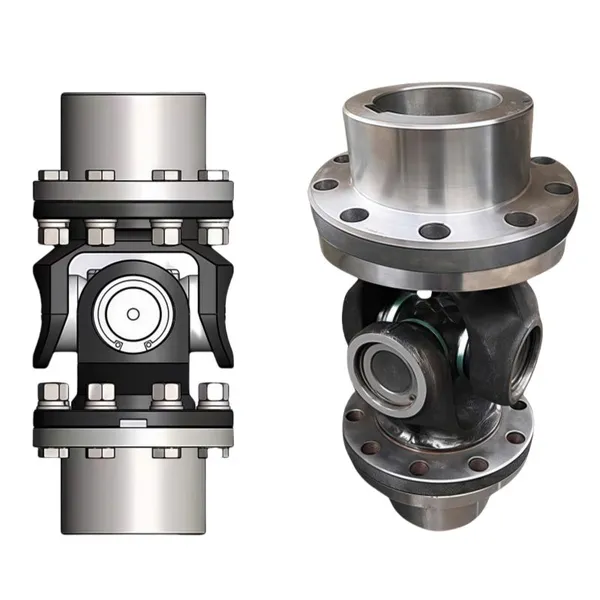
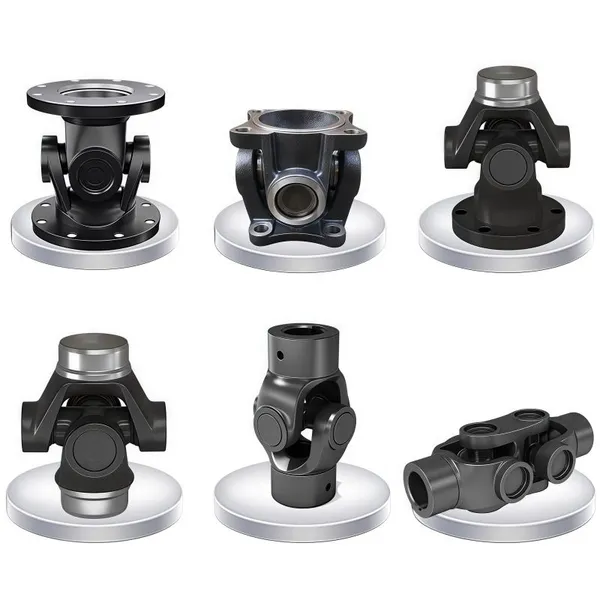
Universal Joint and Cardan Shaft Couplings
Universal joints allow large angular misalignment and are used where shafts are separated by distance or angle.
Cardan shafts extend this principle for long-distance or high-torque drives.
Best for: Mobile equipment, long shaft drives, steering systems, and heavy articulated machinery.
Advantages: Large angular capacity, high torque transmission.
Limitations: Speed variation at high angles; need lubrication and maintenance.
Flexible Coupling Selection: Five Key Factors
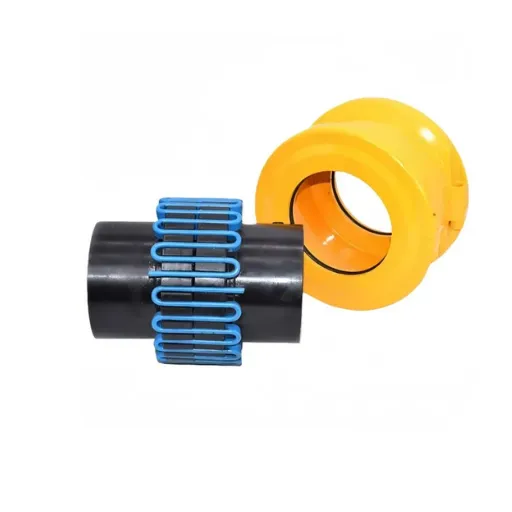
Coupling selection isn't just about picking a catalog size. The right flexible coupling depends on torque, speed, misalignment, environment, and maintenance requirements.
1. Torque and Service Factor
Start with the nominal torque of the drive. Then apply a service factor that accounts for shock loads, starts and stops, and operating hours.
Light, steady loads may use a service factor of 1.0 to 1.5. Heavy shock loads, such as crushers or presses, often need 2.0 to 3.0. AGMA publishes service factor tables for gear couplings, and manufacturers publish factors for other coupling types.
The service factor isn't optional. It's the margin that keeps a coupling alive when startup torque, emergency braking, or impact loads exceed normal running conditions.
For example, a 75 kW motor running at 1,470 RPM produces roughly 487 N·m of nominal torque. With a service factor of 2.0 for a vibrating conveyor, the flexible coupling should be rated for at least 974 N·m.
2. Allowable Misalignment
Every coupling type tolerates misalignment differently. Estimate the expected angular, radial, and axial movement in your application, then choose a coupling whose rated limits exceed those values.
| Coupling Type | Angular | Radial | Axial |
|---|---|---|---|
| Jaw/Spider | Low | Low | Low |
| Gear | Medium | Medium | Medium |
| Diaphragm | Low | Low | Low to medium |
| Tyre | High | High | Medium |
| Pin/Bush | Medium | Medium | Low |
| Universal Joint | Very high | Limited | Limited |
Leaving margin for thermal growth and foundation movement reduces wear and extends coupling life.
3. Operating Speed
High-speed applications need attention to balance. Couplings running above 3,000 RPM should generally be dynamically balanced to the appropriate ISO grade. Diaphragm couplings and precision-balanced gear couplings are common choices for high-speed machinery.
Exceeding the coupling's rated speed can cause vibration, noise, and centrifugal failure.
4. Environment
Temperature, dust, moisture, and chemicals affect flexible coupling life. Heat degrades elastomers. Dust contaminates lubricated couplings. Chemicals attack rubber elements.
Match the material to the environment. Nitrile spiders resist oil but not high heat. Polyurethane offers better abrasion resistance.
HNBR handles higher temperatures. In corrosive environments, a metallic diaphragm or sealed gear coupling may be the safer choice.
5. Maintenance Access
If your equipment runs continuously or sits in a tight space, choose a design that simplifies maintenance.
For instance, jaw couplings allow the spider to be replaced once the hubs are separated. Tyre couplings allow the tyre to be rolled into place. Gear couplings require seal and lubricant inspection but can last for years with proper maintenance.
When to Choose Each Flexible Coupling Type
The right flexible coupling depends on what matters most for the application.
Choose a Jaw Coupling When
Torque is low to medium.
Misalignment is small.
The environment is clean and moderate in temperature.
Easy maintenance and low cost are priorities.
The application is a standard motor-pump or motor-fan set.
Choose a Gear Coupling When
Torque is high or very high.
The drive produces shock loads.
Misalignment is moderate to large.
The environment allows lubrication and inspection.
Service life and reliability matter more than initial cost.
Choose a Diaphragm Coupling When
Precision and zero backlash are required.
Speed is high.
Torsional stiffness is important.
The environment is harsh for elastomers.
Choose a Tyre Coupling When
Shock loads are large.
Misalignment is significant.
The application involves vibration or reversal.
Space is available for the larger coupling size.
Choose a Pin and Bush Coupling When
Torque is medium.
Shock absorption is needed.
Maintenance access is available.
Cost is a consideration.
Installation and Maintenance Best Practices
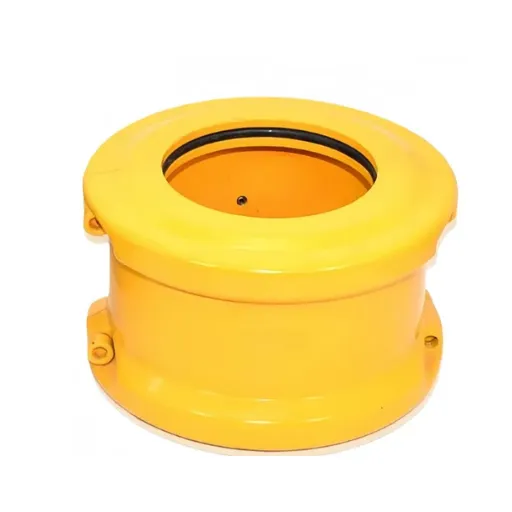
Even the best flexible coupling will fail if it is installed or maintained incorrectly. Follow these practices to maximize service life.
Align Shafts Properly
A flexible coupling tolerates misalignment, but it should not be used to fix severe alignment problems. Align shafts as accurately as practical using dial indicators or laser alignment tools. Operating near the coupling's misalignment limit increases wear and reduces life.
Use the Correct Element Material
Match the spider, tyre, or bush material to the operating temperature and chemical exposure. A mismatch causes premature hardening, cracking, or swelling.
Inspect Regularly
During scheduled maintenance, inspect flexible elements for cracks, wear, and contamination. Replace elastomer inserts before they fail. Check lubricant condition in gear couplings and replace it according to the manufacturer's schedule.
Torque Bolts Correctly
Uneven bolt torque causes hub runout and vibration. Use a torque wrench and follow the manufacturer's tightening sequence.
Use a Simple Installation Checklist
A short checklist prevents the mistakes that shorten coupling life. Before startup, confirm:
Shaft alignment is within the coupling's rated limits.
Hub bores are clean and fit the shaft without damage.
Keys are seated properly and do not protrude.
Fasteners are torqued in the correct sequence.
The flexible element is the correct material and grade.
Guards are in place and rotating parts are clear.
Spending ten minutes on this list can prevent weeks of unplanned downtime.
Storage and Handling
Store spare coupling elements away from direct sunlight, ozone sources, and solvents. Rubber spiders and tyres can harden or crack before they are ever installed. Keep metal components clean and lightly oiled if they won't be used immediately. Handle diaphragm discs carefully; a bent disc won't perform as designed.
Common Coupling Failure Modes
Even a correctly selected flexible coupling can fail if operating conditions change. Recognizing the early signs saves the connected equipment.
Misalignment Overload
Flexible couplings tolerate misalignment, but every design has a limit. Running continuously at the edge of that limit concentrates stress on the elastomer or metal element. The result is premature cracking, heat buildup, and uneven wear on connected bearings.
Elastomer Degradation
Rubber spiders, tyres, and bushes harden when exposed to heat, oil, ozone, or UV light. A degraded elastomer can't cushion shock the way it should. It also transmits more vibration. Scheduled replacement before visible cracking appears is the best defense.
Lubrication Failure in Gear Couplings
Gear couplings depend on clean lubricant. Grease separation, contamination, or extended intervals without relubrication lead to metal-to-metal contact and tooth wear. Temperature monitoring and scheduled lubricant changes prevent this.
Overload and Fatigue
Repeated shock loads above the coupling's rating cause fatigue. Tyre couplings may overheat. Diaphragm couplings can crack. Jaw spiders can tear.
Always match peak torque to the coupling rating. Average torque isn't enough.
Improper Installation
A coupling installed with uneven bolt torque, incorrect hub fit, or poor shaft alignment starts life in distress. Vibration appears early. Bearing loads rise.
Don't let installation shortcuts become the reason for a premature failure. The fix is almost always cheaper than the failure: follow the manufacturer's installation instructions.
When to Replace a Flexible Coupling
Replace elastomer elements at the first sign of surface cracking, chunking, or hardening. For gear couplings, replace lubricant when it darkens or contains particles. Don't wait for visible damage to schedule replacement. Preventive replacement during planned shutdowns costs far less than emergency repairs.
At a limestone quarry in Guangxi, maintenance manager Wei Chen noticed a motor-driven crusher shaking after a bearing replacement. The new bearing was fine. Something else was wrong.
The flexible tyre coupling had been pulled onto the shaft with an impact wrench. That distorted the tyre seat. The team removed the coupling and checked the runout.
Then they reinstalled it with a puller and proper torque. The vibration disappeared. The repair took two hours. It prevented a 48-hour shutdown.
Materials for Coupling Elements
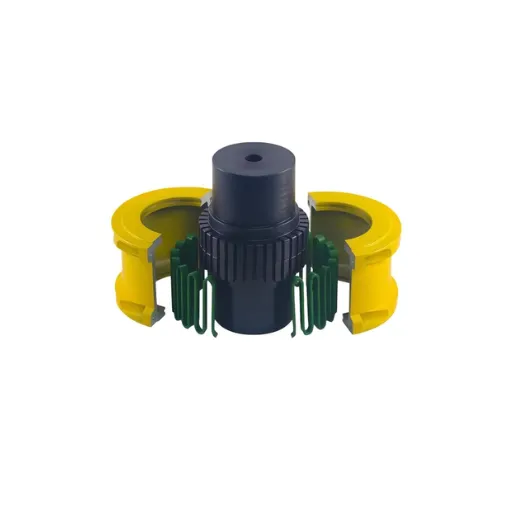
The material of the flexible element often matters more than the coupling type. A material that's perfect in one environment can fail quickly in another.
Elastomer Materials
Nitrile (NBR): Good oil resistance, low cost, and a moderate temperature range. It's the standard choice for many jaw coupling spiders.
Polyurethane (PU): High abrasion resistance and good for jaw spiders in dusty conditions.
Hydrogenated nitrile (HNBR): Higher temperature and oil resistance than standard nitrile.
Natural rubber: Excellent elasticity and shock absorption, commonly used in tyre couplings.
Neoprene: Good weather and ozone resistance for outdoor or exposed drives.
Metallic Materials
Spring steel or stainless steel: Used in diaphragm discs for fatigue resistance and zero backlash.
Alloy steel: Used for gear coupling hubs and sleeves, heat-treated for wear resistance.
Aluminum: Used in light-duty servo couplings where low inertia matters.
Selecting by Environment
Choose nitrile or HNBR for oily environments. Choose polyurethane for abrasive dust. Choose neoprene or EPDM where ozone and weather are concerns. For high temperatures or chemical exposure, a metal diaphragm or sealed gear coupling is usually better than an elastomer. Selecting the right material completes a reliable flexible coupling specification.
Hebei Suju can help you select the right material when you request a quotation.
When to Consider a Custom Flexible Coupling
Catalog flexible couplings cover many applications, but some situations require a custom design. Consider a custom flexible coupling when:
Shaft bores or spacing do not match standard sizes.
Torque, speed, or environment falls outside catalog ranges.
The original coupling is discontinued or no longer available.
The application has unusual shock, thermal, or chemical conditions.
You are developing new equipment and need prototypes.
At Hebei Suju, we provide drawing-based customization for flexible couplings and other transmission components. Send us your drawing or a worn sample.
Our engineers review your requirements and recommend the right type, size, and material.
Flexible Coupling FAQs
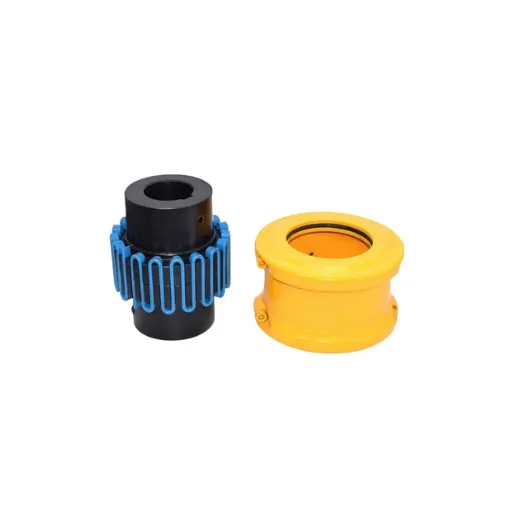
What is a flexible coupling used for?
A flexible coupling connects two rotating shafts while allowing for small amounts of misalignment, vibration, and shock. It protects motors, pumps, compressors, and gearboxes from forces that would otherwise shorten bearing and seal life.
What are the main types of flexible couplings?
The most common flexible coupling types are jaw (spider), gear, diaphragm, tyre, pin and bush, and universal joint (cardan shaft) couplings. Each type balances torque capacity, misalignment tolerance, and maintenance needs differently.
How do I choose a flexible coupling?
Start with torque and service factor. Then check operating speed, expected misalignment, environment, and maintenance access. Match the coupling type to what matters most for your application.
When should a flexible coupling be replaced?
Replace elastomer inserts at the first sign of cracking, hardening, or chunking. Replace gear coupling lubricant when it darkens or contains particles. Preventive replacement during planned shutdowns avoids emergency failures.
What is the difference between a jaw coupling and a gear coupling?
A jaw coupling uses an elastomer spider to cushion light to medium loads with small misalignment. A gear coupling uses meshing crowned teeth to transmit very high torque and tolerate larger misalignment, but it needs lubrication.
Conclusion
It's a small investment that protects much larger equipment. By absorbing vibration, compensating for misalignment, and cushioning shock loads, it extends the life of motors, bearings, gearboxes, and driven machines.
To select the right flexible coupling, start with torque and service factor. Then check speed, misalignment, environment, and maintenance access. Match the coupling type to the application priority. When a catalog part does not fit, a custom design from an experienced manufacturer keeps the project moving.
Hebei Suju manufactures a full range of flexible couplings for industrial machinery.
Whether you need a standard jaw coupling or a custom solution for a difficult application, we can help.
Recently Posted
-
Jaw Coupling Spider Replacement: A Step-by-Step Maintenance Guide
July 28, 2026A maintenance technician at a packaging plant in Brazil noticed vibration on a motor-pump set during his morning rounds. The motor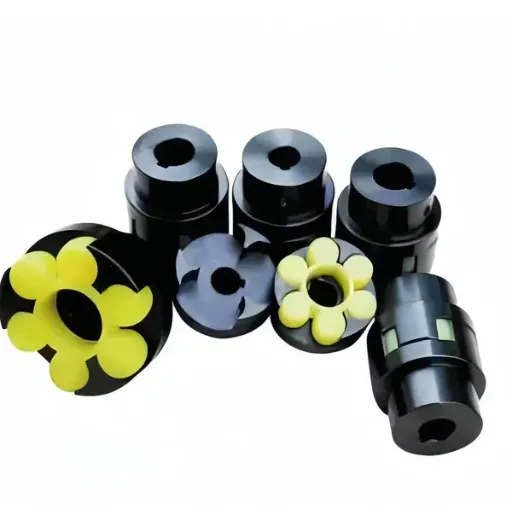 Read More
 -
Flexible Coupling for Motor Pump Sets: A Selection Guide
July 28, 2026A maintenance manager at a water treatment plant in Southeast Asia called us after replacing motor pump couplings three times in 1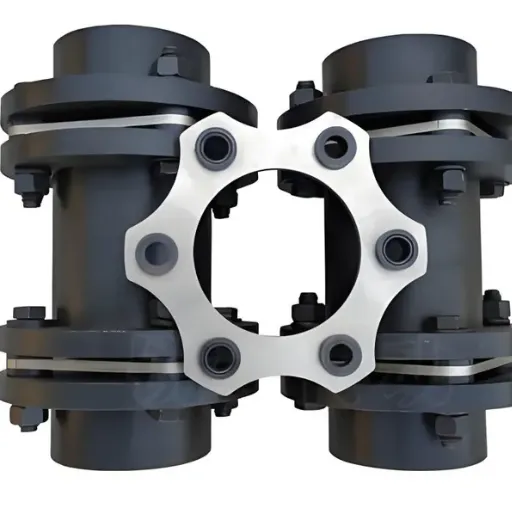 Read More
 -
Flexible Shaft Coupling: Selection Guide for Industrial Drives
July 28, 2026When two rotating shafts are connected directly, even a small amount of misalignment can generate vibration, bearing load, and pre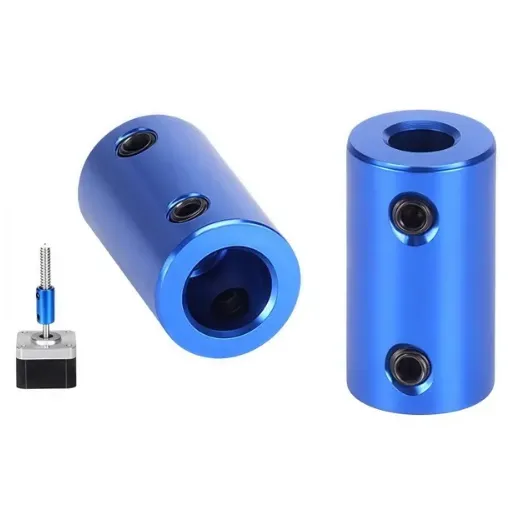 Read More
 -
Elastic Coupling: Vibration Control for Industrial Drives
July 28, 2026When a motor-pump set starts vibrating above acceptable limits, the first checks usually fall on bearing wear, impeller balance, o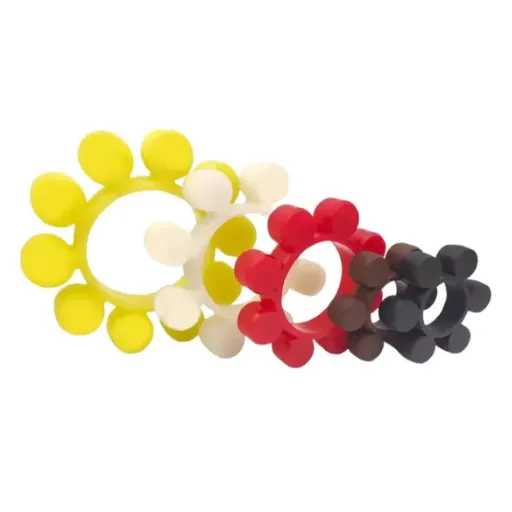 Read More

Contact Us
Recommended Products
-
 OEM Customizable Cardan Shaft Coupling Flexible Rigid Steel for Air Compressor Propeller Universal Construction Printing ShopsNegotiableMOQ: 2 Pieces
 -
Kc Coulpling Roller Chain Coupling Set With Chain and Sprocket for General MachineryNegotiableMOQ: 1 Piece
-
High Transmission Efficiency Drum Gear Coupling Easy Installation Gear Coupler For Heavy MachineryNegotiableMOQ: 10 Pieces
-
High-Torque Roller Chain Coupling Durable Steel Aluminium Construction Customizable Precision Engineering OEM Shaft CouplingsNegotiableMOQ: 2 Pieces
-
Customizable Rigid Iron Steel Aluminium Rubber Tyre Coupling OEM Support for Pumps Industrial Equipment Construction IndustriesNegotiableMOQ: 10 Pieces
-
Jsb Flexible Grid Coupling With Metallic Elastic Element Factory Direct Spider Snake Spring CouplingNegotiableMOQ: 10 Pieces
-
High Torque JQ/JQW Type Clamp Coupling for Motor & Gearbox 45 Steel Jacketed Iron Disc Structure Flexible Rigid OEM SupportedNegotiableMOQ: 2 Pieces
-
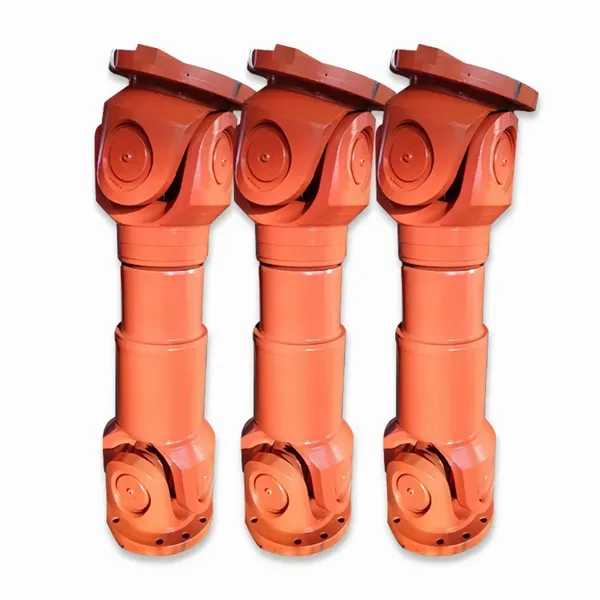
SWC Series Flange Universal Joint Coupling Hardened Cross Shaft Heavy Duty TransmissionNegotiableMOQ: 1 Piece
-
Heavy Duty Universal Coupling High Quality Universal Shaft for Machinery and EquipmentNegotiableMOQ: 1 Piece
-
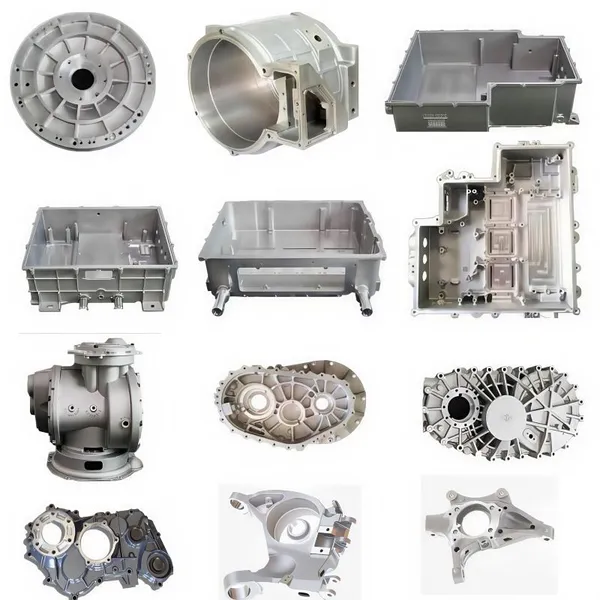
OEM Customized Precision Cast Iron Zinc Aluminum Die Castings New Hydraulic Parts Fittings 1 Year WarrantyNegotiableMOQ: 100 Pieces
-
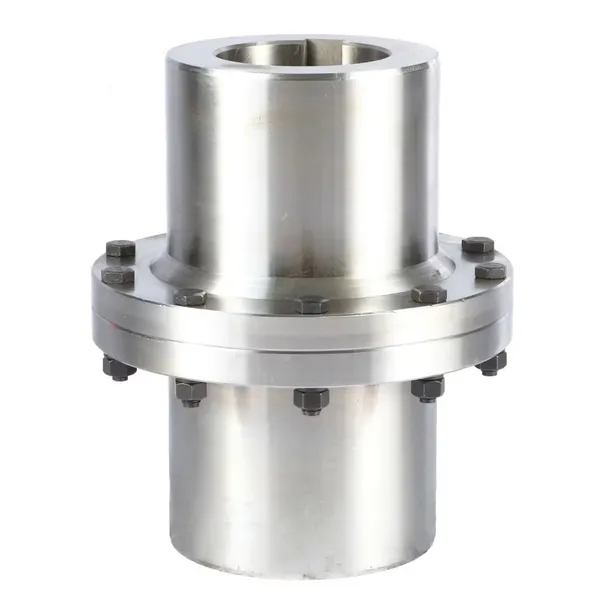
Yl Series Rigid Flange Coupling Power Transmission PartsNegotiableMOQ: 2 Pieces
-
Flange Coupling for Water Pump and Compressor Applications With Rubber Gasket SealNegotiableMOQ: 2 Pieces
-
Heavy-Duty Telescopic Welding Cardan Shaft for Universal UseNegotiableMOQ: 1 Piece
-
Flexible Universal Shaft Flange Coupling for Marine and Industrial Drive SystemsNegotiableMOQ: 10 Pieces
-
Durable Expansion Sleeve, Locking Assembly & Taper Lock Bushing for Robotic Arm JointsNegotiableMOQ: 1 Piece
-
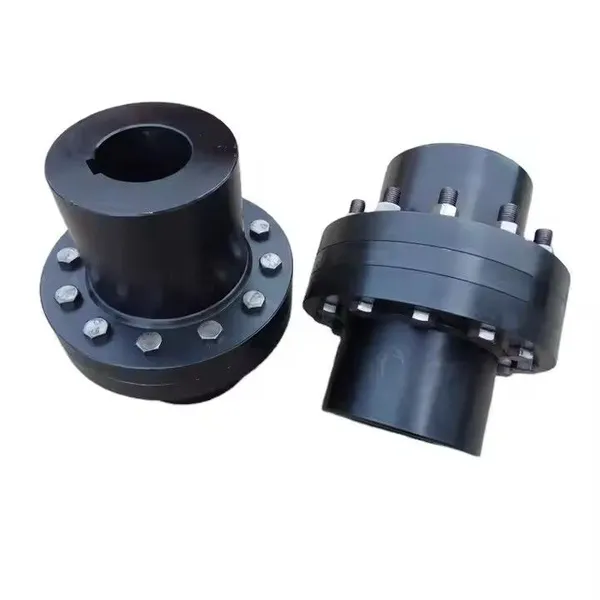
High Quality Yl Type Rigid Flange Coupling Mechanical Transmission CouplingNegotiableMOQ: 2 Pieces
-
Stainless Steel Flexible Universal Joint Coupling for Motor Flange Gear Pump and Spline ShaftNegotiableMOQ: 1 Piece
-
Compact Drum Gear Coupling for Heavy Industrial Transmission High Torque CapacityNegotiableMOQ: 10 Pieces
-
Standard or Customized Jaw Beam (Helical) Flexible Coupling for General MachineryNegotiableMOQ: 10 Pieces
-
TL Series Elastic Pin Coupling Easy Replace Rubber Bush Coupling With Shaft Misalignment CompensationNegotiableMOQ: 10 Pieces