
 Business License
Elastic Coupling: Vibration Control for Industrial Drives
When a motor-pump set starts vibrating above acceptable limits, the first checks usually fall on bearing wear, impeller balance, or foundation bolts. But the connection between motor and pump can also be the source. In many industrial drives, an elastic coupling is the simplest and most effective way to isolate vibration before it spreads through the machine train.
An elastic coupling uses a non-metallic element, such as rubber, polyurethane, or a tyre, to transmit torque while absorbing shock and damping vibration. If you maintain pumps, compressors, conveyors, or general industrial machinery, understanding elastic coupling types and selection will help you extend equipment life and reduce unplanned downtime.
In this guide, you will learn how elastic couplings work, which designs suit common industrial applications, and how to select one for your drive system.
What Is an Elastic Coupling?
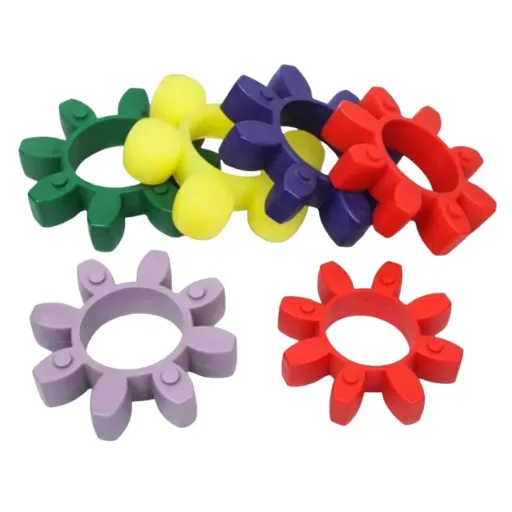
An elastic coupling is a flexible shaft coupling that transmits torque through an elastic element. The element sits between two hubs and deforms under load. This deformation allows the coupling to compensate for small misalignments and absorb torsional shock. It also dampens vibration that would otherwise travel from the motor to the driven machine.
The term "elastic coupling" is widely used in international markets. In many Chinese technical contexts, the same products are called "flexible couplings" or "elastic couplings." For buyers sourcing globally, it helps to know that elastic coupling and flexible coupling often refer to the same category of products. Hebei Suju lists these products as flexible couplings for export customers.
Common elastic coupling designs include jaw couplings, pin and bush couplings, tyre couplings, and sleeve couplings. Each design uses a different elastic element to balance torque capacity, misalignment tolerance, and vibration damping.
How Elastic Couplings Work
The operating principle of an elastic coupling is simple. Torque from the driving hub compresses or shears the elastic element, which then transmits force to the driven hub. The elastic material stores and releases energy during each revolution. This behavior gives elastic couplings three useful characteristics.
Vibration Damping
Rubber and polyurethane elements absorb energy from torsional vibration. This protects bearings, shafts, and gears from cyclic loading. In motor-pump sets, reduced vibration also means quieter operation and less stress on pipework and foundations.
Shock Load Absorption
When a machine starts, stops, or reverses, torque spikes can exceed normal running levels. The elastic element acts as a cushion. It absorbs the spike and reduces the peak load transmitted to the driven equipment. This is especially valuable for reciprocating machinery and crushers.
Misalignment Compensation
No installation is perfectly aligned. Elastic couplings tolerate small amounts of angular, radial, and axial misalignment. The amount depends on the design and hardness of the elastic element. Softer elements generally allow more misalignment but transmit less torque.
Common Types of Elastic Couplings
Different elastic coupling designs suit different applications. Below are the most common types used in industrial machinery.
Jaw Couplings
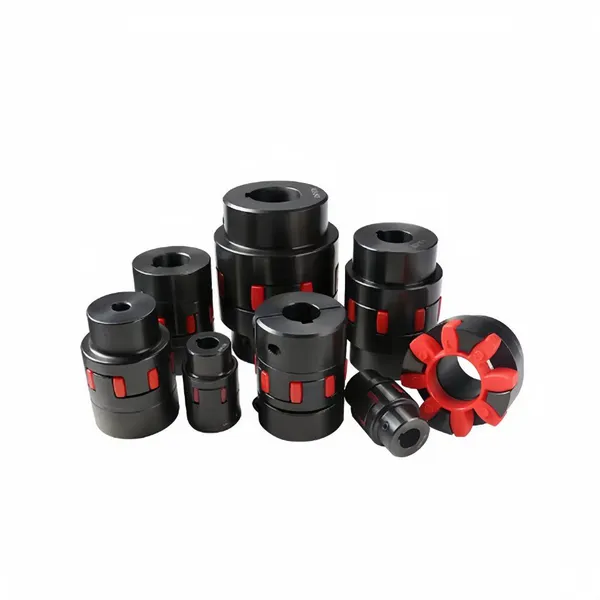
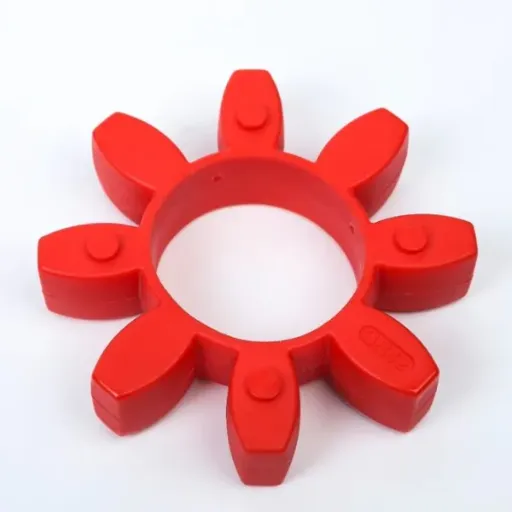
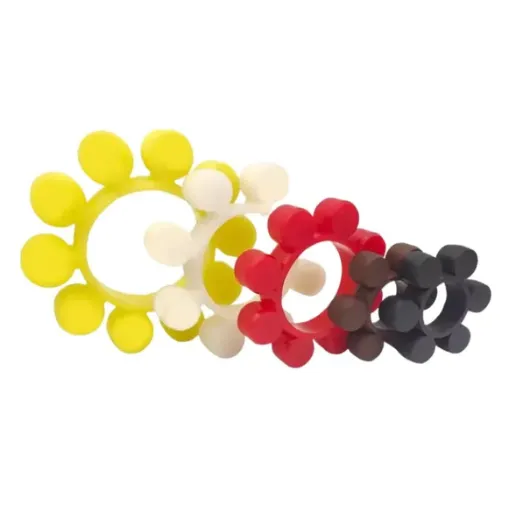
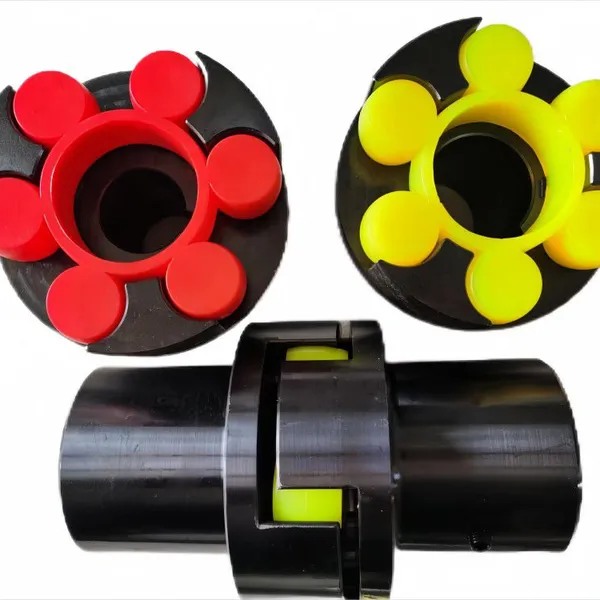
A jaw coupling uses two hubs with interlocking jaws and an elastomer insert called a spider. The spider sits between the jaws and transmits torque while absorbing vibration. Jaw couplings are compact, easy to install, and require no lubrication.
Best for: Pumps, fans, compressors, conveyors, and general machinery.
Advantages: Low cost, simple maintenance, no lubrication.
Limitations: Limited torque and misalignment capacity; spider degrades with heat and chemicals.
At Hebei Suju, we supply jaw couplings with PU and rubber spiders for different operating conditions.
Pin and Bush Couplings
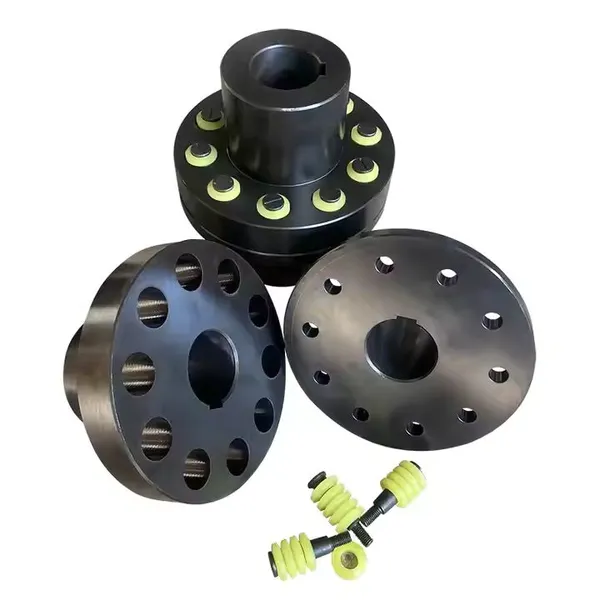
A pin coupling uses rubber bushes mounted on pins. The pins connect the driving and driven halves. The bushes absorb shock and allow small misalignments. Pin couplings are robust and cost-effective for medium-duty drives.
Best for: Pumps, compressors, general industrial drives.
Advantages: Simple construction, good shock absorption, easy bush replacement.
Limitations: Moderate torque capacity; bushes wear over time.
Tyre Couplings
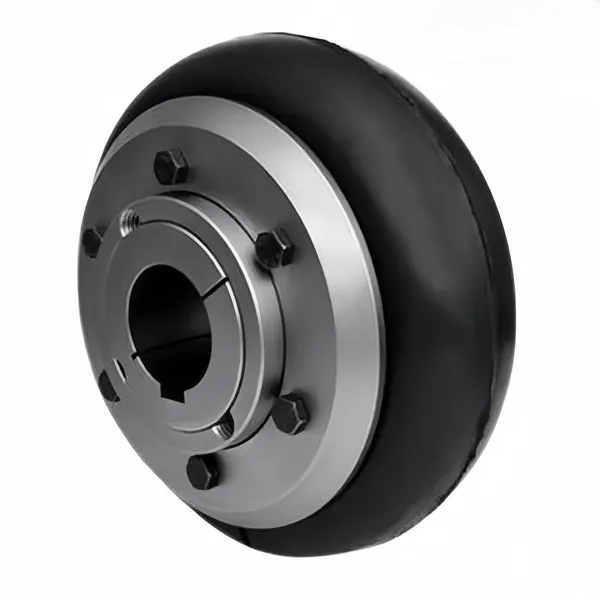
A tyre coupling uses a rubber tyre element between two flanges. The tyre offers excellent shock absorption and can tolerate large radial and angular misalignment. Tyre couplings are common in crushers, conveyors, and reciprocating machinery.
Best for: Heavy shock loads, large misalignment, mining and quarry equipment.
Advantages: High shock absorption, large misalignment tolerance, easy tyre replacement.
Limitations: Bulky, speed limitations, tyre wear over time.
Sleeve Couplings
A sleeve coupling uses a rubber or polyurethane sleeve connecting two hubs. It is simple and inexpensive but offers limited torque and misalignment capacity.
Best for: Light-duty drives, small motors, low-cost applications.
Advantages: Compact, low cost, easy to install.
Limitations: Low torque capacity, limited misalignment tolerance, sleeve wear.
Elastic Coupling Applications
Elastic couplings appear across many industries because they solve two common problems: vibration and misalignment. Here are typical applications.
Motor-Pump Sets
Centrifugal and positive displacement pumps are often driven by electric motors through an elastic coupling. The coupling absorbs vibration from the motor and protects the pump from torque spikes during startup.
Fans and Blowers
Fans operate at variable speeds and can generate torsional vibration. An elastic coupling reduces the transmission of this vibration to the motor and supporting structure. This lowers noise and extends bearing life.
Compressors
Compressors, especially reciprocating types, produce pulsating torque. Elastic couplings cushion these pulses and protect the motor. Jaw and pin couplings are widely used in compressor drives.
Conveyors and Crushers
Conveyors start under load and crushers experience severe shock. Tyre couplings are often chosen for these applications because they handle shock and misalignment well.
When a cement plant in Vietnam replaced a rigid coupling with a tyre coupling on a limestone crusher, vibration levels dropped by 40%. Maintenance manager Pham noted that bearing life on the crusher gearbox improved from 18 months to over 30 months, and unplanned stops for coupling-related issues fell sharply.
General Industrial Machinery
Any rotating machine connected to a motor can benefit from an elastic coupling. The key is matching the coupling type to the torque, speed, and duty cycle.
How to Select an Elastic Coupling
Selecting the right elastic coupling requires attention to several factors. A mismatch can lead to premature wear, excessive vibration, or coupling failure.
1. Rated Torque and Peak Torque
Calculate the nominal torque from motor power and speed. Then apply a service factor based on the application. For pumps and fans, the service factor may be 1.25 to 1.5. For crushers and reciprocating machinery, it can reach 2.0 or higher.
Select a coupling whose rated torque exceeds the adjusted value. Always check peak torque from startup, braking, and shock loads.
2. Operating Speed
Elastic couplings have speed limits based on centrifugal forces and element material. Check the manufacturer's maximum speed rating. For high-speed applications, balance may also be required.
3. Shaft Misalignment
Measure or estimate angular, radial, and axial misalignment. Choose a coupling whose allowable values exceed the expected misalignment. Remember that operating near the limit reduces element life.
4. Operating Environment
Temperature, chemicals, moisture, and dust affect elastic element life. Common considerations include:
Temperature: Natural rubber degrades at higher temperatures; polyurethane may be better for some conditions.
Chemicals: Oil, solvents, and ozone can attack rubber elements.
Moisture and dust: Contamination accelerates wear in some designs.
UV exposure: Outdoor applications may need UV-resistant materials.
5. Service Factor and Duty Cycle
The service factor accounts for load severity. Frequent starts, stops, reversing, and shock loads increase the required service factor. Consult the coupling manufacturer when duty cycles are severe or unusual.
At Hebei Suju, our engineering team reviews motor power, speed, misalignment, and duty cycle before recommending a coupling size and material.
Elastic Coupling Materials
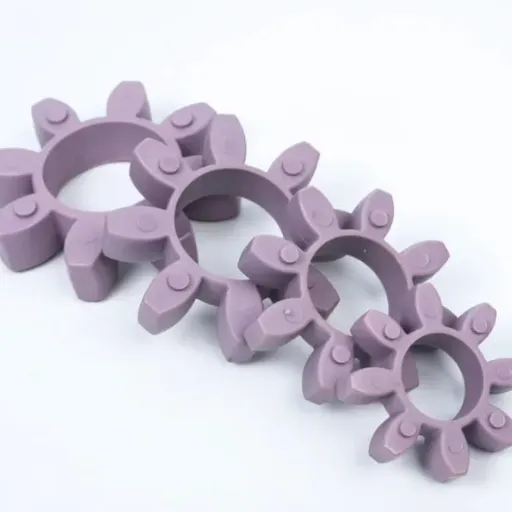
The elastic element is the heart of the coupling. Material selection directly affects performance and life.
Natural Rubber
Natural rubber offers good elasticity and damping. It works well in general industrial applications at moderate temperatures. It is not suitable for oil, ozone, or high-heat environments.
Nitrile Rubber (NBR)
NBR resists oil and petroleum products better than natural rubber. It is a common choice for motor-pump sets and compressors where oil mist may be present.
Polyurethane (PU)
Polyurethane offers high wear resistance and can handle higher loads than many rubber compounds. PU spiders are common in jaw couplings for demanding applications.
EPDM and Neoprene
These synthetic rubbers offer better heat, ozone, and weather resistance. They are suitable for outdoor or high-temperature environments.
Special Compounds
For extreme temperatures, aggressive chemicals, or food-grade requirements, special elastomer formulations are available. Always share environmental details with the supplier when ordering.
Elastic Coupling vs Gear Coupling
Elastic couplings and gear couplings serve different needs. The table below summarizes the main differences.
| Feature | Elastic Coupling | Gear Coupling |
|---|---|---|
| Torque capacity | Low to medium | Very high |
| Vibration damping | Excellent | Limited |
| Misalignment tolerance | Medium to high | Medium |
| Backlash | Low to moderate | Very low |
| Maintenance | Element replacement | Lubrication and inspection |
| Best applications | Pumps, fans, compressors, conveyors | Steel mills, mining, cement, cranes |
Choose an elastic coupling when vibration damping, shock absorption, and cost matter most. Choose a gear coupling when torque capacity and compact size are the priority.
Installation and Maintenance Tips
Proper installation extends elastic coupling life. Follow these guidelines.
1. Align Shafts Within Limits
Even though elastic couplings tolerate misalignment, excessive offset causes uneven loading and element wear. Use alignment tools for critical drives.
2. Check Element Condition Regularly
Inspect spiders, bushes, or tyres during scheduled maintenance. Look for cracks, hardening, deformation, or missing chunks. Replace worn elements before they fail.
3. Use Correct Element Hardness
Manufacturers offer elements in different hardness grades. Softer elements absorb more vibration but transmit less torque. Match the hardness to the application requirements.
4. Avoid Over-Torquing Hardware
Follow the manufacturer's torque specifications for hub bolts and clamp screws. Over-tightening can distort hubs and create runout.
5. Keep Contaminants Away
Shield the coupling from dust, oil, and chemicals when possible. Clean elements last longer and perform more consistently.
When to Order a Custom Elastic Coupling
Catalog elastic couplings fit many applications, but custom designs are sometimes needed. Consider a custom coupling when:
Shaft diameters are non-standard.
The torque or speed rating falls outside standard ranges.
The environment requires special materials.
The space envelope is restricted.
You are replacing a legacy part no longer available.
A recent example involved an OEM building water treatment skids. The standard jaw coupling did not fit between the motor and pump due to a short shaft extension. Hebei Suju supplied a custom elastic coupling with a modified hub bore and shorter overall length, matching the skid layout without redesigning the pump mounting.
For non-standard needs, our customization team reviews your drawing or sample and recommends a manufacturable solution.
Common Mistakes in Elastic Coupling Selection
Avoid these errors to maximize coupling life and machine reliability.
Ignoring service factor: Using nominal torque without a service factor causes premature element failure.
Wrong elastomer material: Heat, oil, or chemicals can destroy the wrong rubber compound.
Excessive misalignment: Operating beyond rated limits leads to uneven wear.
Neglecting inspection: Worn elements can fail suddenly and cause downtime.
Mismatched bore sizes: An oversized bore on a small coupling reduces torque capacity and creates imbalance.
Selecting purely on price: The lowest-cost coupling may cost more in downtime and replacement parts.
Why Quality Matters in Elastic Couplings
The elastic element determines coupling performance. Poor-quality rubber or polyurethane wears quickly, loses elasticity, and may crack under load. Quality couplings use formulated elastomers with consistent hardness and fatigue resistance.
At Hebei Suju, our flexible couplings are produced under a full-process quality control system. Incoming materials are inspected, production steps are standardized, and finished couplings are checked for dimensions and assembly quality. This consistency matters for buyers who need reliable performance across multiple machines or multiple orders.
Conclusion
Elastic couplings are a practical choice for industrial drives that need vibration damping, shock absorption, and misalignment compensation. From compact jaw couplings to heavy-duty tyre couplings, the right design depends on torque, speed, environment, and duty cycle.
Key takeaways:
Elastic couplings isolate vibration and protect connected machinery.
Jaw, pin, and tyre couplings cover most industrial needs.
Material selection must match the operating environment.
Service factor and misalignment limits are critical selection criteria.
Custom designs are available when catalog parts do not fit.
At Hebei Suju, we supply a range of flexible couplings for pumps, fans, compressors, conveyors, and other industrial equipment. Our engineering team can help you select the right coupling size and material for your application.
Recently Posted
-
Jaw Coupling Spider Replacement: A Step-by-Step Maintenance Guide
July 28, 2026A maintenance technician at a packaging plant in Brazil noticed vibration on a motor-pump set during his morning rounds. The motor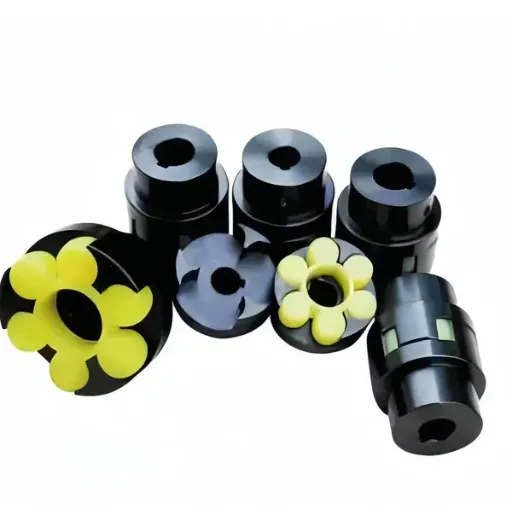 Read More
 -
Flexible Coupling for Motor Pump Sets: A Selection Guide
July 28, 2026A maintenance manager at a water treatment plant in Southeast Asia called us after replacing motor pump couplings three times in 1 Read More
 -
Flexible Shaft Coupling: Selection Guide for Industrial Drives
July 28, 2026When two rotating shafts are connected directly, even a small amount of misalignment can generate vibration, bearing load, and pre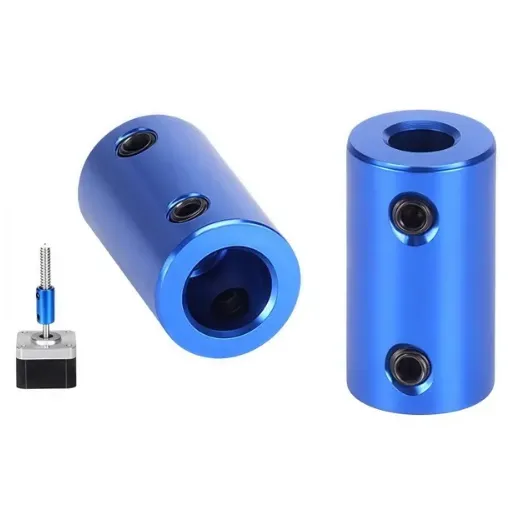 Read More
 -
Bellows Coupling: Precision Guide for Servo Drives
July 28, 2026When a semiconductor packaging line suddenly loses position accuracy, the fault rarely starts at the servo motor. More often, the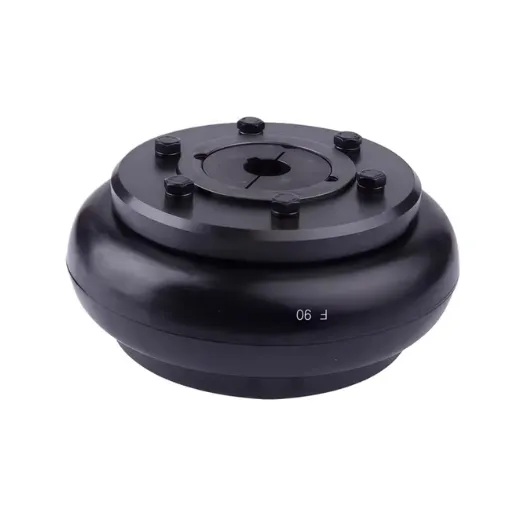 Read More

Contact Us
Recommended Products
-
 OEM Customizable Cardan Shaft Coupling Flexible Rigid Steel for Air Compressor Propeller Universal Construction Printing ShopsNegotiableMOQ: 2 Pieces
 -
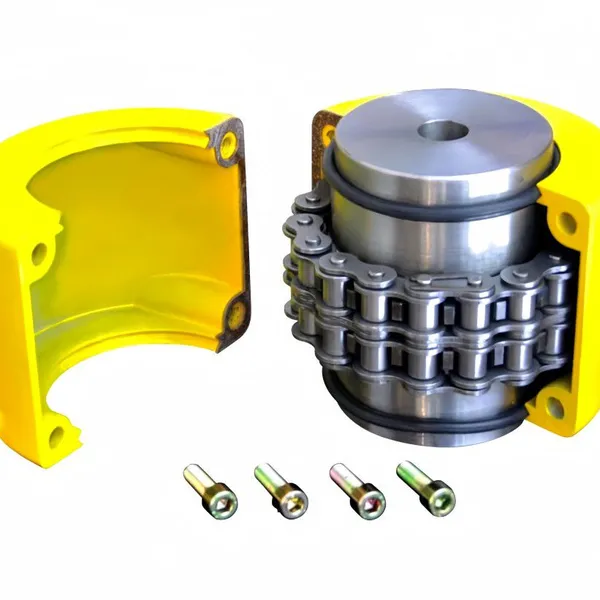
Kc Coulpling Roller Chain Coupling Set With Chain and Sprocket for General MachineryNegotiableMOQ: 1 Piece
-
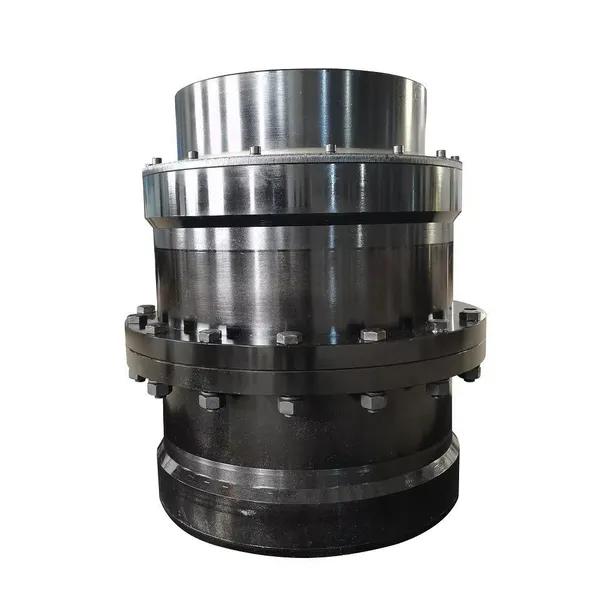
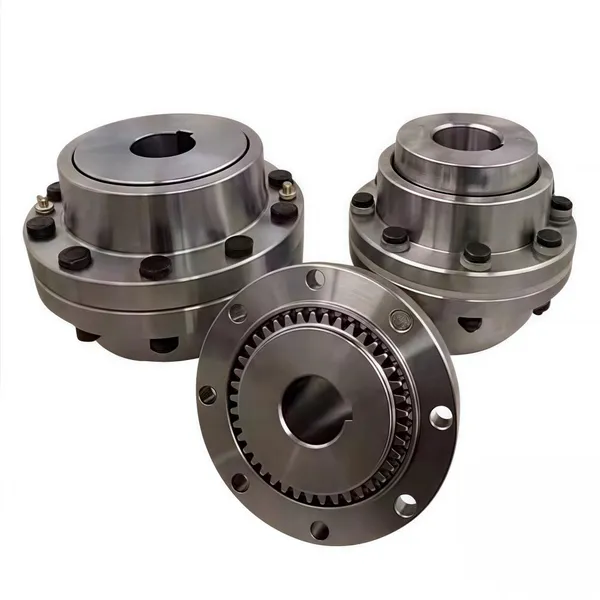
High Transmission Efficiency Drum Gear Coupling Easy Installation Gear Coupler For Heavy MachineryNegotiableMOQ: 10 Pieces
-
High-Torque Roller Chain Coupling Durable Steel Aluminium Construction Customizable Precision Engineering OEM Shaft CouplingsNegotiableMOQ: 2 Pieces
-
Customizable Rigid Iron Steel Aluminium Rubber Tyre Coupling OEM Support for Pumps Industrial Equipment Construction IndustriesNegotiableMOQ: 10 Pieces
-
Jsb Flexible Grid Coupling With Metallic Elastic Element Factory Direct Spider Snake Spring CouplingNegotiableMOQ: 10 Pieces
-
High Torque JQ/JQW Type Clamp Coupling for Motor & Gearbox 45 Steel Jacketed Iron Disc Structure Flexible Rigid OEM SupportedNegotiableMOQ: 2 Pieces
-
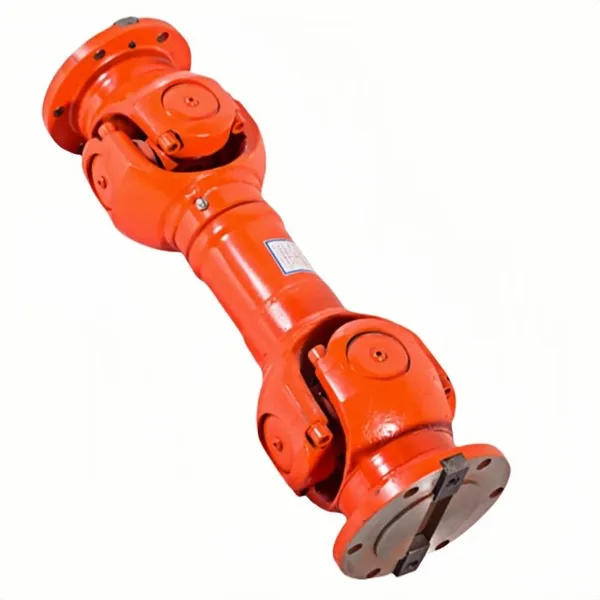
SWC Series Flange Universal Joint Coupling Hardened Cross Shaft Heavy Duty TransmissionNegotiableMOQ: 1 Piece
-
Heavy Duty Universal Coupling High Quality Universal Shaft for Machinery and EquipmentNegotiableMOQ: 1 Piece
-
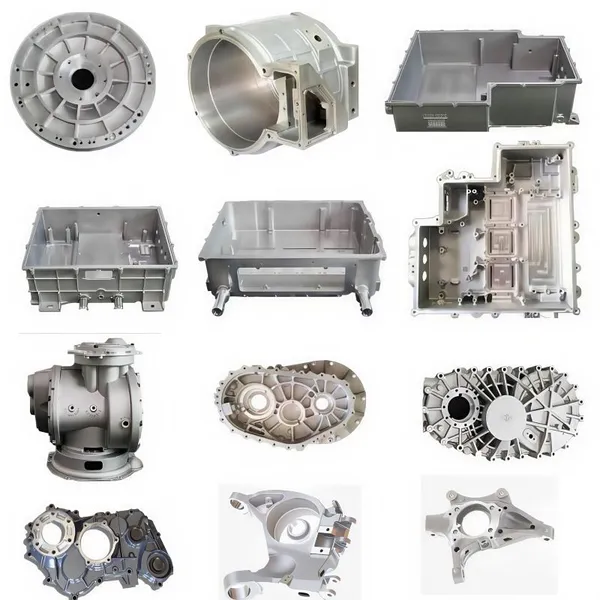
OEM Customized Precision Cast Iron Zinc Aluminum Die Castings New Hydraulic Parts Fittings 1 Year WarrantyNegotiableMOQ: 100 Pieces
-
Yl Series Rigid Flange Coupling Power Transmission PartsNegotiableMOQ: 2 Pieces
-
Flange Coupling for Water Pump and Compressor Applications With Rubber Gasket SealNegotiableMOQ: 2 Pieces
-
Heavy-Duty Telescopic Welding Cardan Shaft for Universal UseNegotiableMOQ: 1 Piece
-
Flexible Universal Shaft Flange Coupling for Marine and Industrial Drive SystemsNegotiableMOQ: 10 Pieces
-
Durable Expansion Sleeve, Locking Assembly & Taper Lock Bushing for Robotic Arm JointsNegotiableMOQ: 1 Piece
-
High Quality Yl Type Rigid Flange Coupling Mechanical Transmission CouplingNegotiableMOQ: 2 Pieces
-
Stainless Steel Flexible Universal Joint Coupling for Motor Flange Gear Pump and Spline ShaftNegotiableMOQ: 1 Piece
-
Compact Drum Gear Coupling for Heavy Industrial Transmission High Torque CapacityNegotiableMOQ: 10 Pieces
-
Standard or Customized Jaw Beam (Helical) Flexible Coupling for General MachineryNegotiableMOQ: 10 Pieces
-
TL Series Elastic Pin Coupling Easy Replace Rubber Bush Coupling With Shaft Misalignment CompensationNegotiableMOQ: 10 Pieces