
 Business License
Flexible Shaft Coupling: Selection Guide for Industrial Drives
When two rotating shafts are connected directly, even a small amount of misalignment can generate vibration, bearing load, and premature wear. A flexible shaft coupling solves this problem by transmitting torque while accommodating movement between the shafts. Selecting the right type and size can extend machine life, reduce maintenance, and prevent unexpected downtime.
This guide explains how flexible shaft couplings work, the main types available, and the key factors that determine which coupling fits your application. Whether you are designing new equipment or replacing a worn coupling, the information here will help you make a more reliable choice.
What Is a Flexible Shaft Coupling?
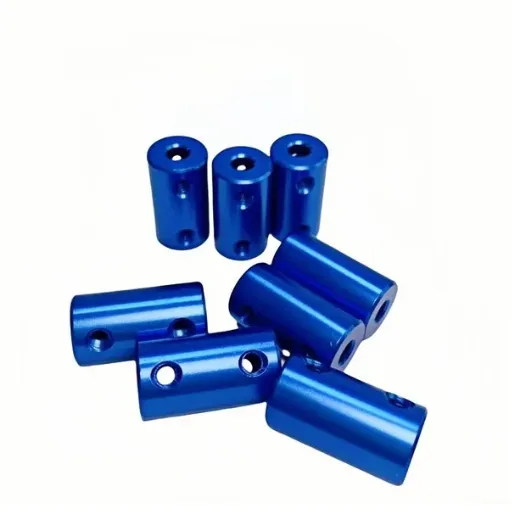
A flexible shaft coupling is a mechanical device that connects two rotating shafts while allowing a limited amount of misalignment and movement. Unlike a rigid coupling, which requires precise alignment, a flexible coupling contains an elastic or movable element that absorbs vibration, shock, and thermal expansion.
Flexible shaft couplings are used in motor-pump sets, compressors, conveyors, gearboxes, and automation equipment. They protect motors, bearings, and driven machinery by reducing the transfer of vibration and shock loads across the drive train.
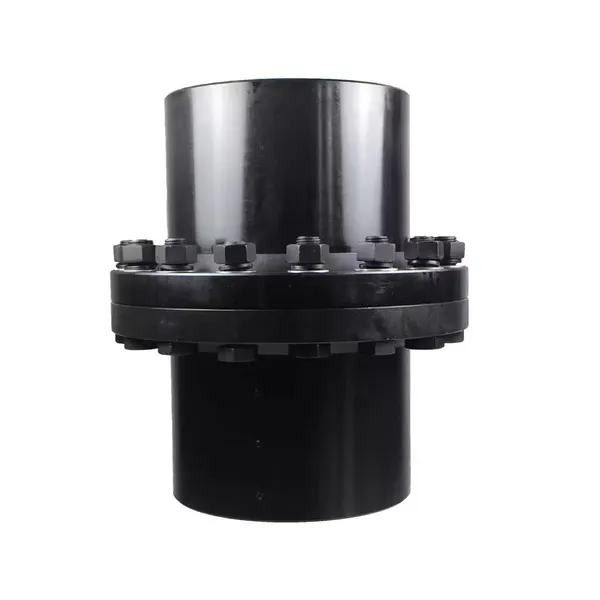
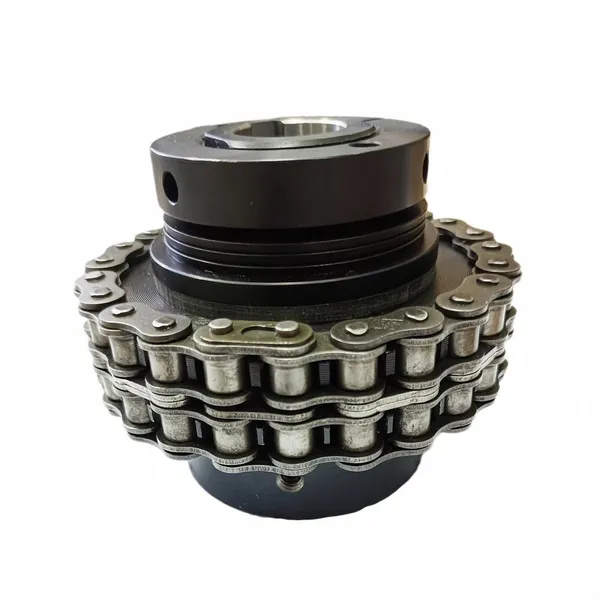
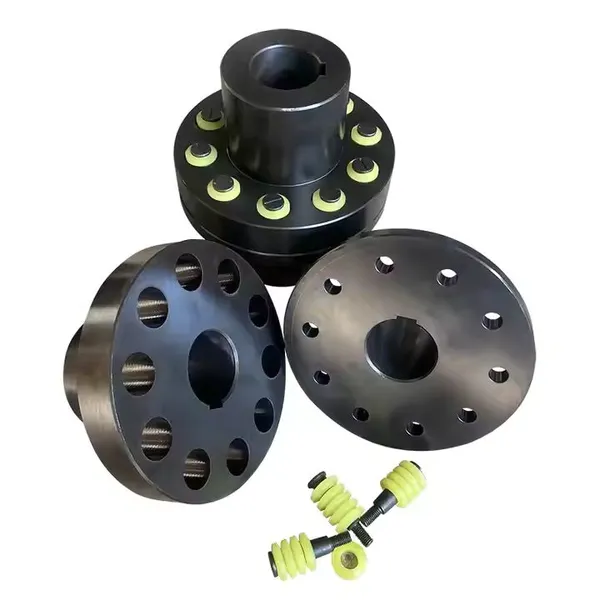
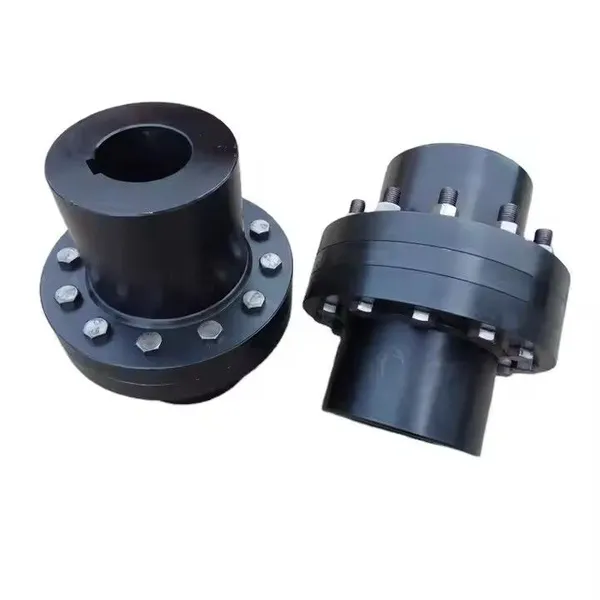
At Hebei Suju, we manufacture and supply a range of flexible couplings for industrial applications. Our products include jaw, tyre, pin, gear, diaphragm, and universal joint designs.
Why Flexible Shaft Couplings Matter
No industrial shaft alignment is perfect. Thermal expansion, foundation settling, bearing wear, and assembly tolerances all create misalignment over time. A flexible shaft coupling accepts these deviations so the connected machines can operate without excessive stress.
The benefits include:
Vibration damping: reduces the transmission of torsional vibration.
Shock absorption: cushions startup, stopping, and load spikes.
Misalignment compensation: accepts angular, radial, and axial displacement.
Bearing protection: reduces load on motor and driven equipment bearings.
Noise reduction: isolates vibration that would otherwise create noise.
For example, when a pump manufacturer in India switched from a rigid coupling to a flexible shaft coupling on a cooling water pump set, bearing temperature dropped by 12°C and seal life doubled. The small change in coupling type eliminated the axial preload that had been causing repeated seal failures.
Types of Flexible Shaft Couplings
Different flexible shaft coupling designs use different mechanisms to transmit torque and absorb movement. Below are the most common types.
Jaw Couplings
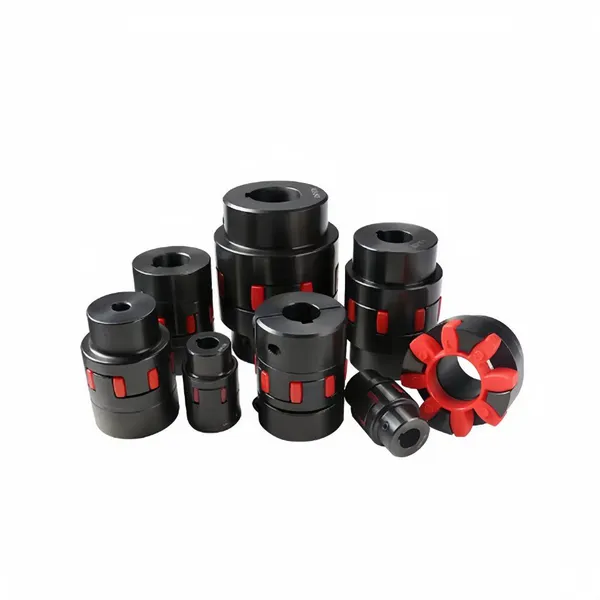
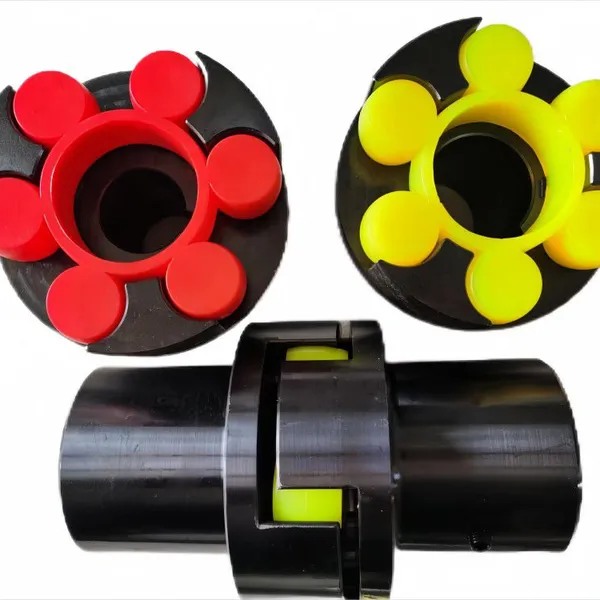
A jaw coupling uses two hubs with interlocking jaws and an elastomer insert called a spider. The spider absorbs vibration and allows small misalignment. These couplings are simple, low cost, and widely used in general machinery.
Best for: Pumps, fans, compressors, conveyors.
Advantages: Easy installation, no lubrication, element replacement is simple.
Limitations: Limited torque and misalignment capacity.
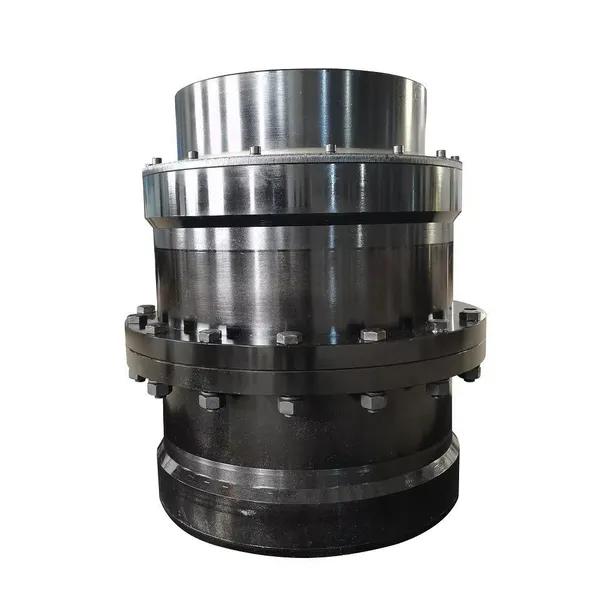
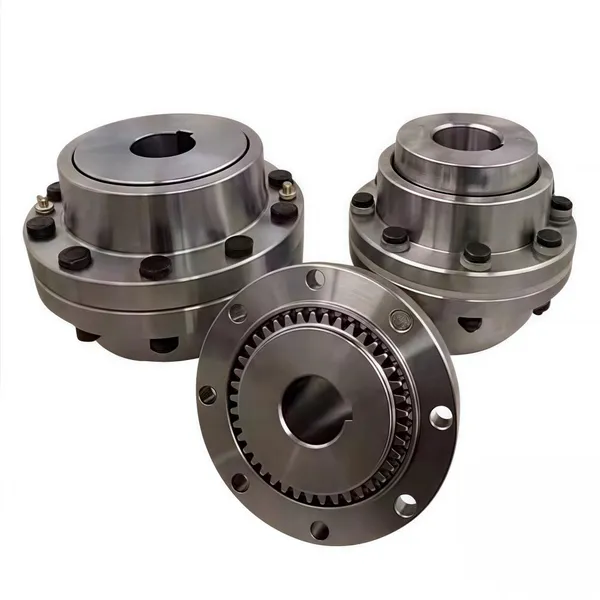
Gear Couplings
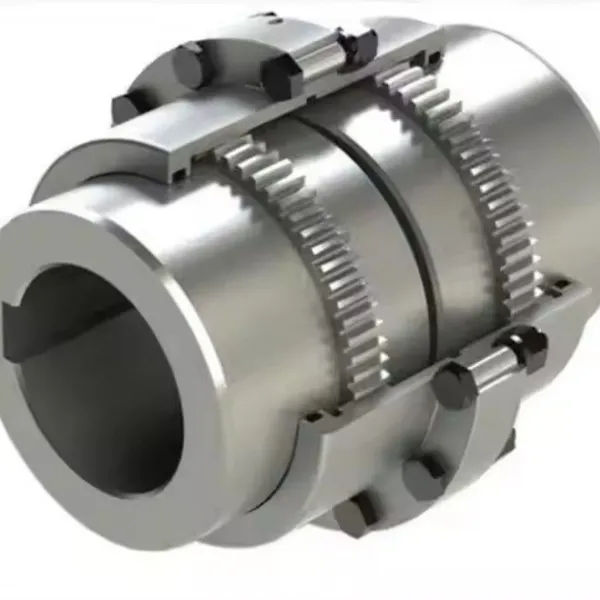
Gear couplings transmit torque through meshing gear teeth. The teeth are crowned to allow angular, radial, and axial misalignment. Gear couplings handle very high torque and are common in heavy industry.
Best for: Steel mills, mining equipment, cement plants, cranes.
Advantages: High torque capacity, long service life, compact size.
Limitations: Require lubrication and regular inspection.
Hebei Suju supplies GIICL drum gear couplings for high-torque, heavy-duty applications.
Diaphragm Couplings
Diaphragm couplings use thin metal discs to transmit torque. They offer zero backlash and high torsional stiffness, making them suitable for precision and high-speed drives.
Best for: Turbines, compressors, servo systems, precision machinery.
Advantages: No lubrication, zero backlash, high-speed capability.
Limitations: Lower misalignment tolerance than gear or tyre couplings.
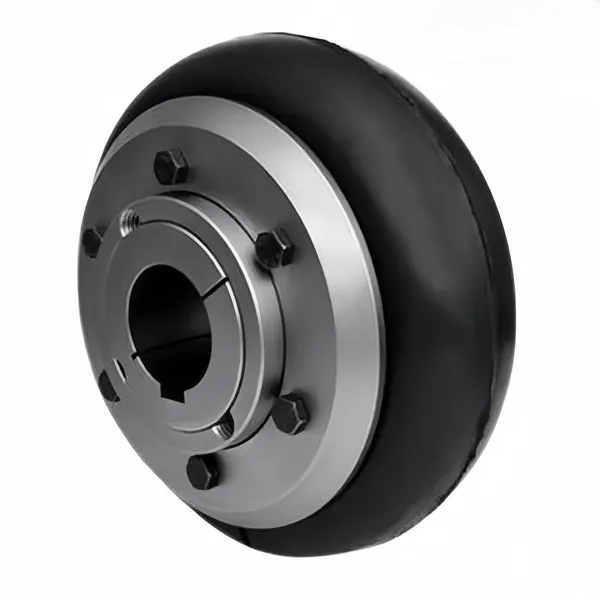
Tyre Couplings
Tyre couplings use a rubber tyre element between two flanges. They provide high shock absorption and can tolerate large misalignment.
Best for: Crushers, conveyors, reciprocating machinery.
Advantages: High shock absorption, large misalignment tolerance.
Limitations: Bulky, speed limitations, tyre wear over time.
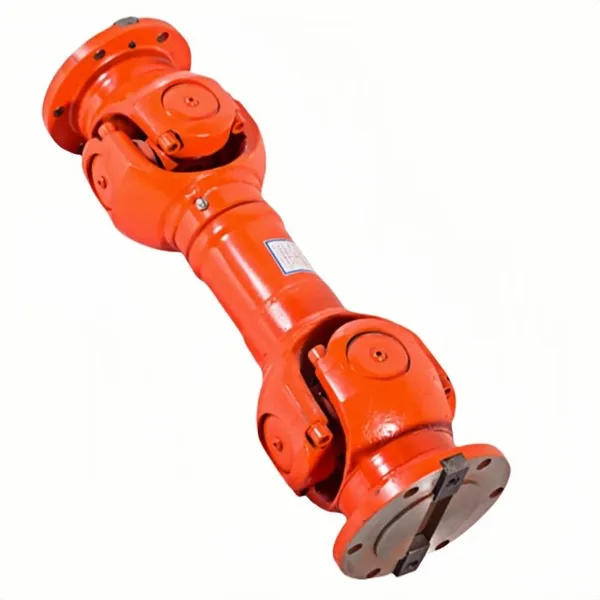
Universal Joint Couplings
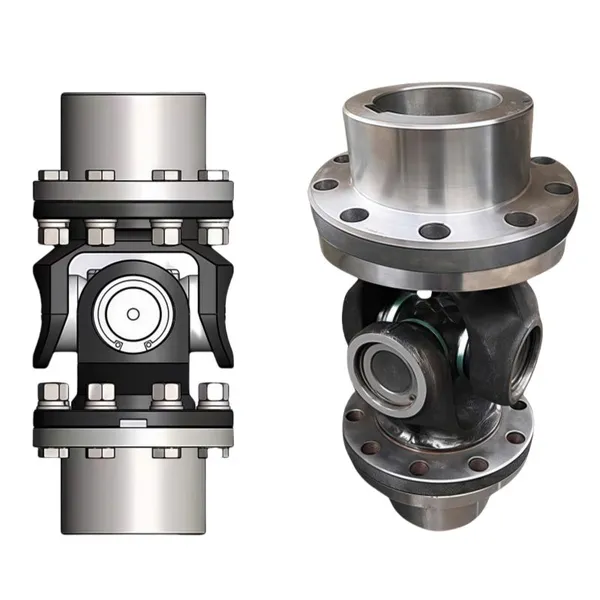
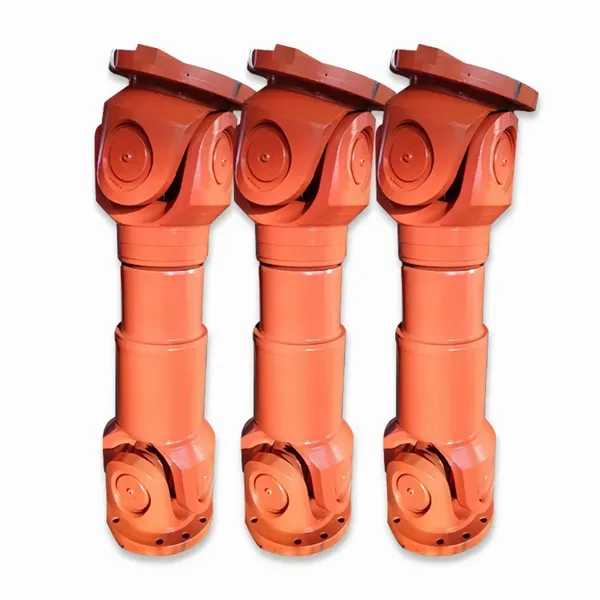
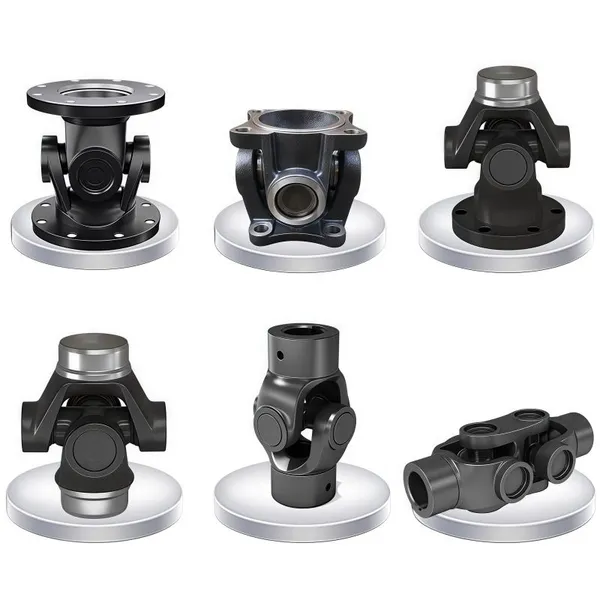
Universal joints allow large angular misalignment and are often used in driveshafts and articulated machinery. For industrial power transmission, cardan shafts with universal joints handle high torque across large angles.
Best for: Vehicles, mobile equipment, long-distance shaft connections.
Advantages: Large angular capacity, high torque transmission.
Limitations: Speed fluctuations at high angles; require maintenance.
Flexible Shaft Coupling Selection Criteria
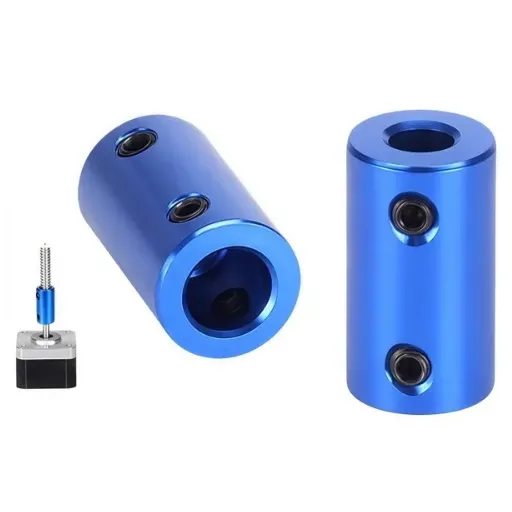
Choosing the right flexible shaft coupling requires more than matching bore sizes. The following factors determine performance and service life.
1. Torque Requirements
Calculate the nominal torque from motor power and speed. Apply a service factor based on the application severity. For smooth loads, the service factor may be 1.25. For crushers, reciprocating compressors, and reversing drives, it can reach 2.0 or higher.
Select a coupling whose rated torque exceeds the adjusted value. Also check peak torque from startup, braking, and shock loads.
2. Operating Speed
Each coupling type has a maximum safe operating speed. High-speed applications may require dynamic balancing. Exceeding the speed limit can cause vibration, heat, and failure.
3. Shaft Misalignment
Identify the types and amounts of misalignment expected in the application:
Angular misalignment: the angle between shaft centerlines.
Radial misalignment: the parallel offset between shaft centerlines.
Axial movement: end float or thermal expansion along the shaft axis.
Choose a coupling whose allowable misalignment exceeds the expected values. Gear and tyre couplings tolerate more misalignment than diaphragm or bellows couplings.
4. Environment
Temperature, moisture, dust, chemicals, and UV exposure affect coupling materials. Rubber elements degrade in oil, ozone, or high heat. Metal couplings may need corrosion protection in wet or chemical environments.
5. Space and Inertia
The coupling must fit the available space between shafts. In high-acceleration systems, low inertia matters. Diaphragm and bellows couplings are often preferred for compact, high-response drives.
6. Maintenance Access
Some couplings allow element replacement without moving the connected machines. Jaw and tyre couplings are examples. Others, such as gear couplings, require lubrication and inspection. Consider maintenance access during selection.
How to Install a Flexible Shaft Coupling
Proper installation extends coupling life and protects connected equipment. Follow these steps.
1. Inspect the Coupling and Shafts
Check the coupling for damage before installation. Inspect shaft ends for burrs, corrosion, and correct dimensions. Clean the bores and shaft surfaces.
2. Align the Shafts
Align the shafts within the coupling manufacturer's specified limits. Use dial indicators or laser alignment tools for precision. Even flexible couplings last longer when shafts are well aligned.
3. Install the Hubs
Slide the hubs onto the shafts without forcing them. Use a press or puller if needed. Avoid hammering, which can damage the coupling or distort the bore.
4. Secure the Hubs
Tighten set screws, clamp screws, or keyway fasteners to the specified torque. Uneven tightening causes runout and vibration.
5. Install the Flexible Element
Install the spider, tyre, or other flexible element according to the manufacturer's instructions. Verify that the element is seated correctly and evenly loaded.
6. Verify Alignment and Runout
After installation, recheck alignment and measure runout. Rotate the shafts by hand to ensure smooth movement and no binding.
Common Mistakes in Flexible Shaft Coupling Selection
Avoid these common errors to improve reliability and reduce downtime.
Ignoring service factor: using nominal torque without accounting for shock or reversing loads.
Underestimating misalignment: selecting a coupling with insufficient misalignment capacity.
Wrong material choice: using rubber elements in oil, high heat, or ozone without protection.
Poor installation: forcing the coupling onto shafts or unevenly tightening hardware.
Neglecting maintenance: failing to inspect or replace worn flexible elements.
Selecting by price alone: the lowest-cost coupling may not meet the application requirements.
When to Consider a Custom Flexible Shaft Coupling
Catalog couplings fit many applications, but some projects require a custom solution. Consider a custom flexible shaft coupling when:
Shaft diameters or spacing are non-standard.
The torque or speed rating falls outside standard ranges.
The environment requires special materials or coatings.
The space envelope is restricted.
You need to match a legacy coupling that is no longer available.
A recent example involved a textile machinery OEM that needed a compact coupling for a high-speed spindle drive. Standard catalog products were either too long or could not handle the required speed. Hebei Suju supplied a custom diaphragm coupling with modified hub geometry and dynamic balancing, fitting the spindle layout and performance requirements.
For non-standard requirements, our customization team reviews your drawing or sample and recommends a manufacturable solution.
Quality and Manufacturing Considerations
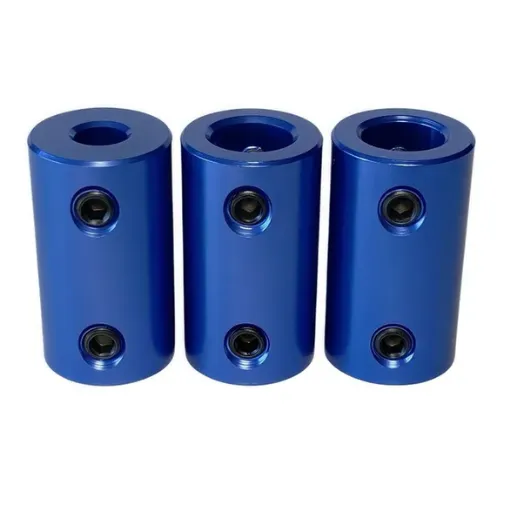
The performance of a flexible shaft coupling depends on material quality, machining accuracy, and assembly consistency. Key quality points include:
Accurate bore and keyway dimensions.
Correct hardness and fatigue resistance of flexible elements.
Balanced construction for high-speed operation.
Consistent torque capacity across production batches.
At Hebei Suju, our flexible couplings are produced under a full-process quality control system. Incoming materials are inspected, machining steps are standardized, and finished couplings are checked for dimensions and assembly quality before shipment.
Conclusion
A flexible shaft coupling is a small but critical component in industrial drives. The right coupling protects bearings, reduces vibration, accommodates misalignment, and extends machine life. The wrong coupling can cause premature wear, vibration, and unexpected downtime.
Key takeaways:
Match the coupling type to the torque, speed, and misalignment requirements.
Consider the operating environment when selecting materials.
Use the correct service factor for the application.
Install with proper alignment and fastener torque.
Specify custom designs when catalog parts do not fit.
At Hebei Suju, we help engineers and buyers select flexible shaft couplings for pumps, compressors, conveyors, gearboxes, and automation equipment. Our engineering team can review your application data and recommend the right coupling type and size.
Recently Posted
-
Jaw Coupling Spider Replacement: A Step-by-Step Maintenance Guide
July 28, 2026A maintenance technician at a packaging plant in Brazil noticed vibration on a motor-pump set during his morning rounds. The motor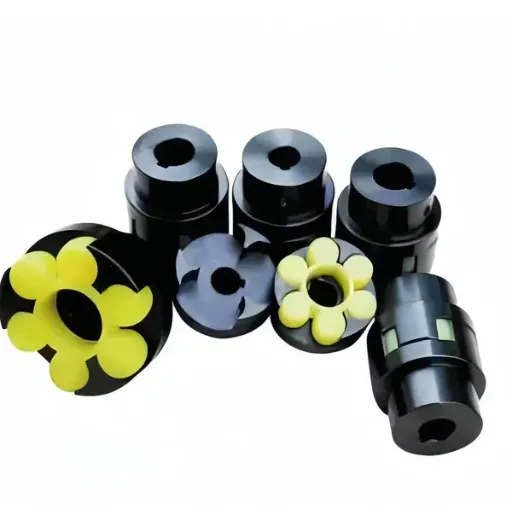 Read More
 -
Flexible Coupling for Motor Pump Sets: A Selection Guide
July 28, 2026A maintenance manager at a water treatment plant in Southeast Asia called us after replacing motor pump couplings three times in 1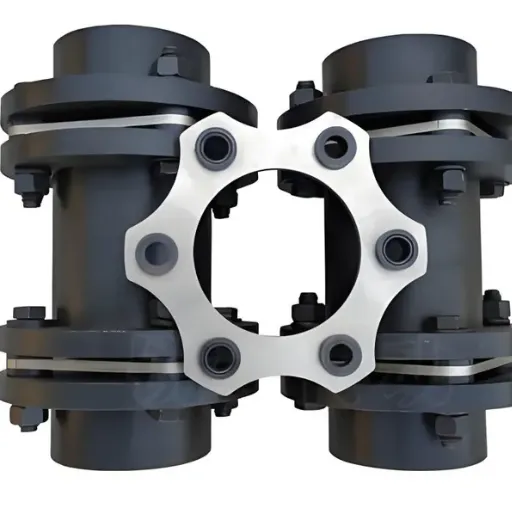 Read More
 -
Elastic Coupling: Vibration Control for Industrial Drives
July 28, 2026When a motor-pump set starts vibrating above acceptable limits, the first checks usually fall on bearing wear, impeller balance, o Read More
 -
Bellows Coupling: Precision Guide for Servo Drives
July 28, 2026When a semiconductor packaging line suddenly loses position accuracy, the fault rarely starts at the servo motor. More often, the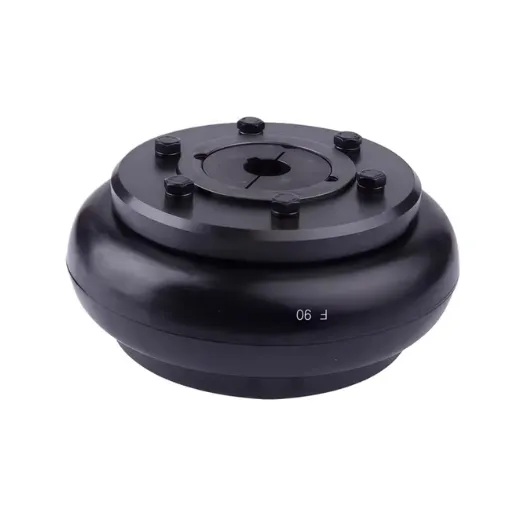 Read More

Contact Us

Recommended Products
-
 OEM Customizable Cardan Shaft Coupling Flexible Rigid Steel for Air Compressor Propeller Universal Construction Printing ShopsNegotiableMOQ: 2 Pieces
 -
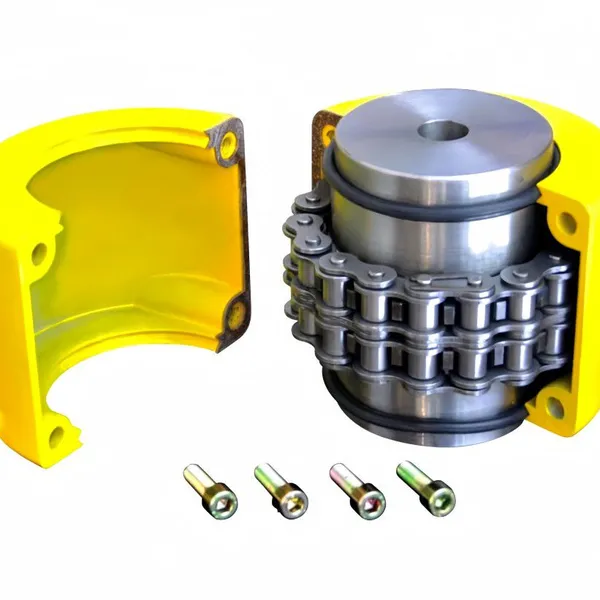
Kc Coulpling Roller Chain Coupling Set With Chain and Sprocket for General MachineryNegotiableMOQ: 1 Piece
-
High Transmission Efficiency Drum Gear Coupling Easy Installation Gear Coupler For Heavy MachineryNegotiableMOQ: 10 Pieces
-
High-Torque Roller Chain Coupling Durable Steel Aluminium Construction Customizable Precision Engineering OEM Shaft CouplingsNegotiableMOQ: 2 Pieces
-
Customizable Rigid Iron Steel Aluminium Rubber Tyre Coupling OEM Support for Pumps Industrial Equipment Construction IndustriesNegotiableMOQ: 10 Pieces
-
Jsb Flexible Grid Coupling With Metallic Elastic Element Factory Direct Spider Snake Spring CouplingNegotiableMOQ: 10 Pieces
-
High Torque JQ/JQW Type Clamp Coupling for Motor & Gearbox 45 Steel Jacketed Iron Disc Structure Flexible Rigid OEM SupportedNegotiableMOQ: 2 Pieces
-
SWC Series Flange Universal Joint Coupling Hardened Cross Shaft Heavy Duty TransmissionNegotiableMOQ: 1 Piece
-
Heavy Duty Universal Coupling High Quality Universal Shaft for Machinery and EquipmentNegotiableMOQ: 1 Piece
-
OEM Customized Precision Cast Iron Zinc Aluminum Die Castings New Hydraulic Parts Fittings 1 Year WarrantyNegotiableMOQ: 100 Pieces
-
Yl Series Rigid Flange Coupling Power Transmission PartsNegotiableMOQ: 2 Pieces
-
Flange Coupling for Water Pump and Compressor Applications With Rubber Gasket SealNegotiableMOQ: 2 Pieces
-
Heavy-Duty Telescopic Welding Cardan Shaft for Universal UseNegotiableMOQ: 1 Piece
-
Flexible Universal Shaft Flange Coupling for Marine and Industrial Drive SystemsNegotiableMOQ: 10 Pieces
-
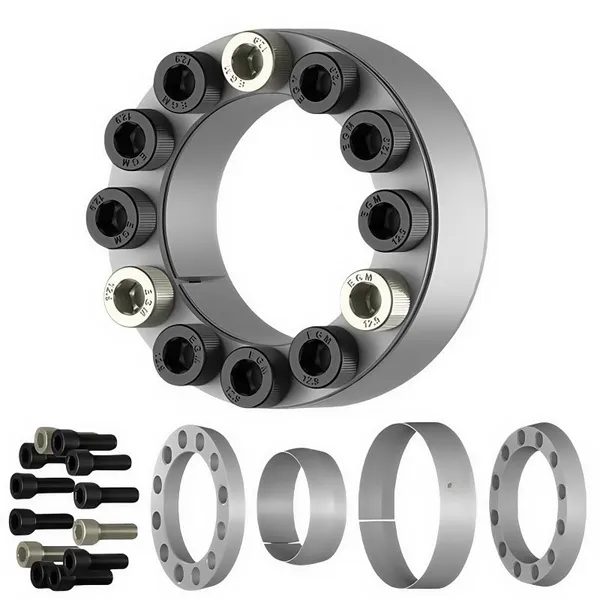
Durable Expansion Sleeve, Locking Assembly & Taper Lock Bushing for Robotic Arm JointsNegotiableMOQ: 1 Piece
-
High Quality Yl Type Rigid Flange Coupling Mechanical Transmission CouplingNegotiableMOQ: 2 Pieces
-
Stainless Steel Flexible Universal Joint Coupling for Motor Flange Gear Pump and Spline ShaftNegotiableMOQ: 1 Piece
-
Compact Drum Gear Coupling for Heavy Industrial Transmission High Torque CapacityNegotiableMOQ: 10 Pieces
-
Standard or Customized Jaw Beam (Helical) Flexible Coupling for General MachineryNegotiableMOQ: 10 Pieces
-
TL Series Elastic Pin Coupling Easy Replace Rubber Bush Coupling With Shaft Misalignment CompensationNegotiableMOQ: 10 Pieces