
 Business License
Flexible Coupling for Motor Pump Sets: A Selection Guide
A maintenance manager at a water treatment plant in Southeast Asia called us after replacing motor pump couplings three times in 14 months. Each time, the same elastomer insert cracked. The coupling was rated for the torque, but no one had checked the operating temperature and the pump's slight angular misalignment. Once the correct flexible coupling for motor pump duty was installed, the failures stopped.
Motor pump sets are among the most common rotating machines in industry. The coupling between the motor and pump is small compared with the full assembly, but it has an outsized effect on reliability. This guide explains how to choose the right flexible coupling for motor pump applications, what to measure, and which designs fit different operating conditions.
Why Motor Pump Couplings Fail
Motor pump couplings usually fail for one of four reasons: misalignment, vibration, thermal exposure, or overload. In many cases, the coupling itself is not the root cause. It is the symptom of a problem elsewhere in the installation.
Misalignment is the most common issue. Even when shafts are aligned during commissioning, thermal growth, pipe strain, foundation settling, and bearing wear change the position of the shafts over time. A flexible coupling for motor pump sets absorbs some of this movement, but every design has limits.
Vibration from the pump or motor transfers through the coupling. If the coupling has poor damping characteristics, the vibration accelerates wear in bearings and seals. The right coupling reduces this transfer.
Heat, chemicals, and outdoor exposure degrade elastomer elements. A coupling that works well in an air-conditioned pump room may fail quickly near a boiler or in direct sunlight.
Overload includes peak torque from startup, flow surges, and cavitation. These loads can exceed the continuous torque rating of the coupling without being obvious during normal operation.
What a Flexible Coupling Does in a Motor Pump Set
A flexible coupling for motor pump duty connects the motor shaft to the pump shaft while allowing a small amount of movement. This movement usually falls into three categories:
Angular misalignment: the shaft centerlines meet at a slight angle.
Parallel misalignment: the shaft centerlines are offset but parallel.
Axial movement: the shafts move toward or away from each other.
The coupling also dampens torsional vibration and cushions shock loads. This protects the motor bearings, pump bearings, and mechanical seals from forces that would shorten their life.
In a typical centrifugal pump set, the pump shaft experiences axial thrust from the impeller. The coupling must allow this axial movement without transferring excessive load back to the motor. A rigid coupling would preload the bearings. A properly selected flexible coupling for motor pump service prevents this.
Common Flexible Coupling Types for Motor Pump Sets
Several coupling designs are commonly used between motors and pumps. The best choice depends on torque, speed, misalignment, and environment.
Jaw Couplings
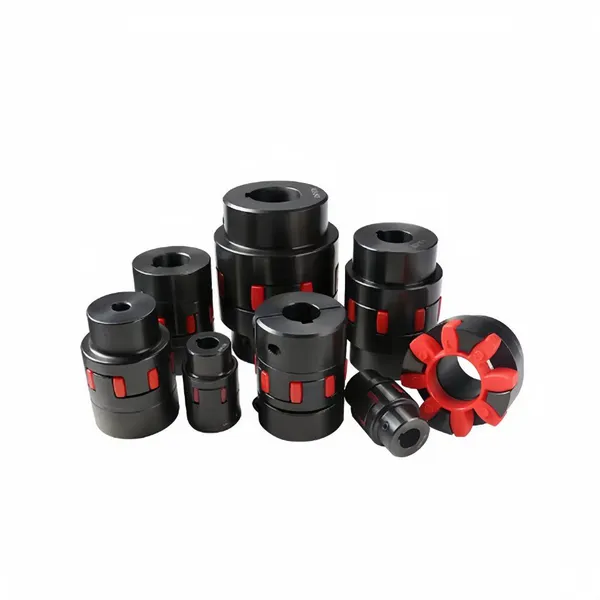
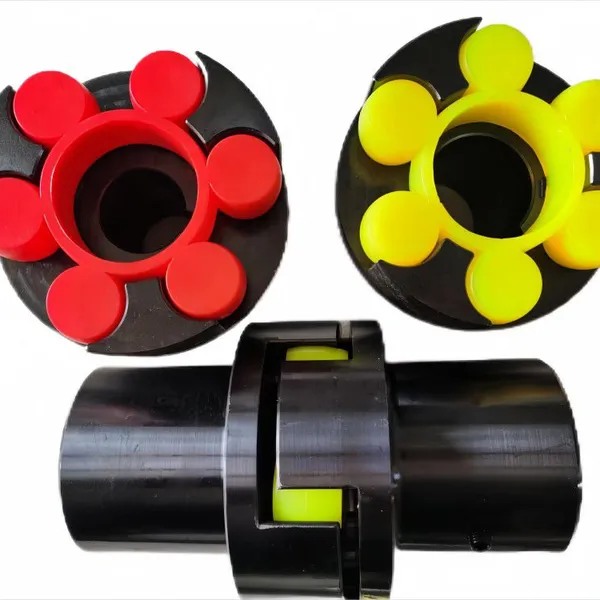
A jaw coupling uses two hubs with interlocking jaws and an elastomer spider. The spider transmits torque and absorbs vibration. Jaw couplings are inexpensive, easy to install, and require no lubrication.
Best for: small to medium centrifugal pumps, fans, and general machinery.
Advantages: low cost, easy element replacement, good vibration damping.
Limitations: limited misalignment capacity; elastomer degrades with heat and oil.
For many motor pump sets, a jaw coupling is the default choice when loads are smooth and misalignment is small. Hebei Suju supplies jaw couplings with different spider materials for different operating temperatures.
Tyre Couplings
Tyre couplings use a rubber tyre element between two hubs. They offer excellent shock absorption and tolerance to large misalignment. They are ideal for pumps that experience pulsating flow or frequent starts and stops.
Best for: reciprocating pumps, slurry pumps, and pumps with pulsating loads.
Advantages: high shock absorption, large misalignment tolerance, quiet operation.
Limitations: larger diameter than jaw couplings; tyre wear over time.
If vibration damping is the main concern, a tyre coupling is often the best flexible coupling for motor pump duty.
Gear Couplings
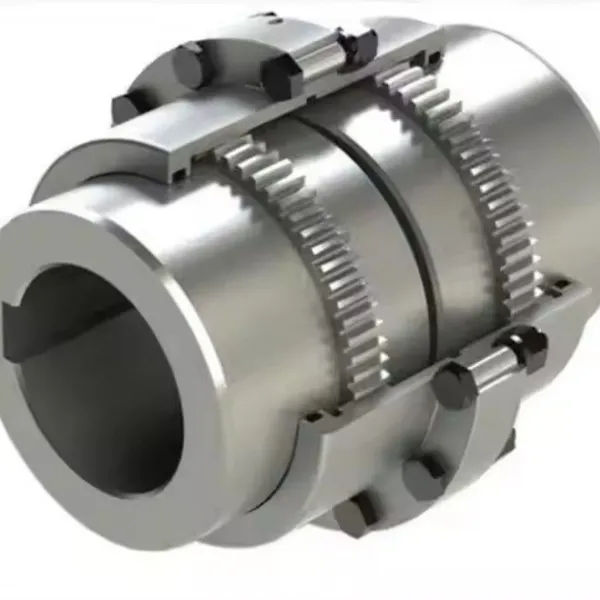
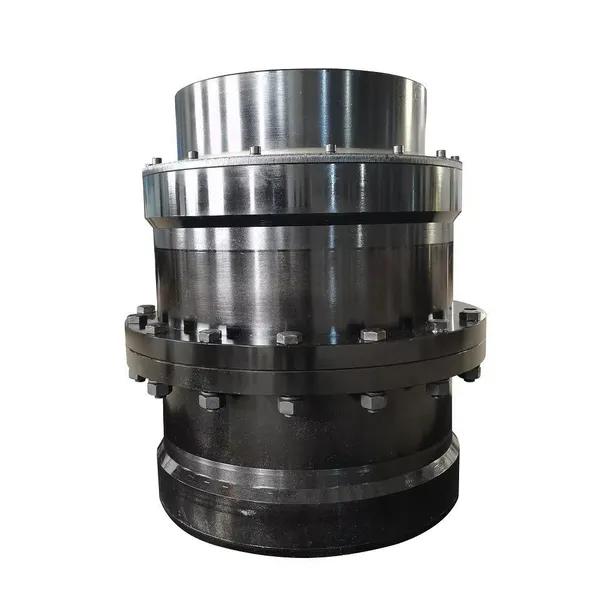
Gear couplings use meshing gear teeth to transmit torque. They handle high torque and multi-direction misalignment. They are heavier and require lubrication, so they are used on larger pump sets rather than small motor pump units.
Best for: large centrifugal pumps, boiler feed pumps, and cooling water pumps.
Advantages: very high torque capacity, tolerant of misalignment, long life.
Limitations: need lubrication and maintenance; heavier and more expensive.
For high-power pump drives, a gear coupling may be the right flexible coupling for motor pump service.
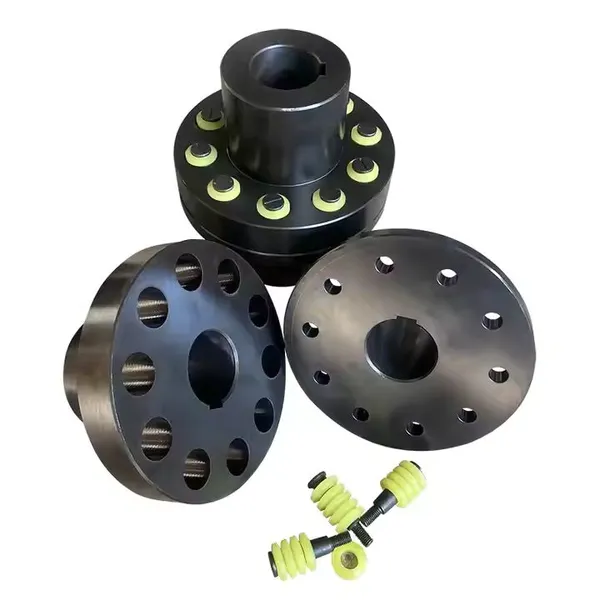
Pin and Bush Couplings
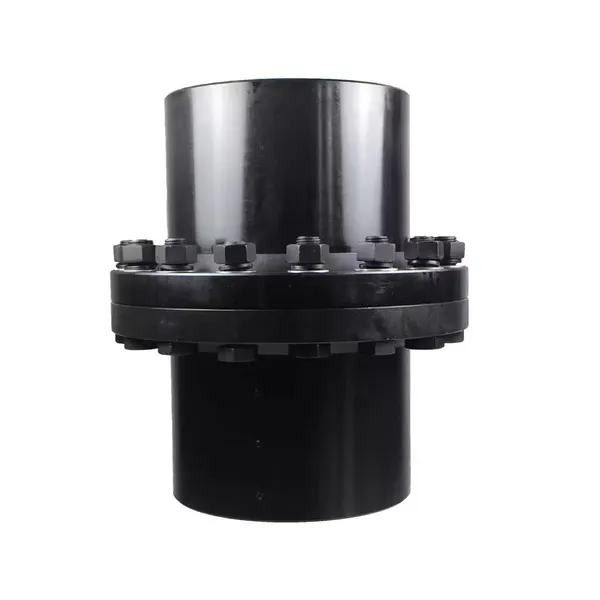
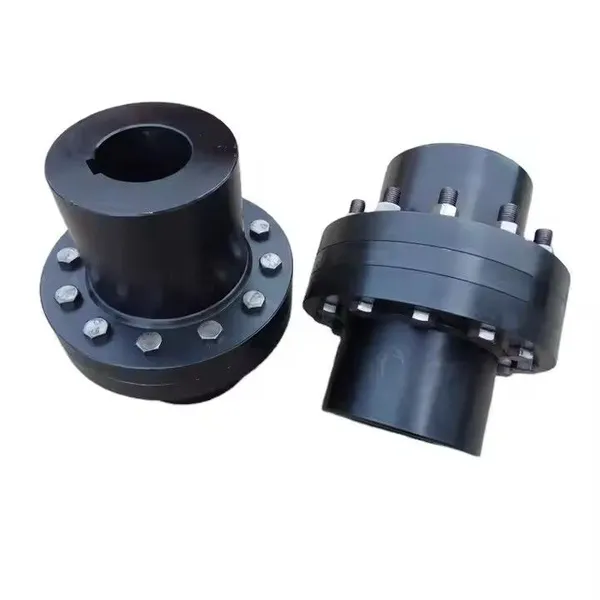
Pin couplings use rubber bushes mounted on pins to transmit torque. They are robust and cost-effective for medium-duty motor pump sets.
Best for: general industrial pumps and compressors.
Advantages: robust construction, good shock absorption, easy maintenance.
Limitations: moderate torque capacity; bushes wear and need inspection.
Diaphragm Couplings
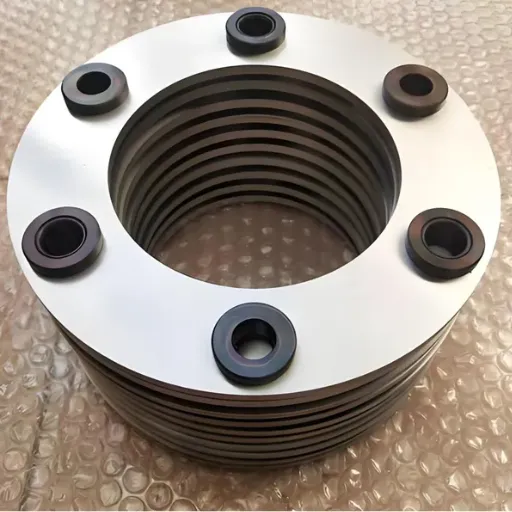
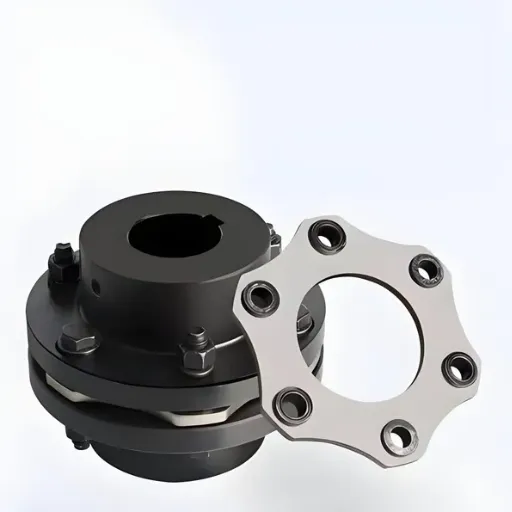
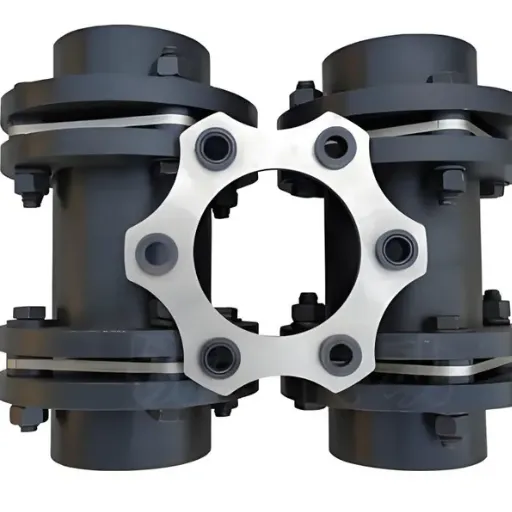
Diaphragm couplings use thin metal discs to transmit torque. They are precise, backlash-free, and suitable for high-speed pumps.
Best for: high-speed pump drives, multistage centrifugal pumps, and turbine-driven pumps.
Advantages: no lubrication, zero backlash, high speed capability.
Limitations: lower misalignment capacity; sensitive to overload.
Key Selection Criteria for Motor Pump Couplings
Choosing a flexible coupling for motor pump duty starts with a clear understanding of the application. The following factors determine the right size and type.
Motor Power and Speed
Calculate the nominal torque from motor power and speed. Then apply a service factor based on the duty of the pump. Smooth centrifugal pumps use a lower service factor. Reciprocating pumps, slurry pumps, and pumps with frequent starts use a higher factor.
A simple formula is:
Nominal torque (N·m) = (9,548 × motor power in kW) / speed in RPM
Required coupling torque = nominal torque × service factor
Select a coupling with a rated torque at least equal to the required torque.
Shaft Misalignment
Measure or estimate the expected angular and parallel misalignment. Add a margin for changes during operation. If misalignment is likely to increase over time, choose a coupling with higher tolerance.
Axial Movement
Consider the axial thrust from the pump impeller. The coupling must allow axial movement without transferring excessive force. If axial movement is large, consult the coupling manufacturer.
Operating Environment
Check the operating temperature, exposure to oil or chemicals, dust, moisture, and outdoor conditions. These affect the choice of elastomer, seal, and coating.
Maintenance Access
Some couplings allow the elastic element to be replaced without moving the motor or pump. This reduces downtime during maintenance.
Mini-Story: Solving a Recurring Pump Coupling Failure
In 2024, a cooling tower maintenance team in the Middle East replaced a motor pump coupling every six months. The original coupling was a standard jaw coupling selected by the motor supplier. The pump ran at 1,800 RPM in an ambient temperature of 45°C.
Our engineers reviewed the application and found two issues. The pump shaft had 0.4 mm of parallel misalignment, near the limit of the jaw coupling. The continuous operating temperature was above the rating of the standard rubber spider.
We recommended a flexible coupling for motor pump duty with a high-temperature polyurethane spider and slightly higher misalignment capacity. The new coupling was installed in October 2024. After 12 months, the spider showed normal wear and no cracking. The team now schedules element replacement during annual shutdowns instead of responding to emergency failures.
Installation Best Practices
Even the best flexible coupling for motor pump duty will fail if it is installed incorrectly. Follow these practices:
Align the shafts before installation. Use dial indicators or laser alignment tools. Do not rely on visual alignment.
Check alignment after pipe connection. Pipe strain can move the pump casing and change shaft alignment.
Leave the correct gap between hubs. Follow the manufacturer's recommended spacing.
Torque fasteners to specification. Uneven torque causes runout and vibration.
Verify alignment after the first run. Thermal growth changes alignment once the pump reaches operating temperature.
For a detailed guide on alignment, see our article on measuring shaft misalignment.
Maintenance and Inspection
Motor pump couplings should be inspected during scheduled maintenance. Check the following:
Elastomer elements: look for cracks, hardening, or deformation.
Hubs and bolts: check for wear, loosening, and corrosion.
Alignment: re-check after any pump or motor work.
Vibration: monitor bearing housing vibration for changes.
Replacing a worn coupling element during a planned shutdown costs far less than replacing bearings and seals after a failure.
When to Specify a Custom Coupling
Standard catalog couplings fit many motor pump sets, but some applications require a custom design. Consider a custom flexible coupling for motor pump duty when:
Shaft diameters are non-standard.
The space between motor and pump is limited.
The environment requires special materials or seals.
The pump is a legacy model and the original coupling is unavailable.
At Hebei Suju, we provide drawing-based customization for motor pump couplings and other transmission components. Send us your drawing or sample for an engineering review.
Comparing Motor Pump Coupling Types
The table below summarizes the main options for motor pump couplings.
| Coupling Type | Torque Range | Misalignment Tolerance | Best Pump Applications |
|---|---|---|---|
| Jaw/Spider | Low to medium | Low to medium | Centrifugal pumps, small to medium sizes |
| Tyre | Medium | High | Reciprocating pumps, slurry pumps, pulsating loads |
| Gear | High to very high | Medium | Large centrifugal pumps, boiler feed pumps |
| Pin/Bush | Medium | Medium | General industrial pumps and compressors |
| Diaphragm | Medium to high | Low to medium | High-speed multistage pumps, turbine drives |
Use this table as a starting point, then confirm the selection with torque calculations and misalignment measurements.
Common Mistakes in Motor Pump Coupling Selection
Avoid these common errors when selecting a flexible coupling for motor pump sets:
Under-sizing: using nominal torque without a service factor leads to premature wear.
Ignoring misalignment: assuming shafts stay aligned after commissioning causes early failure.
Wrong elastomer: using a standard rubber spider in a high-temperature or oily environment.
Copying the old part: replacing a failed coupling with the same type without finding the root cause.
Skipping alignment checks: relying on visual alignment instead of proper tools.
If a coupling fails repeatedly, the problem is usually in the application, not the coupling itself.
External Standards and Resources
Coupling selection and installation are supported by industry standards. The American Gear Manufacturers Association (AGMA) publishes guidance on coupling service factors and ratings. The International Organization for Standardization (ISO) provides standards for mechanical vibration and rotating machinery alignment.
Referencing these standards helps ensure that your coupling selection meets accepted engineering practice.
Conclusion
Choosing the right flexible coupling for motor pump duty requires more than matching a torque rating. You need to consider misalignment, vibration, axial movement, operating temperature, and maintenance access. A well-selected coupling extends bearing and seal life, reduces noise, and prevents unplanned downtime.
At Hebei Suju, we supply flexible couplings for motor pump sets and other industrial drives. Our engineering team can review your application data and recommend the right coupling type, size, and material.
Recently Posted
-
Jaw Coupling Spider Replacement: A Step-by-Step Maintenance Guide
July 28, 2026A maintenance technician at a packaging plant in Brazil noticed vibration on a motor-pump set during his morning rounds. The motor Read More
 -
Flexible Shaft Coupling: Selection Guide for Industrial Drives
July 28, 2026When two rotating shafts are connected directly, even a small amount of misalignment can generate vibration, bearing load, and pre Read More
 -
Elastic Coupling: Vibration Control for Industrial Drives
July 28, 2026When a motor-pump set starts vibrating above acceptable limits, the first checks usually fall on bearing wear, impeller balance, o Read More
 -
Bellows Coupling: Precision Guide for Servo Drives
July 28, 2026When a semiconductor packaging line suddenly loses position accuracy, the fault rarely starts at the servo motor. More often, the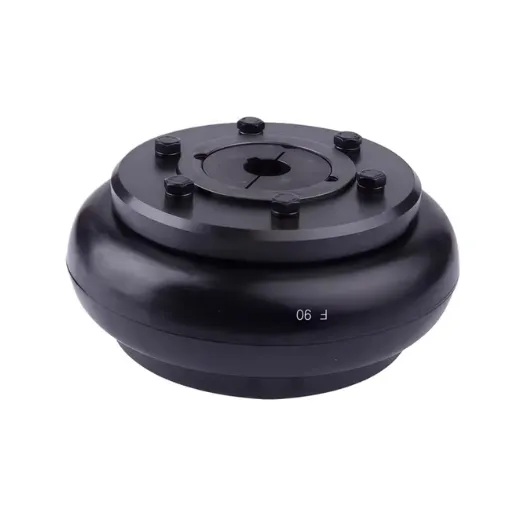 Read More

Contact Us

Recommended Products
-
 OEM Customizable Cardan Shaft Coupling Flexible Rigid Steel for Air Compressor Propeller Universal Construction Printing ShopsNegotiableMOQ: 2 Pieces
 -
Kc Coulpling Roller Chain Coupling Set With Chain and Sprocket for General MachineryNegotiableMOQ: 1 Piece
-
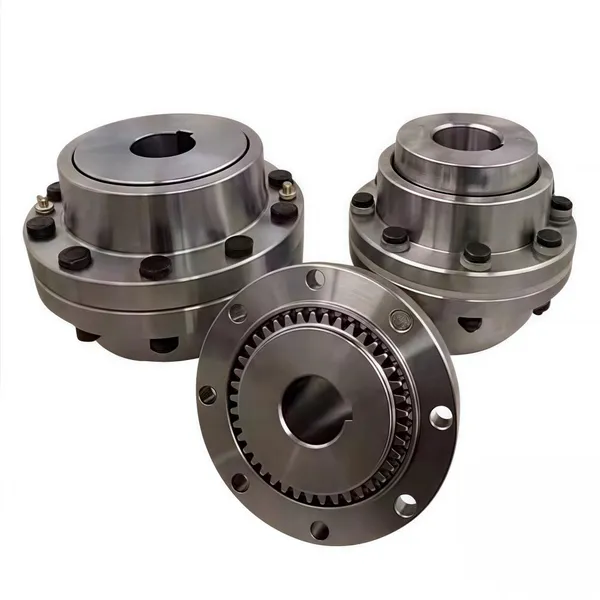
High Transmission Efficiency Drum Gear Coupling Easy Installation Gear Coupler For Heavy MachineryNegotiableMOQ: 10 Pieces
-
High-Torque Roller Chain Coupling Durable Steel Aluminium Construction Customizable Precision Engineering OEM Shaft CouplingsNegotiableMOQ: 2 Pieces
-
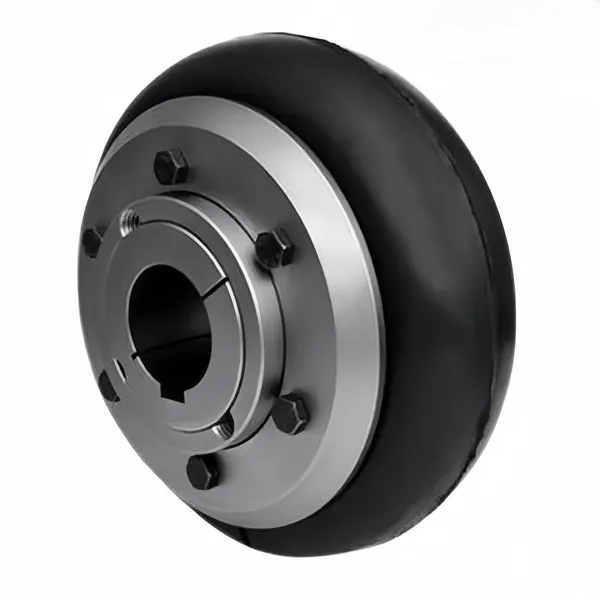
Customizable Rigid Iron Steel Aluminium Rubber Tyre Coupling OEM Support for Pumps Industrial Equipment Construction IndustriesNegotiableMOQ: 10 Pieces
-
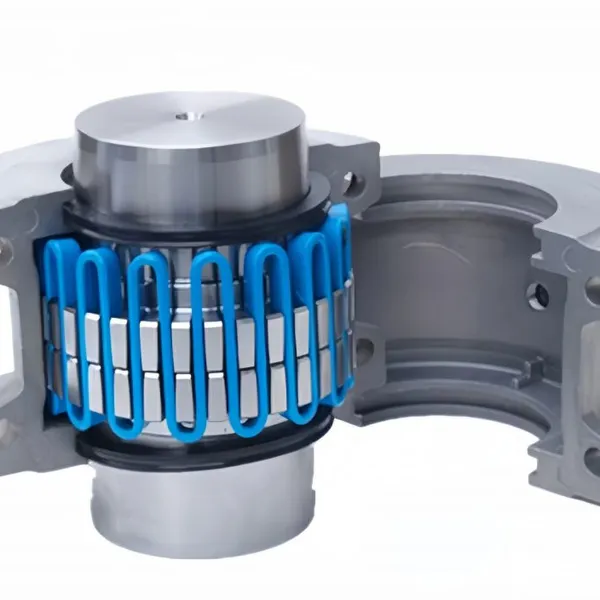
Jsb Flexible Grid Coupling With Metallic Elastic Element Factory Direct Spider Snake Spring CouplingNegotiableMOQ: 10 Pieces
-
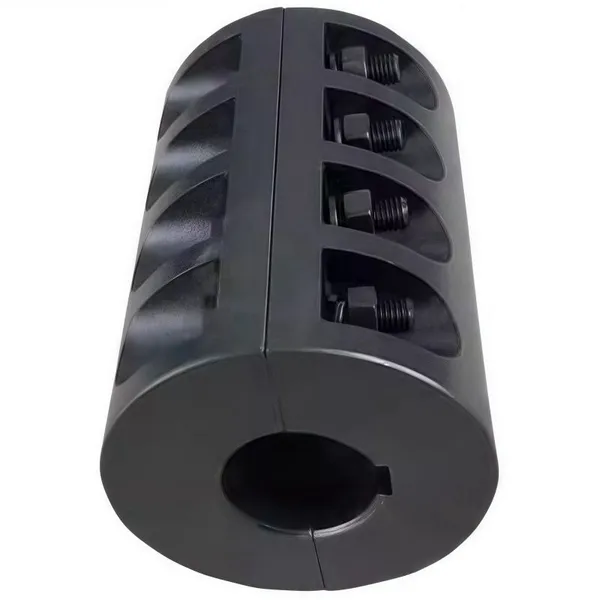
High Torque JQ/JQW Type Clamp Coupling for Motor & Gearbox 45 Steel Jacketed Iron Disc Structure Flexible Rigid OEM SupportedNegotiableMOQ: 2 Pieces
-
SWC Series Flange Universal Joint Coupling Hardened Cross Shaft Heavy Duty TransmissionNegotiableMOQ: 1 Piece
-
Heavy Duty Universal Coupling High Quality Universal Shaft for Machinery and EquipmentNegotiableMOQ: 1 Piece
-
OEM Customized Precision Cast Iron Zinc Aluminum Die Castings New Hydraulic Parts Fittings 1 Year WarrantyNegotiableMOQ: 100 Pieces
-
Yl Series Rigid Flange Coupling Power Transmission PartsNegotiableMOQ: 2 Pieces
-
Flange Coupling for Water Pump and Compressor Applications With Rubber Gasket SealNegotiableMOQ: 2 Pieces
-
Heavy-Duty Telescopic Welding Cardan Shaft for Universal UseNegotiableMOQ: 1 Piece
-
Flexible Universal Shaft Flange Coupling for Marine and Industrial Drive SystemsNegotiableMOQ: 10 Pieces
-
Durable Expansion Sleeve, Locking Assembly & Taper Lock Bushing for Robotic Arm JointsNegotiableMOQ: 1 Piece
-
High Quality Yl Type Rigid Flange Coupling Mechanical Transmission CouplingNegotiableMOQ: 2 Pieces
-
Stainless Steel Flexible Universal Joint Coupling for Motor Flange Gear Pump and Spline ShaftNegotiableMOQ: 1 Piece
-
Compact Drum Gear Coupling for Heavy Industrial Transmission High Torque CapacityNegotiableMOQ: 10 Pieces
-
Standard or Customized Jaw Beam (Helical) Flexible Coupling for General MachineryNegotiableMOQ: 10 Pieces
-
TL Series Elastic Pin Coupling Easy Replace Rubber Bush Coupling With Shaft Misalignment CompensationNegotiableMOQ: 10 Pieces