
 Business License
Gear Coupling: Types, Selection, and Uses
At a steel rolling mill in Turkey, a main drive coupling failed during the night shift. The maintenance team replaced it with an off-the-shelf gear coupling that matched the shaft diameter but was rated for only half the peak torque of the mill stand. Six weeks later, the teeth were pitted and the grease was full of metal particles. The second failure cost the plant three days of production.
That story is more common than it should be. A gear coupling is the high torque coupling of choice for many misaligned shaft applications, but only when it's selected, installed, and maintained correctly. In heavy industry, the consequences of getting it wrong extend far beyond the coupling itself.
In this guide, you'll learn what a gear coupling is, how the main gear coupling types differ, how to select one for your application, and what causes premature failure. By the end, you'll know how to specify a gear coupling that matches the real demands of your drive system.
What a Gear Coupling Does
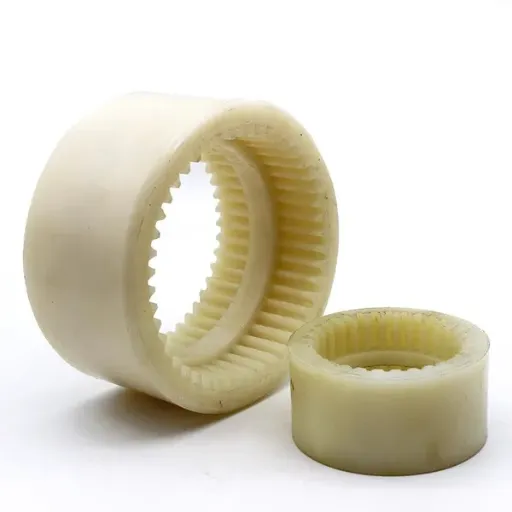
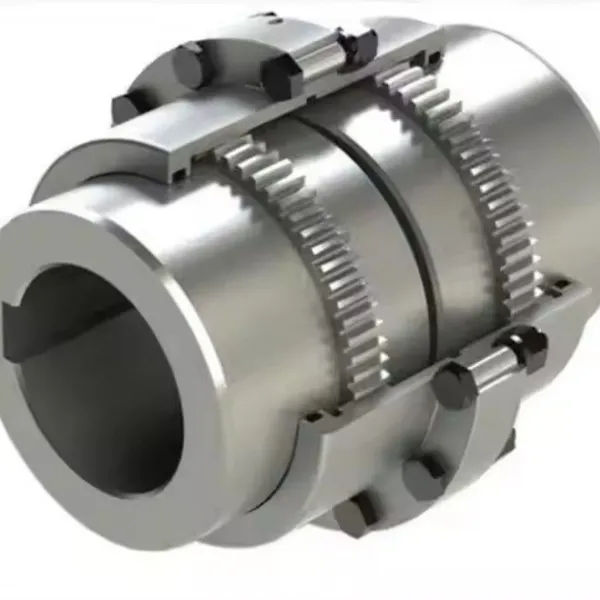
A gear coupling is a flexible shaft connector that transmits torque through meshing external and internal gear teeth. Unlike a rigid coupling, it can accommodate angular, radial, and axial misalignment between connected shafts. The teeth are typically crowned so they can move slightly while maintaining contact across the tooth face.
These couplings are used where torque is high and some misalignment is expected. Common applications include steel rolling mills, mining crushers, cement kilns, cranes, and large pumps. Because the teeth are lubricated and hardened, a well-specified unit can deliver long service life even in severe conditions.
Hebei Suju manufactures GIICL drum gear couplings for exactly these environments. Our couplings are machined from forged alloy steel, heat-treated to required hardness, and inspected for dimensional accuracy before shipment.
Main Gear Coupling Types
Not every coupling is built the same way. Therefore, the hub and sleeve arrangement determines how much torque the coupling can handle, how much misalignment it'll tolerate, and how easy it is to maintain.
Understanding the main gear coupling types is the first step toward correct specification. The most common designs are:
Drum gear couplings
Curved tooth gear couplings
Spacer gear couplings
Flanged sleeve gear couplings
Drum Gear Couplings
A drum gear coupling has a curved or drum-shaped external gear on one hub that meshes with an internal gear sleeve. The crowned teeth allow angular, radial, and axial movement. The drum gear coupling is the most common choice for heavy industrial drives because it combines high torque capacity with good misalignment tolerance.
The GIICL series is a widely used standard design. The GIICL coupling combines a compact layout with high torque density, and is suitable for horizontal and vertical installations. At Hebei Suju, our GIICL drum gear couplings are supplied for steel mills, mining equipment, cement plants, and cranes.
Best for: Steel rolling mills, mining crushers, cement kilns, heavy conveyors, cranes.
Advantages: Very high torque capacity, good misalignment tolerance, long service life.
Limitations: Require lubrication, heavier than elastomer couplings.
Curved Tooth Gear Couplings
Curved tooth gear couplings use teeth with a curved profile rather than a true involute form. The curved shape increases the contact area and allows more movement. These couplings are often used where shock loads and reversing loads are common.
Best for: Crushers, presses, reversing mills, heavy conveyors.
Advantages: High shock load tolerance, smooth torque transmission.
Limitations: More complex manufacturing, precise lubrication required.
Spacer Gear Couplings
A spacer gear coupling includes a tubular spacer between the two gear hubs. The spacer allows the two connected machines to be separated for maintenance without moving either shaft. This is valuable when access is limited or when frequent inspection is needed.
Best for: Pumps, compressors, gearboxes where maintenance access is tight.
Advantages: Easier maintenance, allows axial disassembly.
Limitations: Longer overall length, slightly more complex installation.
Flanged Sleeve Gear Couplings
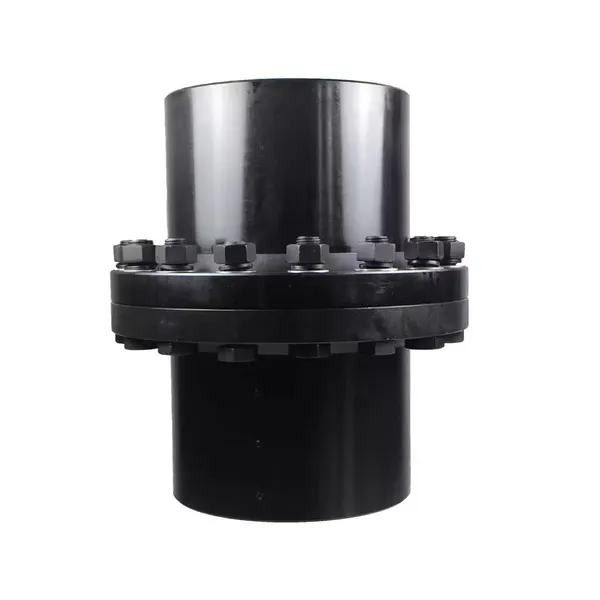
Flanged sleeve gear couplings use two flanged hubs bolted together. They're compact and handle high torque but allow less misalignment than drum gear designs. They're often used where shafts are well aligned and space is limited.
Best for: Fans, blowers, pumps, general machinery with good alignment.
Advantages: Compact, high torque, simple bolted assembly.
Limitations: Lower misalignment tolerance.
Which gear coupling type is right for your application? Compare torque capacity, misalignment tolerance, and typical uses below.
| Type | Torque Capacity | Misalignment | Best For |
|---|---|---|---|
| Drum gear | Very high | Angular, radial, axial | Steel mills, mining, cement |
| Curved tooth | High | Moderate | Crushers, reversing drives |
| Spacer | High | Moderate | Pumps, compressors, tight access |
| Flanged sleeve | High | Low | Fans, blowers, aligned shafts |
Gear Coupling Selection: Five Key Factors
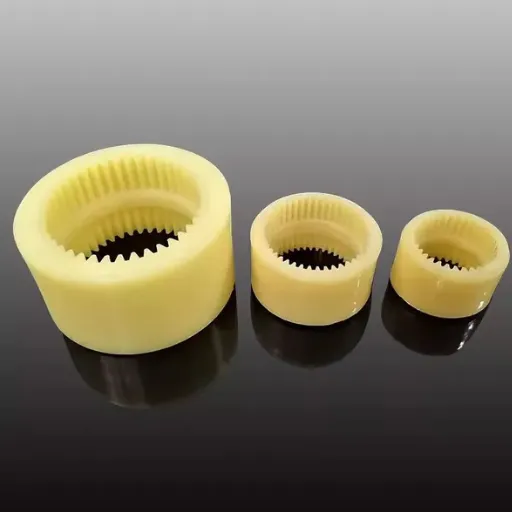
Gear coupling selection isn't just about matching shaft size. The right coupling depends on torque, speed, misalignment, environment, and duty cycle. For a step-by-step approach, see our coupling selection guide.
1. Torque and Service Factor
Start with the nominal torque of the drive system. In heavy machinery, it's also important to consider peak torque from startup, braking, and shock loads. Most manufacturers publish a rated torque value, but the application service factor increases that requirement.
As a simple rule:
Calculate nominal torque from motor power and speed.
Multiply by a service factor based on the application (typically 1.5 to 3.0 for heavy machinery).
Select a coupling with a rated torque at least equal to the adjusted value.
For example, a 500 kW motor running at 500 RPM produces approximately 9,550 N·m of nominal torque. With a service factor of 2.0, the unit should be rated for at least 19,100 N·m.
AGMA publishes service factor tables that help engineers match the coupling to the severity of the drive. Manufacturer catalogs also provide application-specific factors.
2. Operating Speed
Gear couplings are suitable for a wide speed range, but high-speed applications require attention to balance. An unbalanced coupling at high RPM causes vibration, bearing load, and noise. For speeds above 3,000 RPM, specify dynamic balancing to the appropriate ISO grade.
At Hebei Suju, we can perform dynamic balancing on these couplings when the application demands it. This is especially important for test stands, turbo machinery, and high-speed pump drives.
3. Shaft Misalignment
Heavy machinery often experiences thermal expansion, foundation settlement, and assembly tolerances that create misalignment. Gear couplings can compensate for angular, radial, and axial misalignment, but each design has limits.
When reviewing application requirements, measure or estimate:
Angular misalignment: The angle between the two shaft centerlines.
Radial misalignment: The parallel offset between shaft centerlines.
Axial movement: The expected end float of the connected shafts.
Select a coupling series whose allowable misalignment exceeds the expected values. If space permits, a spacer-type design can make maintenance easier by allowing axial disassembly without moving the connected machines.
4. Operating Environment
The environment affects material selection, sealing, and lubrication. Consider:
Temperature: High temperatures reduce lubricant life and may require special seals or materials.
Dust and moisture: Open designs need protection in dirty or wet environments.
Corrosion: Chemical plants and marine applications may require corrosion-resistant coatings or materials.
Safety: Some applications require guards or limited end float designs.
For outdoor or dusty environments, specify a sealed design with appropriate lubricant retention. In corrosive atmospheres, discuss material options such as alloy steel with protective coating or stainless alternatives.
5. Service Life and Maintenance Requirements
Gear couplings can last for years when they're properly lubricated and aligned. However, neglecting maintenance leads to rapid wear. Before selecting a coupling, consider:
How often the coupling can be inspected.
Whether the lubricant can be replenished during operation.
Whether seals can be replaced without removing the coupling.
Whether the application can tolerate downtime for maintenance.
A coupling that's difficult to access should use a long-life lubricant and robust seals. A coupling in a critical drive should be monitored for temperature and vibration.
Quick Gear Coupling Selection Checklist
Use this checklist before finalizing a specification:
Nominal torque calculated from motor power and speed
Service factor applied for shock, reversing, or heavy-duty loads
Maximum operating speed confirmed and balancing specified if required
Expected angular, radial, and axial misalignment documented
Environmental factors reviewed (temperature, dust, moisture, chemicals)
Maintenance access and lubrication intervals planned
Spacer or custom design considered if removal is difficult
Need help with a specific application? Request a quotation and send us your drive details.
Common Gear Coupling Applications
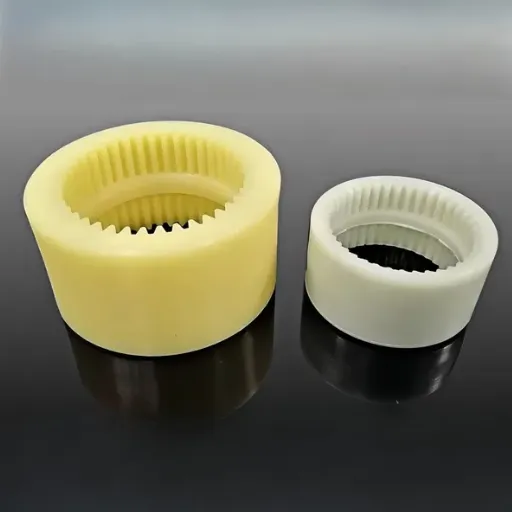
These couplings appear across heavy industry because they combine torque capacity with misalignment tolerance. These gear coupling applications span steel production, mining, cement, chemicals, cranes, power generation, and marine propulsion. Below are the most common uses we supply.
Steel and Metallurgy
In steel and metallurgy applications such as rolling mills and continuous casting lines, gear couplings transmit high torque between motors, gearboxes, and work rolls. In these drives, a high torque coupling must tolerate shock loads from bite impacts and misalignment caused by roll changes. A GIICL coupling is widely used in these drives because it handles the shock loads and roll-change misalignment common in steel production.
Mining and Cement
Crushers, mills, kilns, and conveyors in mining and cement plants operate in dusty, high-load conditions. Gear couplings provide the torque capacity and durability these machines need. Regular inspection and lubrication are essential because contamination accelerates wear.
Chemical and Process Industry
Large pumps, compressors, and mixers in chemical plants often use toothed couplings because of their reliability and compact size. In these applications, material compatibility and sealing against process fluids are critical.
Cranes and Lifting Equipment
Crane hoists and travel drives use these couplings to connect motors and gearboxes. The couplings must handle frequent starts, stops, and reversing loads. Proper service factor selection is especially important here.
Power Generation and Marine
Turbines, generators, and marine propulsion systems use this design where high torque and some shaft movement must be accommodated. These applications often require special balancing, materials, and corrosion protection.
Gear Coupling Materials and Manufacturing
The performance of a gear coupling depends on material quality and heat treatment. At Hebei Suju, our coupling hubs and sleeves are typically manufactured from alloy steel such as 42CrMo or equivalent. After rough machining, the teeth are induction hardened or carburized to reach the required surface hardness and wear resistance.
Key manufacturing steps include:
Forging or bar-stock preparation: Ensures grain structure and material integrity.
Rough machining: Brings the part close to final dimensions.
Heat treatment: Hardens teeth and toughens the core.
Finish machining: Achieves final bore, keyway, and tooth profile tolerances.
Inspection: Dimensional checks, hardness testing, and surface finish verification.
Assembly and preservation: Lubrication, sealing, and corrosion protection for shipment.
Our full-process quality control ensures that each step is documented and repeatable. We can provide inspection reports and material certificates on request.
At a cement plant in Vietnam, engineer Linh Pham was replacing a worn coupling on a kiln drive. The original coupling had lasted only 18 months because the teeth were made from untreated carbon steel.
Hebei Suju supplied a replacement with 42CrMo hubs, induction-hardened teeth, and HNBR seals. After 30 months, the inspection showed only normal wear patterns and the lubricant was still clean. The upgraded material specification paid for itself in avoided downtime.
Gear Coupling Lubrication Best Practices
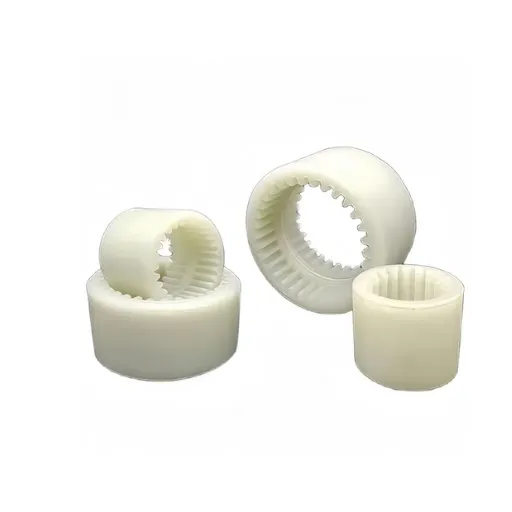
Gear couplings need the right lubricant to separate the teeth and carry away heat and wear particles. Most drum designs use a lithium-based or polyurea-thickened grease with EP additives. Oil lubrication is sometimes used in high-speed or continuously running drives where grease wouldn't circulate enough.
Follow these practices to extend lubricant life:
Fill the coupling to the manufacturer's recommended level. Too little grease causes metal-to-metal contact; too much causes churning and overheating.
Re-grease on the recommended schedule, or sooner in dusty or wet environments.
Use compatible grease when topping up. Mixing incompatible thickeners can break the grease down.
Inspect the lubricant during maintenance. Metal particles, discoloration, or separation mean the coupling needs attention.
At Hebei Suju, couplings are shipped with an initial lubricant charge. We can recommend a grease grade based on your operating temperature, speed, and load. Following these practices is the core of effective gear coupling maintenance.
Gear Coupling Standards and Certifications
Gear couplings for industrial service are often specified against recognized standards. AGMA publishes service-factor and rating guidelines such as AGMA 9000, while ISO 10441 addresses couplings used in petroleum, chemical, and gas-industry equipment. At Hebei Suju, hubs and sleeves are produced under a documented quality system, and we can provide material certificates and inspection reports on request.
Common Gear Coupling Failure Modes
Even a correctly selected gear coupling can fail if operating conditions change. Recognizing the early signs saves the connected equipment.
Misalignment Overload
Gear couplings tolerate misalignment, but every design has a limit. Running continuously at the edge of that limit concentrates contact stress on one side of the tooth. The result is uneven wear, pitting, and early fatigue.
Lubrication Failure
Gear couplings depend on clean lubricant. Grease separation, contamination, or extended intervals without relubrication lead to metal-to-metal contact. Temperature monitoring and scheduled lubricant changes prevent this.
Overload and Fatigue
Repeated shock loads above the coupling's rating cause tooth fatigue. Pitting appears first, then cracking, then tooth breakage. Matching peak torque to the coupling rating prevents fatigue failures.
Contamination
Dust, water, and process chemicals entering the gear mesh accelerate wear. Seals must be inspected and replaced before they fail.
Improper Installation
A coupling installed with uneven bolt torque, incorrect hub fit, or poor shaft alignment starts life in distress. Vibration appears early. Bearing loads rise. Don't let installation shortcuts become the reason for a premature failure.
At a limestone quarry in Guangxi, maintenance manager Wei Chen noticed a motor-driven crusher shaking after a bearing replacement. The new bearing was fine. The coupling had been pulled onto the shaft with an impact wrench, distorting the hub bore.
After the team removed the coupling, checked the runout, and reinstalled it with a puller and proper torque, the vibration disappeared. The repair took two hours. It prevented a 48-hour shutdown.
Gear Coupling Installation and Maintenance
Proper installation and gear coupling maintenance extend service life significantly. Follow these guidelines:
Align shafts within the coupling's rated limits. Even though gear couplings tolerate misalignment, operating near the limit increases wear.
Use the correct lubricant. Follow the manufacturer's recommendation for grease type and replenishment interval.
Torque bolts to specification. Uneven bolt torque causes hub runout and vibration.
Inspect seals regularly. Replace damaged seals before contamination enters the gear mesh.
Monitor temperature and vibration. Unusual heat or vibration can indicate misalignment, lubrication failure, or wear.
For critical applications, schedule coupling inspection during planned maintenance shutdowns. As a result, early wear detection prevents unexpected failures and costly production losses.
Storage and Handling
Store spare couplings and components in a clean, dry location. Protect machined surfaces from corrosion. Keep lubricant seals away from ozone, sunlight, and solvents. Handle finished couplings carefully to avoid impact damage to teeth or bores.
When to Consider a Custom Gear Coupling
Catalog couplings fit many applications, but some situations require a custom design. Consider a custom gear coupling when:
The shaft bores are non-standard sizes.
The space between shafts requires a special spacer length.
The torque or speed falls outside standard catalog ranges.
The coupling must match a legacy part that isn't available from the original manufacturer.
The environment requires special materials, seals, or coatings.
At Hebei Suju, we specialize in drawing-based customization. Send us your drawing or a worn sample, and our engineers will review manufacturability, recommend materials, and provide a quotation.
How Much Does a Custom Gear Coupling Cost?
Custom gear coupling pricing depends on size, material grade, heat treatment, quantity, and inspection requirements. A non-standard bore or special spacer length adds machining time, while corrosion-resistant coatings or stainless materials increase material cost. For an accurate quotation, send us your drawing or a worn sample, and our engineers will review manufacturability within one to two business days.
Gear Coupling FAQs
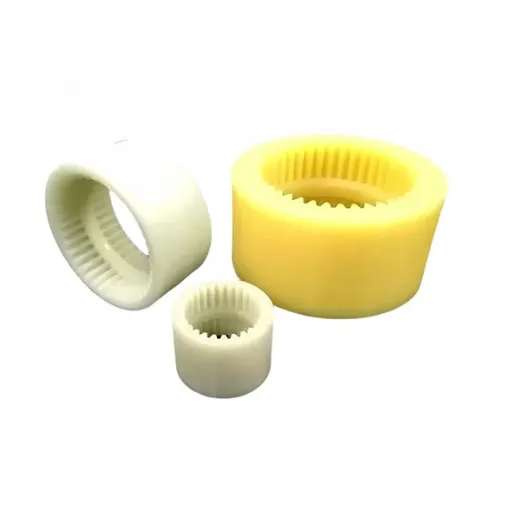
What is a gear coupling used for?
A gear coupling transmits torque between two rotating shafts while accommodating angular, radial, and axial misalignment. It's used in high-torque applications such as steel mills, mining equipment, cement plants, and cranes.
What are the main types of gear couplings?
The most common gear coupling types are drum gear couplings, curved tooth gear couplings, spacer gear couplings, and flanged sleeve gear couplings. Each balances torque capacity, misalignment tolerance, and maintenance access differently.
How do I select a gear coupling?
Start with gear coupling selection basics: torque and service factor. Then check operating speed, expected misalignment, environment, and maintenance access. Match the coupling type to what matters most for your application.
When should a gear coupling be replaced?
Replace the coupling when inspection shows pitting, cracking, excessive backlash, or contaminated lubricant. Preventive replacement during planned shutdowns avoids emergency failures.
What is the difference between a gear coupling and a flexible coupling?
A gear coupling uses meshing metal teeth to transmit very high torque and tolerate significant misalignment. A flexible coupling typically uses an elastomer element to cushion vibration and handle smaller loads. For a deeper comparison, see our guide to gear coupling vs flexible coupling.
Why is a gear coupling used as a high torque coupling?
A gear coupling is used as a high torque coupling because its meshing hardened steel teeth can transmit very large loads while accommodating angular, radial, and axial misalignment. That combination makes it the default choice for heavy drives where elastomer or jaw couplings would fail.
What does gear coupling maintenance involve?
Routine gear coupling maintenance includes alignment checks, lubricant replenishment, seal inspection, bolt torque verification, and vibration or temperature monitoring. Catching wear early prevents catastrophic failure and protects the connected machinery.
Conclusion
A gear coupling is a small but critical part of a heavy-duty drive system. By transmitting high torque while accommodating misalignment, this power transmission coupling protects motors, gearboxes, and driven equipment from forces that would otherwise cause premature failure.
To select the right gear coupling, start with torque and service factor. Then check speed, misalignment, environment, and maintenance access. Match the coupling type to the application priority. When a catalog part doesn't fit, a custom design from an experienced manufacturer keeps the project moving.
Hebei Suju manufactures a full range of drum gear couplings for these and other demanding gear coupling applications. Whether you need a standard GIICL coupling or a custom solution for a difficult application, we can help.
Recently Posted
-
Jaw Coupling Spider Replacement: A Step-by-Step Maintenance Guide
July 28, 2026A maintenance technician at a packaging plant in Brazil noticed vibration on a motor-pump set during his morning rounds. The motor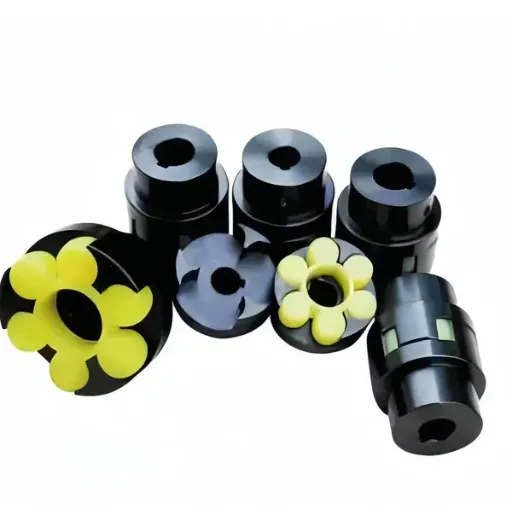 Read More
 -
Flexible Coupling for Motor Pump Sets: A Selection Guide
July 28, 2026A maintenance manager at a water treatment plant in Southeast Asia called us after replacing motor pump couplings three times in 1 Read More
 -
Flexible Shaft Coupling: Selection Guide for Industrial Drives
July 28, 2026When two rotating shafts are connected directly, even a small amount of misalignment can generate vibration, bearing load, and pre Read More
 -
Elastic Coupling: Vibration Control for Industrial Drives
July 28, 2026When a motor-pump set starts vibrating above acceptable limits, the first checks usually fall on bearing wear, impeller balance, o Read More

Contact Us
Recommended Products
-
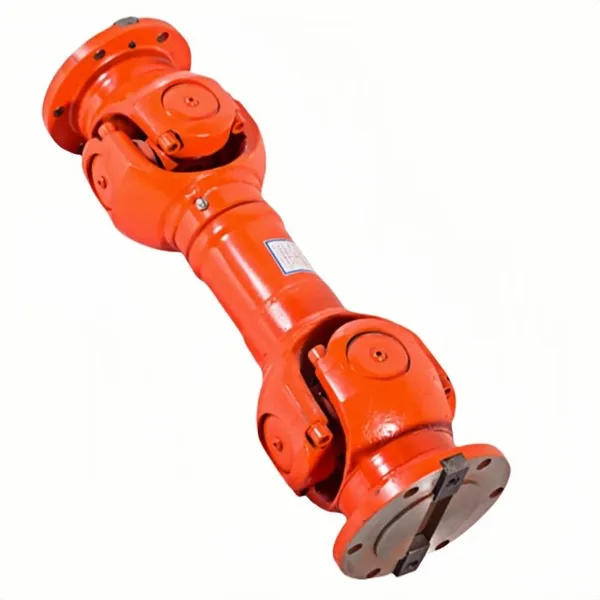
 OEM Customizable Cardan Shaft Coupling Flexible Rigid Steel for Air Compressor Propeller Universal Construction Printing ShopsNegotiableMOQ: 2 Pieces
 -
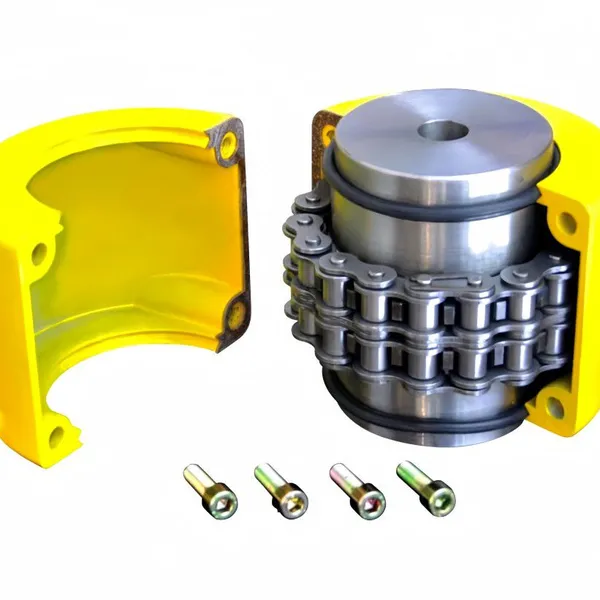
Kc Coulpling Roller Chain Coupling Set With Chain and Sprocket for General MachineryNegotiableMOQ: 1 Piece
-
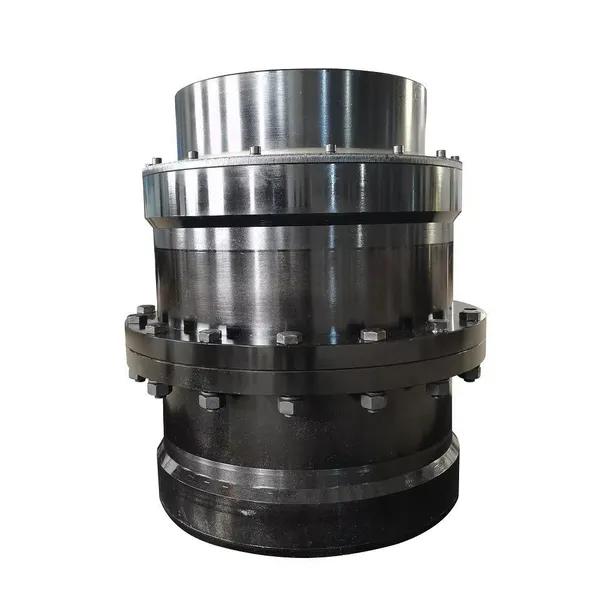
High Transmission Efficiency Drum Gear Coupling Easy Installation Gear Coupler For Heavy MachineryNegotiableMOQ: 10 Pieces
-
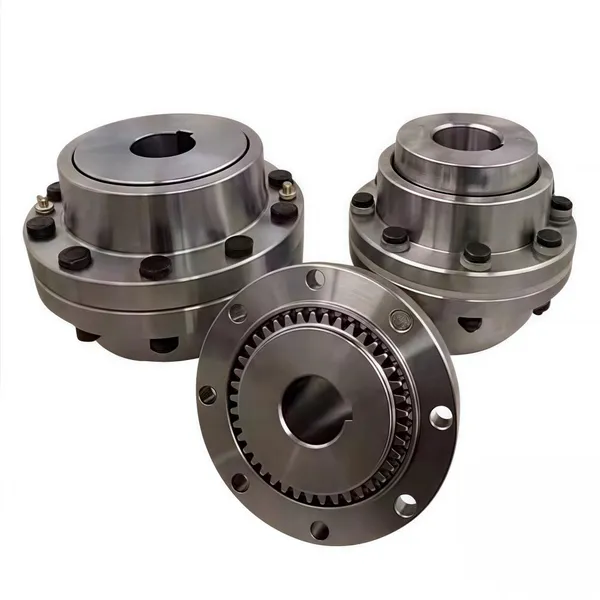
High-Torque Roller Chain Coupling Durable Steel Aluminium Construction Customizable Precision Engineering OEM Shaft CouplingsNegotiableMOQ: 2 Pieces
-
Customizable Rigid Iron Steel Aluminium Rubber Tyre Coupling OEM Support for Pumps Industrial Equipment Construction IndustriesNegotiableMOQ: 10 Pieces
-
Jsb Flexible Grid Coupling With Metallic Elastic Element Factory Direct Spider Snake Spring CouplingNegotiableMOQ: 10 Pieces
-
High Torque JQ/JQW Type Clamp Coupling for Motor & Gearbox 45 Steel Jacketed Iron Disc Structure Flexible Rigid OEM SupportedNegotiableMOQ: 2 Pieces
-
SWC Series Flange Universal Joint Coupling Hardened Cross Shaft Heavy Duty TransmissionNegotiableMOQ: 1 Piece
-
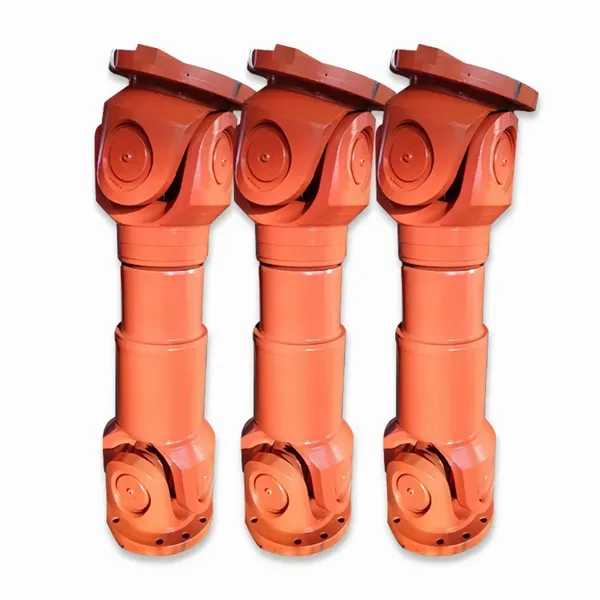
Heavy Duty Universal Coupling High Quality Universal Shaft for Machinery and EquipmentNegotiableMOQ: 1 Piece
-
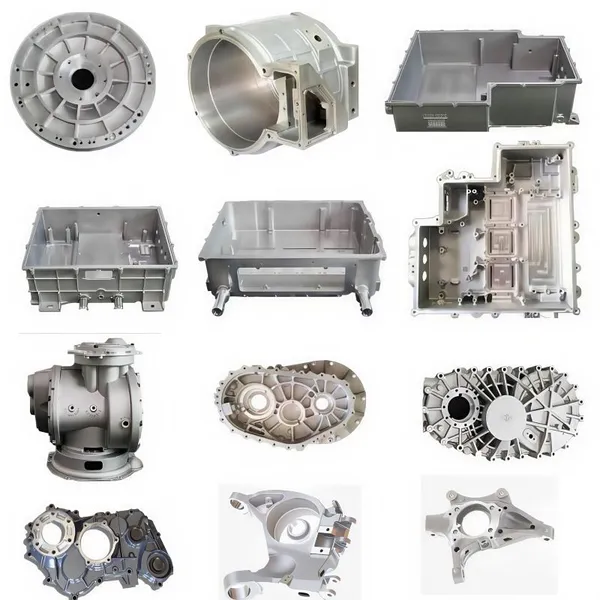
OEM Customized Precision Cast Iron Zinc Aluminum Die Castings New Hydraulic Parts Fittings 1 Year WarrantyNegotiableMOQ: 100 Pieces
-
Yl Series Rigid Flange Coupling Power Transmission PartsNegotiableMOQ: 2 Pieces
-
Flange Coupling for Water Pump and Compressor Applications With Rubber Gasket SealNegotiableMOQ: 2 Pieces
-
Heavy-Duty Telescopic Welding Cardan Shaft for Universal UseNegotiableMOQ: 1 Piece
-
Flexible Universal Shaft Flange Coupling for Marine and Industrial Drive SystemsNegotiableMOQ: 10 Pieces
-
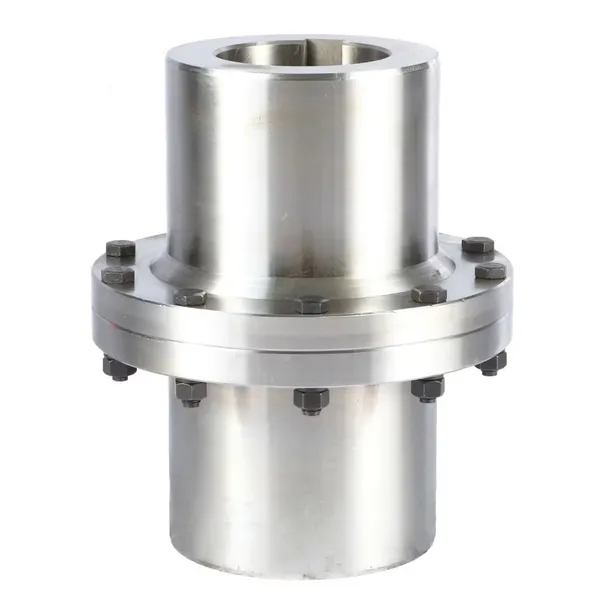
Durable Expansion Sleeve, Locking Assembly & Taper Lock Bushing for Robotic Arm JointsNegotiableMOQ: 1 Piece
-
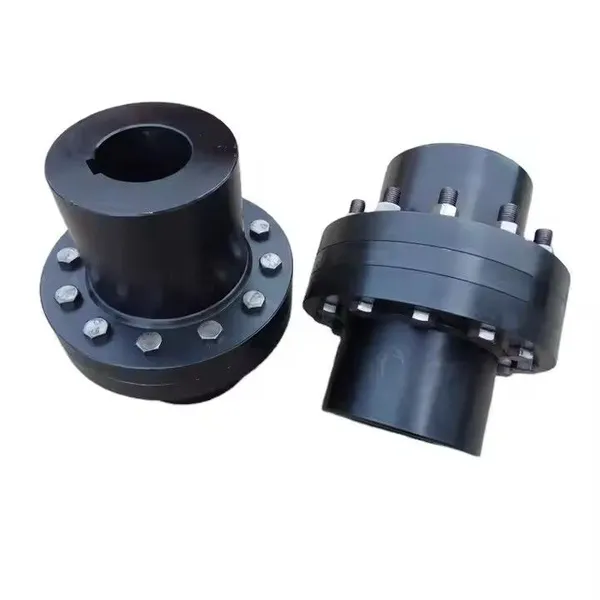
High Quality Yl Type Rigid Flange Coupling Mechanical Transmission CouplingNegotiableMOQ: 2 Pieces
-
Stainless Steel Flexible Universal Joint Coupling for Motor Flange Gear Pump and Spline ShaftNegotiableMOQ: 1 Piece
-
Compact Drum Gear Coupling for Heavy Industrial Transmission High Torque CapacityNegotiableMOQ: 10 Pieces
-
Standard or Customized Jaw Beam (Helical) Flexible Coupling for General MachineryNegotiableMOQ: 10 Pieces
-
TL Series Elastic Pin Coupling Easy Replace Rubber Bush Coupling With Shaft Misalignment CompensationNegotiableMOQ: 10 Pieces