
 Business License
Lubrication of Gear Coupling: A Practical Guide to Longer Service Life
In 2023, a steel plant in Turkey shut down its bar mill for an emergency repair after a gear coupling on the finishing stand seized. The root cause was not wear from torque or misalignment. The lubricant had dried out because the grease nipple was never cleaned, and fresh grease could not enter the sleeve. A two-hour relubrication job that should have happened every six months turned into a 72-hour production loss.
Proper lubrication of gear coupling assemblies is one of the most overlooked factors in industrial power transmission. Gear couplings rely on a continuous lubricating film between crowned teeth to reduce friction, carry away heat, and exclude contamination. When the lubricant fails, the coupling fails fast.
This guide explains the lubrication of gear coupling systems in practical terms. You will learn which lubricant type to choose, how much to apply, how often to relubricate, and how to avoid the mistakes that shorten coupling life. Whether you maintain steel mills, cement plants, or mining equipment, these practices will help you protect your couplings and reduce unplanned downtime.
Why Lubrication of Gear Coupling Matters
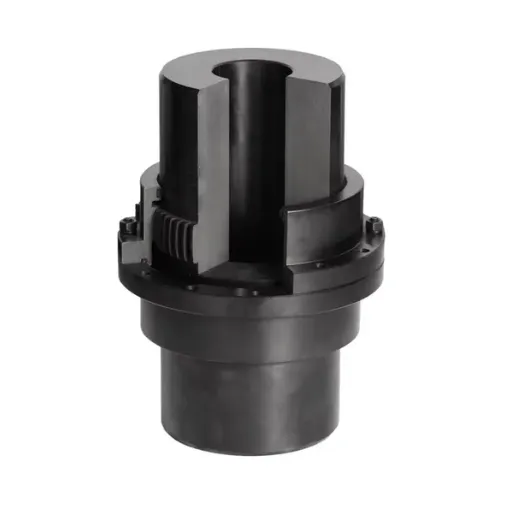
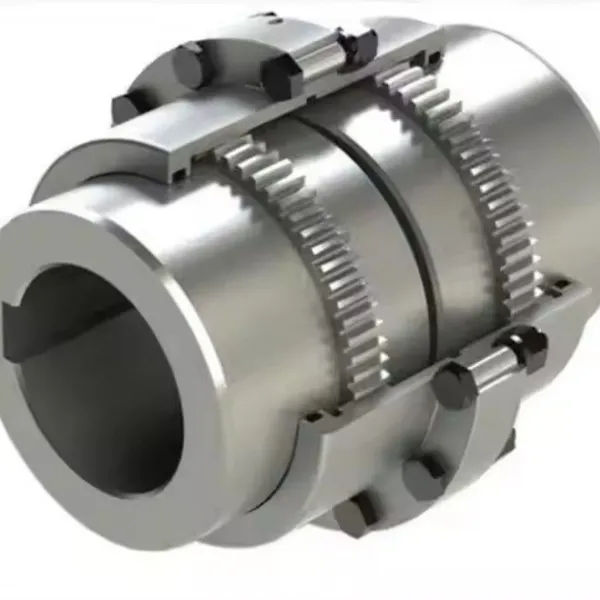
A gear coupling transmits torque through sliding contact between the external teeth on the hubs and the internal teeth in the sleeve. The teeth are crowned to allow misalignment, but that crown also creates a sliding motion as the coupling rotates. Without lubrication, metal contacts metal directly, and friction generates heat, scoring, and pitting.
The lubricant in a gear coupling does four jobs at once:
Reduces friction between meshing teeth.
Carries away heat generated by sliding and torque.
Cushions shock loads during startup, braking, and reversing.
Seals out contamination such as dust, moisture, and process debris.
When lubrication is neglected, the first sign is usually increased temperature. The next sign is vibration. By the time noise appears, tooth damage is often severe. Understanding lubrication of gear coupling systems is therefore a maintenance priority, not a minor detail.
At Hebei Suju, our GIICL drum gear couplings are supplied with clear lubrication instructions because we know that even the best coupling cannot survive without the right lubricant maintenance.
Types of Lubricants for Gear Couplings
The two main choices for lubrication of gear coupling assemblies are grease and oil. Each has advantages and limitations. The right choice depends on speed, temperature, coupling size, and maintenance access.
Grease Lubrication
Grease is the most common choice for gear couplings in heavy industry. It stays in place, seals better than oil, and is easier to apply through grease fittings. Most drum gear couplings used in steel mills, cement plants, and mining are grease-lubricated.
Recommended grease characteristics:
NLGI Grade 1 or 2: Soft enough to flow into the tooth mesh but firm enough to stay in place.
EP additives: Extreme pressure additives protect against high contact loads.
Rust and oxidation inhibitors: Essential for outdoor or humid environments.
High drop point: Should exceed the maximum operating temperature by at least 30°C.
Good adhesion: Resists sling-off at higher speeds.
For most industrial gear couplings, a lithium-complex or polyurea-based EP grease works well. In high-temperature applications such as kiln drives, a synthetic or clay-thickened grease may be needed.
Oil Lubrication
Oil is used for high-speed or very large gear couplings where grease cannot remove enough heat or flow effectively. Oil bath and circulating oil systems are common on large turbine drives, compressors, and marine applications.
Oil lubrication advantages:
Better heat removal than grease.
Easier to filter and condition.
More consistent supply to all tooth surfaces.
Oil lubrication disadvantages:
Requires seals, reservoirs, and sometimes pumps.
Higher installation and maintenance cost.
Leak risk if seals fail.
For most Hebei Suju customers, grease is the practical choice. If your application runs above 3,600 RPM or has a coupling bore above 300 mm, consult the manufacturer about whether oil lubrication is more suitable.
How Much Grease to Apply
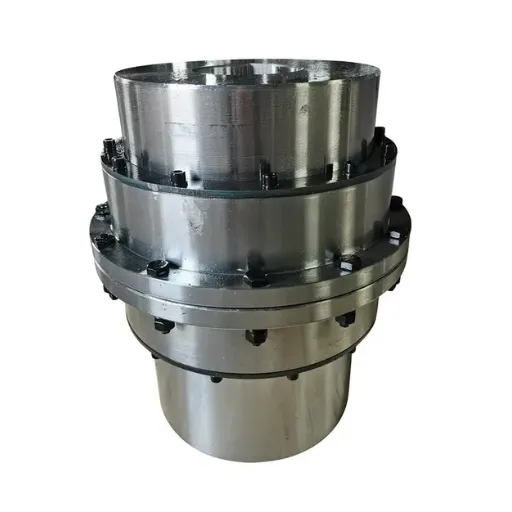
One of the most common mistakes in lubrication of gear coupling systems is applying too much or too little grease. Both cause problems.
Too little grease leaves teeth unprotected. Too much grease creates internal pressure, strains seals, and causes overheating because the grease churns instead of flowing.
A practical rule for grease-filled gear couplings is to fill approximately 40% to 60% of the available internal volume. This leaves space for the grease to move and for thermal expansion. The exact volume depends on the coupling size and design.
For a general guide, refer to the manufacturer's catalog. Many coupling manufacturers publish a grease quantity table based on coupling size. If no value is available, use this approximation:
| Coupling Size (Nominal Torque, N·m) | Approximate Grease Quantity (g) |
|---|---|
| Up to 1,000 | 30-60 |
| 1,000 - 5,000 | 60-150 |
| 5,000 - 20,000 | 150-350 |
| 20,000 - 50,000 | 350-700 |
| Above 50,000 | 700-1,500+ |
These values are starting points. Always confirm the quantity with the coupling manufacturer or maintenance manual. For custom gear couplings, Hebei Suju provides a lubrication chart matched to the specific design.
Lubrication Intervals: How Often to Relubricate
Relubrication frequency depends on operating conditions. Severe duty, high temperature, contamination, and continuous operation all shorten the interval. The following table gives general guidance for grease-lubricated gear couplings.
| Operating Condition | Recommended Relubrication Interval |
|---|---|
| Clean, moderate temperature, continuous duty | 6-12 months |
| Dusty or humid environment | 3-6 months |
| High temperature (above 80°C) | 2-4 months |
| Frequent starts, stops, or reversing | 3-6 months |
| Heavy shock loads (rolling mills, crushers) | 1-3 months |
A steel mill in Poland learned this lesson the hard way. Its roughing mill gear coupling was on a 12-month relubrication schedule because that schedule worked for cleaner parts of the plant. The mill stand produced severe shock loads and ran at high temperature. After switching to a 6-week relubrication interval and cleaning the grease fittings each time, coupling life increased from 18 months to more than four years.
If a coupling runs continuously without shutdown, use a pressure grease gun or automatic lubricator compatible with the coupling design. Never skip relubrication because the coupling "looks fine." Lubricant condition degrades inside the sleeve where it cannot be seen.
Best Practices for Lubricating a Gear Coupling
Consistent lubrication of gear coupling assemblies requires discipline and the right technique. Follow these best practices to maximize coupling life.
1. Clean Before You Grease
Dust, metal particles, and old hardened grease can block grease passages and damage seals. Wipe the grease fitting clean before attaching the grease gun. Flush a small amount of grease through the fitting to clear debris.
2. Use the Correct Grease Type
Mixing incompatible greases can cause separation, hardening, or softening. Use the same grease type specified by the coupling manufacturer. If changing grease types, disassemble and clean the coupling thoroughly first.
3. Apply Grease Slowly
Pump grease slowly until fresh grease appears at the seal or relief port. Fast pumping can damage seals and force contaminants into the mesh. If no fresh grease appears, stop and inspect the fitting and passages for blockage.
4. Do Not Overfill
Overfilling raises internal pressure and temperature. If the coupling has a relief plug, remove it during greasing to allow old grease to escape. Replace the plug after the new grease is in place.
5. Inspect Seals and Hardware
Every relubrication is a chance to inspect seals, bolts, and hubs. Cracked seals, loose bolts, or leaking grease are warning signs. Address them before they lead to tooth damage.
6. Monitor Temperature and Vibration
Track temperature and vibration trends between lubrication intervals. A sudden rise in either value can indicate lubrication breakdown, misalignment, or overloading. Schedule inspection if readings exceed baseline by more than 15%.
Common Lubrication Mistakes
Even experienced maintenance teams make mistakes with lubrication of gear coupling systems. Avoid these common errors:
Using the wrong grease grade: A general-purpose grease without EP additives will not protect gear teeth under high contact pressure.
Infrequent relubrication: Waiting until the coupling overheats means damage has already started.
Overgreasing: More grease is not better. Excess grease churns, overheats, and blows out seals.
Mixing greases: Incompatible thickeners and base oils can ruin lubricant performance.
Ignoring blocked fittings: A clogged grease nipple gives a false sense of security. The coupling may be dry inside.
Skipping cleaning: Pumping new grease through a dirty fitting pushes contaminants directly into the tooth mesh.
Neglecting oil systems: Oil-lubricated couplings need filter changes, level checks, and seal inspection just like gearboxes.
A mining company in Chile experienced a classic example. The maintenance team noticed a gear coupling running hot and pumped in extra grease. The real problem was misalignment caused by a shifted motor base.
The extra grease masked the symptom for two weeks, then the coupling failed completely. Proper diagnosis would have found the misalignment; more lubricant only delayed the repair.
How Lubrication Relates to Gear Coupling Failure Modes
Lubrication problems often show up as other failure modes. Understanding the connection helps with diagnosis.
| Symptom | Likely Lubrication Cause | Action |
|---|---|---|
| Overheating | Insufficient or degraded grease | Relubricate, check quantity and grade |
| Vibration increase | Dry teeth, wear debris, or contamination | Inspect, clean, and relubricate |
| Metal particles in grease | Advanced tooth wear | Inspect coupling for replacement |
| Seal leakage | Overgreasing or blocked breather | Check fill level and relief path |
| Noise during operation | Metal-to-metal contact | Stop and inspect lubricant condition |
| Fretting corrosion | Stale grease retaining moisture | Replace grease, inspect seals |
When any of these symptoms appear, treat lubrication as the first variable to check. It is often the easiest and cheapest problem to fix.
Oil Lubrication Systems: When and How
For large or high-speed gear couplings, oil lubrication may be required. There are two common arrangements.
Oil Bath Lubrication
The lower portion of the coupling sits in an oil reservoir. As the coupling rotates, the teeth pick up oil and distribute it through the mesh. This system is simple but limited to lower speeds where centrifugal force does not throw off the oil.
Circulating Oil Lubrication
Oil is pumped through the coupling from an external system. This method provides cooling, filtration, and continuous fresh oil supply. It is used on large compressors, turbines, and high-power gear drives.
For circulating systems, monitor:
Oil temperature at inlet and outlet.
Pressure drop across filters.
Oil cleanliness class.
Water content in the oil.
Oil systems require more maintenance than grease systems, but they are necessary when heat and speed exceed the limits of grease.
Special Environments and Lubrication Adjustments
Some operating environments need special lubrication considerations.
High Temperature
Above 80°C, standard lithium greases degrade faster. Switch to a high-temperature grease with a synthetic base oil and a polyurea or clay thickener. Shorten relubrication intervals by 50% or more.
Low Temperature
Below -20°C, standard grease may stiffen and fail to flow. Use a low-temperature grease with a synthetic base oil and confirm flow at the minimum operating temperature.
Dust and Moisture
In cement plants, mines, and outdoor installations, seals are critical. Use a grease with good adhesion and water resistance. Clean grease fittings before every service. Consider installing protective covers over grease fittings.
Food and Pharmaceutical
If the coupling is near food or pharmaceutical production, use food-grade lubricants that meet NSF H1 or equivalent standards. Standard industrial greases are not acceptable in these areas.
Storing and Handling Lubricants
Lubricant quality starts before it enters the coupling. Store grease and oil in a clean, dry area away from direct sunlight and extreme temperatures. Keep containers sealed to prevent contamination. Label grease guns and fittings clearly to avoid cross-contamination.
When handling bulk grease, use dedicated pumps and hoses. Do not use the same equipment for different grease types unless it has been thoroughly cleaned. A small amount of incompatible grease can ruin a fresh fill.
Documenting Lubrication Maintenance
Good maintenance is repeatable maintenance. Keep records of:
Grease type and manufacturer.
Quantity applied.
Date of each relubrication.
Temperature and vibration readings.
Any observations such as leakage, blocked fittings, or worn seals.
These records help identify trends and justify schedule adjustments. If a coupling fails, the records also support root-cause analysis.
Conclusion
Lubrication of gear coupling assemblies is not a routine chore. It is a critical maintenance activity that directly affects coupling life, machine reliability, and production cost. The right lubricant, the right quantity, and the right interval protect the gear teeth from friction, heat, and contamination.
Start by selecting a grease or oil that matches your operating conditions. Apply the correct quantity, keep grease fittings clean, and stick to a relubrication schedule that reflects the real severity of your application. Monitor temperature and vibration, and inspect seals and hardware during every service.
At Hebei Suju, we design and manufacture drum gear couplings for heavy industry, and we provide lubrication guidance for every design. If you need a custom coupling for a severe application, send us your drawing or request a quotation for engineering support.
Recently Posted
-
Jaw Coupling Spider Replacement: A Step-by-Step Maintenance Guide
July 28, 2026A maintenance technician at a packaging plant in Brazil noticed vibration on a motor-pump set during his morning rounds. The motor Read More
 -
Flexible Coupling for Motor Pump Sets: A Selection Guide
July 28, 2026A maintenance manager at a water treatment plant in Southeast Asia called us after replacing motor pump couplings three times in 1 Read More
 -
Flexible Shaft Coupling: Selection Guide for Industrial Drives
July 28, 2026When two rotating shafts are connected directly, even a small amount of misalignment can generate vibration, bearing load, and pre Read More
 -
Elastic Coupling: Vibration Control for Industrial Drives
July 28, 2026When a motor-pump set starts vibrating above acceptable limits, the first checks usually fall on bearing wear, impeller balance, o Read More

Contact Us
Recommended Products
-
 OEM Customizable Cardan Shaft Coupling Flexible Rigid Steel for Air Compressor Propeller Universal Construction Printing ShopsNegotiableMOQ: 2 Pieces
 -
Kc Coulpling Roller Chain Coupling Set With Chain and Sprocket for General MachineryNegotiableMOQ: 1 Piece
-
High Transmission Efficiency Drum Gear Coupling Easy Installation Gear Coupler For Heavy MachineryNegotiableMOQ: 10 Pieces
-
High-Torque Roller Chain Coupling Durable Steel Aluminium Construction Customizable Precision Engineering OEM Shaft CouplingsNegotiableMOQ: 2 Pieces
-
Customizable Rigid Iron Steel Aluminium Rubber Tyre Coupling OEM Support for Pumps Industrial Equipment Construction IndustriesNegotiableMOQ: 10 Pieces
-
Jsb Flexible Grid Coupling With Metallic Elastic Element Factory Direct Spider Snake Spring CouplingNegotiableMOQ: 10 Pieces
-
High Torque JQ/JQW Type Clamp Coupling for Motor & Gearbox 45 Steel Jacketed Iron Disc Structure Flexible Rigid OEM SupportedNegotiableMOQ: 2 Pieces
-
SWC Series Flange Universal Joint Coupling Hardened Cross Shaft Heavy Duty TransmissionNegotiableMOQ: 1 Piece
-
Heavy Duty Universal Coupling High Quality Universal Shaft for Machinery and EquipmentNegotiableMOQ: 1 Piece
-
OEM Customized Precision Cast Iron Zinc Aluminum Die Castings New Hydraulic Parts Fittings 1 Year WarrantyNegotiableMOQ: 100 Pieces
-
Yl Series Rigid Flange Coupling Power Transmission PartsNegotiableMOQ: 2 Pieces
-
Flange Coupling for Water Pump and Compressor Applications With Rubber Gasket SealNegotiableMOQ: 2 Pieces
-
Heavy-Duty Telescopic Welding Cardan Shaft for Universal UseNegotiableMOQ: 1 Piece
-
Flexible Universal Shaft Flange Coupling for Marine and Industrial Drive SystemsNegotiableMOQ: 10 Pieces
-
Durable Expansion Sleeve, Locking Assembly & Taper Lock Bushing for Robotic Arm JointsNegotiableMOQ: 1 Piece
-
High Quality Yl Type Rigid Flange Coupling Mechanical Transmission CouplingNegotiableMOQ: 2 Pieces
-
Stainless Steel Flexible Universal Joint Coupling for Motor Flange Gear Pump and Spline ShaftNegotiableMOQ: 1 Piece
-
Compact Drum Gear Coupling for Heavy Industrial Transmission High Torque CapacityNegotiableMOQ: 10 Pieces
-
Standard or Customized Jaw Beam (Helical) Flexible Coupling for General MachineryNegotiableMOQ: 10 Pieces
-
TL Series Elastic Pin Coupling Easy Replace Rubber Bush Coupling With Shaft Misalignment CompensationNegotiableMOQ: 10 Pieces