
 Business License
High Torque Gear Coupling: A Selection and Sizing Guide
In January 2026, Mehmet, a maintenance engineer at a Turkish cement plant near Konya, restarted the 2,800 kW raw mill after a winter shutdown. The charge had frozen against the mill shell, and the drive had to break it loose. The motor coupling, sized on nameplate torque two years earlier, sheared its teeth in under a minute. A high torque gear coupling sized for the starting condition, not the nameplate, would have absorbed the spike and kept the mill on schedule.
If you specify couplings for mills, crushers, kilns, hoists, or heavy conveyors, you already know that torque is the number that decides everything. Choose too little capacity and the teeth fail. Choose too much and you pay for steel you never use.
This guide explains what "high torque" means for a gear coupling in measurable terms, which design features create that capacity, and how to size a high torque gear coupling with the 9550 formula, service factors, and peak torque checks. As a manufacturer of high torque drum gear couplings, Hebei Suju builds these drives for heavy industry worldwide, and this guide reflects that experience.
What "High Torque" Means for a Gear Coupling
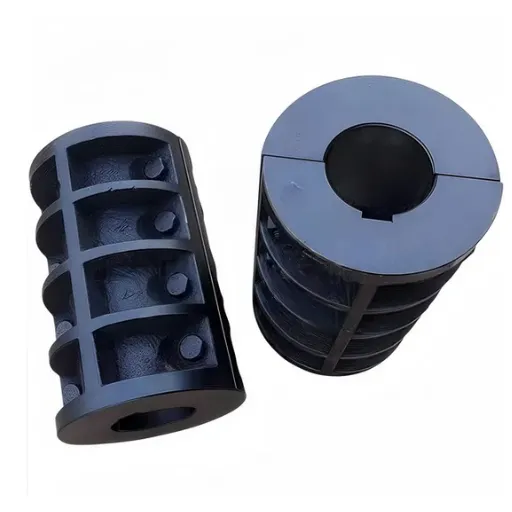
The phrase "high torque" is a capacity class, not a marketing adjective. In coupling terms, the classes break down roughly like this.
General-purpose elastomer couplings, including jaw, tyre, and pin types, cover light and medium duty up to roughly 10,000 N·m. Above that level, the elastomer elements become impractically large. Diaphragm and disc couplings reach higher, but their strength lies in precision and speed, not in bulk torque.
Drum gear couplings start where the elastomers top out. Standard series span from a few hundred N·m to more than 1,000,000 N·m, and the largest frames exceed 4,000,000 N·m. That range is why the high torque gear coupling dominates main drives in steel, mining, cement, and power generation.
Two published numbers define the class. Rated torque is the continuous torque the coupling transmits indefinitely. Peak torque is the short-duration spike the coupling survives during starts, stalls, and shock events. A high torque gear coupling must be checked against both.
One more concept matters: torque density. A gear coupling transmits more torque per unit of outside diameter than any other flexible coupling type, which is why it fits between a motor and gearbox where a tyre or jaw coupling of equal capacity would never clear the guards.
What Makes a High Torque Gear Coupling Capable
Torque capacity is manufactured, not declared. Five features decide whether a gear coupling genuinely belongs in the high torque class.
Forged alloy steel. Hubs and sleeves machined from 42CrMo or equivalent forged steel provide the core strength that cast materials cannot match. Forging aligns the grain structure with the load path.
Hardened teeth. Induction hardening or carburizing gives the tooth flanks the surface hardness to resist pitting and wear under high contact stress. The core stays tough to absorb shock.
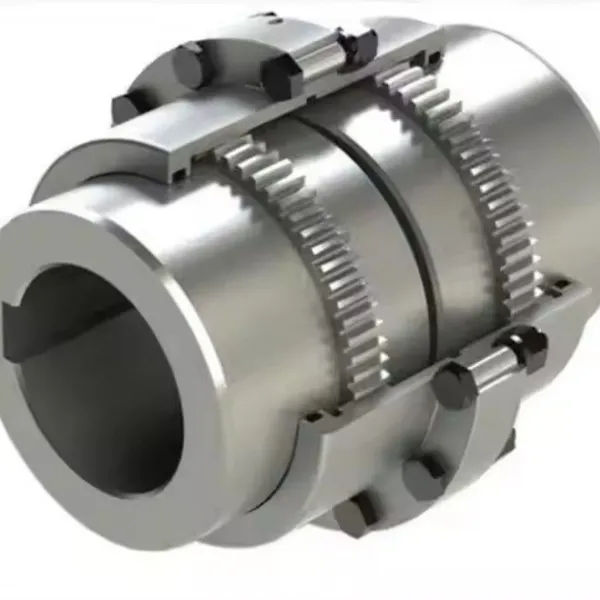
Crowned tooth profile. The drum-shaped external teeth keep contact distributed across the tooth face even when the shafts misalign. Straight teeth would concentrate the load at the edges and strip early.
Generous tooth geometry. Larger module teeth with proper backlash carry more load per mesh. This is a design choice made at the series level, not something a buyer can upgrade later.
Precision fits. At high torque, the bore and keyway become the limiting factor before the teeth do. High torque positions often call for interference or shrink fits instead of loose keyed fits that fret under cyclic load.
Hebei Suju machines every drum gear coupling to this sequence: forging, rough machining, heat treatment, finish machining, and documented inspection of dimensions, hardness, and surface finish.
Documentation matters at this level of capacity. A high torque gear coupling should ship with hardness test results traceable to the heat treatment batch, plus balancing reports where the drive speed requires them. Those certificates are the buyer's proof that the rated torque on the drawing exists in the steel.
How to Size a High Torque Gear Coupling
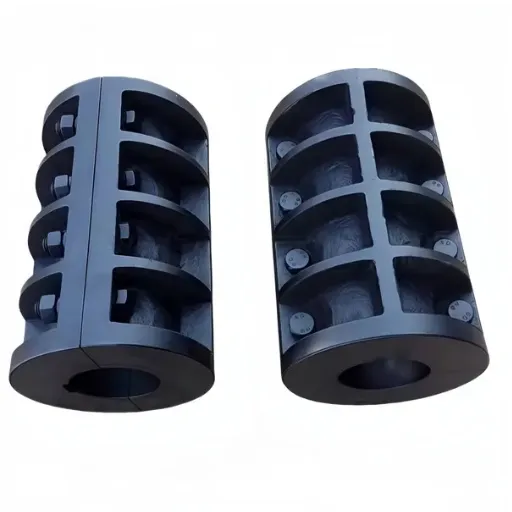
Sizing a high torque gear coupling takes five checks, in the order that prevents the most failures.
1. Calculate Nominal Torque with the 9550 Formula
Nominal torque comes from motor power and speed: T = 9550 x P / n, where T is torque in N·m, P is power in kW, and n is speed in RPM.
A 900 kW motor running at 990 RPM produces approximately 8,680 N·m. That number is only the baseline; the next two checks adjust it to what the coupling actually sees.
2. Apply the Service Factor
The service factor converts nominal torque into design torque by accounting for the severity of the driven machine.
| Application | Duty Character | Suggested Service Factor |
|---|---|---|
| Ball mills, crushers, rolling mills | Severe shock | 2.5-3.0 |
| Kilns, hoists, heavy conveyors | Moderate shock, frequent starts | 2.0-2.5 |
| Reciprocating compressors | Cyclic torque | 2.0-2.5 |
| Centrifugal pumps and fans | Uniform | 1.5-1.75 |
| Test stands, dynamometers | Smooth, controlled | 1.25-1.5 |
Multiply nominal torque by the service factor, then select a frame whose rated torque meets or exceeds the result. Application factors from the American Gear Manufacturers Association and manufacturer catalogs provide the reference values.
3. Check Peak Torque, Including Starting Conditions
Peak torque arrives during starts, stalls, jam clearing, and shock events. Direct-on-line motors can deliver two to three times rated torque at startup, and a frozen or jammed driven machine multiplies it further, as Mehmet's raw mill demonstrated.
Verify that the coupling's allowable peak torque covers the highest credible spike. This is the check most failed couplings never had.
4. Verify Speed and Balance
High torque and high speed rarely coincide, but test stands, turbomachinery drives, and some finishing drives combine them. For couplings above roughly 3,000 RPM, specify dynamic balancing to the appropriate ISO grade. A large coupling running unbalanced at speed loads the bearings it was meant to protect.
5. Confirm Bores, Keyways, and Fits
At high torque, confirm both shaft diameters and keyway dimensions against the hub bore range, then check the fit class. Cyclic and reversing loads fret loose fits, so specify interference fits where the duty demands them.
High Torque Gear Coupling vs Other Coupling Types
The high torque gear coupling is not the only option above 10,000 N·m, but it wins most comparisons on the combination of capacity, size, and misalignment tolerance.
| Coupling Type | Torque Class | Misalignment Tolerance | Lubrication | Best For |
|---|---|---|---|---|
| Drum gear | Very high, to 4,000,000+ N·m | Angular, radial, axial | Grease or oil | Heavy main drives |
| Tyre | Medium | High | None | Shock absorption, moderate torque |
| Jaw/spider | Low to medium | Low | None | Motor-pump sets, general machinery |
| Diaphragm | Medium to high | Low to medium | None | High speed, precision, API drives |
| Cardan shaft | Very high | High angle | Grease | Spindles, long spans, large angles |
Choose the gear coupling when torque and compactness dominate. Choose a cardan shaft when the drive must cross large or changing angles, as on rolling mill spindles.
Diego, a maintenance planner at a Chilean copper mine, lived this comparison on a 1,200 kW overland conveyor. The tyre coupling at the head drive needed new elements every four to six months because dust and constant starting shredded the rubber. The mine replaced it with a drum gear coupling inside a sealed housing, and the drive has now run three years without an unplanned stop.
One honest boundary: at very high speed with moderate torque, such as turbine and centrifugal compressor drives built to API specifications, diaphragm couplings often win because they need no lubrication and run backlash-free. The high torque gear coupling owns the other end of the map, where torque per unit of diameter decides the drive layout.
Applications That Demand High Torque Gear Couplings
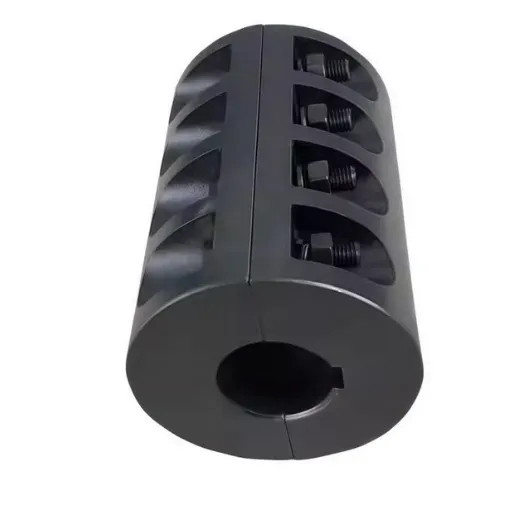
The high torque gear coupling appears wherever a drive line moves serious power through hostile conditions.
Rolling mills. Main motor-to-gearbox drives transmit hundreds of thousands of N·m through bite shock and reversing duty.
Ball mills and crushers. Starting torque with a loaded chamber decides the coupling size, not running torque.
Cement kilns. Continuous duty under heat and dust, with misalignment from shell movement.
Mine hoists and winches. Reversing torque with full safety implications.
Heavy conveyors. Long starting sequences under full load, as Diego's case showed.
Test stands and large pumps. High torque combined with speed, where balance grade joins the specification.
Power generation belongs on this list as well. Induced-draft fans, coal mills, and crusher drives in thermal plants run continuously at high load, and their couplings follow the same service factor logic as the mill drives above.
For mining and cement applications, the GIICL series covers most main and auxiliary drives; the GIICL drum gear coupling specifications guide lists the full rating tables. NGCL adds a brake wheel for hoists, and WGT adds a spacer sleeve for drives that cannot be moved apart for maintenance.
Common Mistakes When Specifying a High Torque Gear Coupling
Most high torque coupling failures trace back to a short list of specification errors.
Sizing on nameplate torque. The nameplate ignores starting conditions, service factors, and the driven machine entirely.
Ignoring peak torque. Continuous ratings do not protect against stall and shock spikes.
Assuming the teeth are the weak point. At high torque, bores, keyways, and bolts often fail first.
Running at the misalignment limit. A coupling compensating at its maximum offset wears teeth rapidly; capacity ratings assume alignment within limits.
Skipping lubrication discipline. High contact stress without the specified grease or oil regime turns a ten-year coupling into a one-year coupling.
Replacing like-for-like after a failure. If the original failed on torque, the identical replacement will fail the same way.
Every one of these mistakes is a sizing or specification decision, which means every one is preventable at the quotation stage.
When You Need a Custom High Torque Gear Coupling
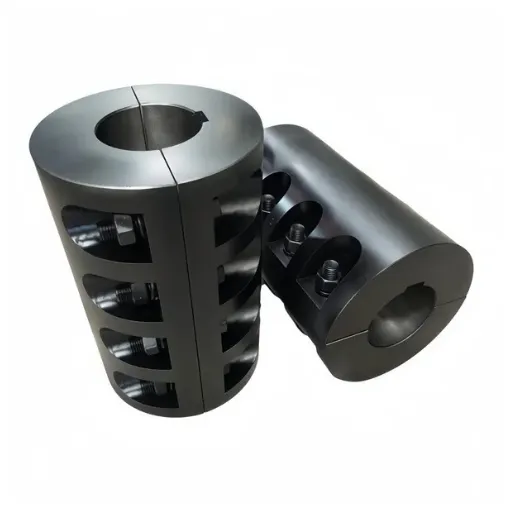
Catalog frames cover most drives, but high torque positions generate custom requirements more often than any other class: non-standard bores for large shafts, shrink-fit hubs, legacy frames from discontinued suppliers, and special materials for corrosive or high-temperature service.
Yerlan, a maintenance superintendent at a Kazakh copper concentrator, faced this when the ball mill's original drive coupling failed and the Soviet-era manufacturer no longer existed. He shipped the worn sample to Hebei Suju, where engineers reverse-engineered the dimensions, upsized the frame by one size to cover the frozen-charge starting condition, and delivered the replacement inside the planned outage window.
At Hebei Suju, drawing-based customization handles exactly these cases. Send the original drawing or a worn sample, and our engineers verify dimensions, recommend materials and heat treatment, and quote single pieces or small batches. Every quotation states a clear lead time so your outage plan holds.
Conclusion
A high torque gear coupling succeeds on three numbers: the rated torque that covers design torque after the service factor, the peak torque that covers the worst credible spike, and the bore fit that survives the duty cycle. The key points:
Calculate nominal torque with the 9550 formula, then apply the service factor for the driven machine.
Check peak torque against starting and stall conditions, not just running conditions.
Trust the design features that create capacity: forged steel, hardened crowned teeth, and precision fits.
Keep lubrication discipline, because no torque rating survives a dry mesh.
Whether you are replacing a failed coupling or specifying a new high torque drive, Hebei Suju can verify every rating before production. Request a quotation with your drive data, or send us your drawing for a free engineering review of a custom high torque gear coupling.
Recently Posted
-
Jaw Coupling Spider Replacement: A Step-by-Step Maintenance Guide
July 28, 2026A maintenance technician at a packaging plant in Brazil noticed vibration on a motor-pump set during his morning rounds. The motor Read More
 -
Flexible Coupling for Motor Pump Sets: A Selection Guide
July 28, 2026A maintenance manager at a water treatment plant in Southeast Asia called us after replacing motor pump couplings three times in 1 Read More
 -
Flexible Shaft Coupling: Selection Guide for Industrial Drives
July 28, 2026When two rotating shafts are connected directly, even a small amount of misalignment can generate vibration, bearing load, and pre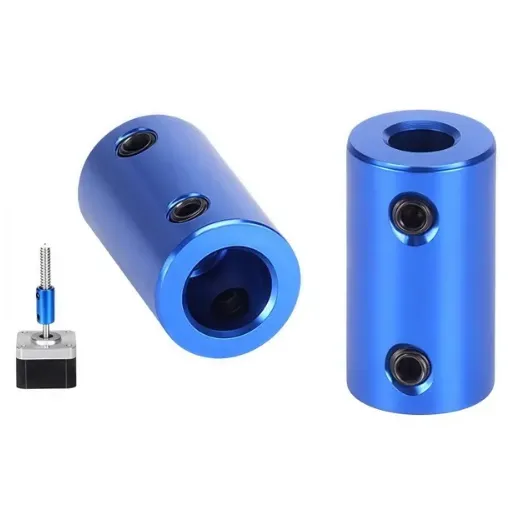 Read More
 -
Elastic Coupling: Vibration Control for Industrial Drives
July 28, 2026When a motor-pump set starts vibrating above acceptable limits, the first checks usually fall on bearing wear, impeller balance, o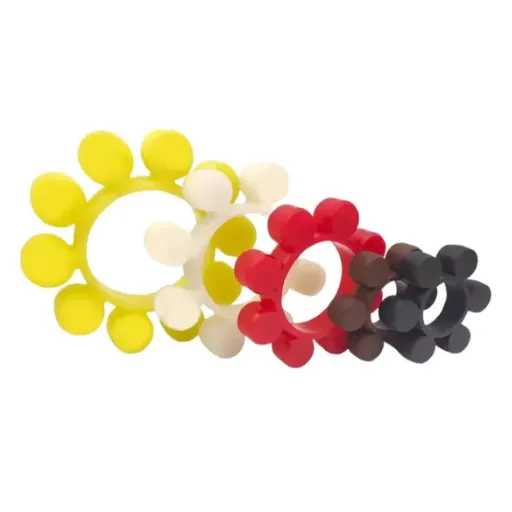 Read More

Contact Us
Recommended Products
-
 OEM Customizable Cardan Shaft Coupling Flexible Rigid Steel for Air Compressor Propeller Universal Construction Printing ShopsNegotiableMOQ: 2 Pieces
 -
Kc Coulpling Roller Chain Coupling Set With Chain and Sprocket for General MachineryNegotiableMOQ: 1 Piece
-
High Transmission Efficiency Drum Gear Coupling Easy Installation Gear Coupler For Heavy MachineryNegotiableMOQ: 10 Pieces
-
High-Torque Roller Chain Coupling Durable Steel Aluminium Construction Customizable Precision Engineering OEM Shaft CouplingsNegotiableMOQ: 2 Pieces
-
Customizable Rigid Iron Steel Aluminium Rubber Tyre Coupling OEM Support for Pumps Industrial Equipment Construction IndustriesNegotiableMOQ: 10 Pieces
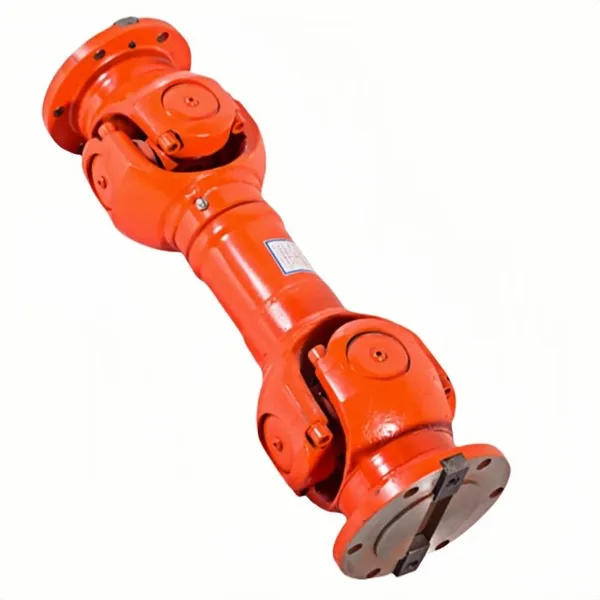
-
Jsb Flexible Grid Coupling With Metallic Elastic Element Factory Direct Spider Snake Spring CouplingNegotiableMOQ: 10 Pieces
-
High Torque JQ/JQW Type Clamp Coupling for Motor & Gearbox 45 Steel Jacketed Iron Disc Structure Flexible Rigid OEM SupportedNegotiableMOQ: 2 Pieces
-
SWC Series Flange Universal Joint Coupling Hardened Cross Shaft Heavy Duty TransmissionNegotiableMOQ: 1 Piece
-
Heavy Duty Universal Coupling High Quality Universal Shaft for Machinery and EquipmentNegotiableMOQ: 1 Piece
-
OEM Customized Precision Cast Iron Zinc Aluminum Die Castings New Hydraulic Parts Fittings 1 Year WarrantyNegotiableMOQ: 100 Pieces
-
Yl Series Rigid Flange Coupling Power Transmission PartsNegotiableMOQ: 2 Pieces
-
Flange Coupling for Water Pump and Compressor Applications With Rubber Gasket SealNegotiableMOQ: 2 Pieces
-
Heavy-Duty Telescopic Welding Cardan Shaft for Universal UseNegotiableMOQ: 1 Piece
-
Flexible Universal Shaft Flange Coupling for Marine and Industrial Drive SystemsNegotiableMOQ: 10 Pieces
-
Durable Expansion Sleeve, Locking Assembly & Taper Lock Bushing for Robotic Arm JointsNegotiableMOQ: 1 Piece
-
High Quality Yl Type Rigid Flange Coupling Mechanical Transmission CouplingNegotiableMOQ: 2 Pieces
-
Stainless Steel Flexible Universal Joint Coupling for Motor Flange Gear Pump and Spline ShaftNegotiableMOQ: 1 Piece
-
Compact Drum Gear Coupling for Heavy Industrial Transmission High Torque CapacityNegotiableMOQ: 10 Pieces
-
Standard or Customized Jaw Beam (Helical) Flexible Coupling for General MachineryNegotiableMOQ: 10 Pieces
-
TL Series Elastic Pin Coupling Easy Replace Rubber Bush Coupling With Shaft Misalignment CompensationNegotiableMOQ: 10 Pieces