
 Business License
Pin Coupling: A Practical Guide for Industrial Drives
A maintenance engineer in India spent three months replacing a worn gear coupling on a limestone crusher every six weeks. The teeth were pitting, the lubricant was leaking, and the downtime was costing the plant roughly $8,000 per stop.
The engineer switched to a flexible pin coupling with rubber bushes. The new assembly ran for eighteen months with only bush inspections. It cost less than the previous three gear coupling rebuilds.
If you're looking for a simple, shock-absorbing shaft connector that's easy to maintain, a pin coupling may be a better fit than you think. This guide explains what a pin coupling is, how it works, where it performs best, and how to select and maintain one. By the end, you'll know whether this design belongs in your drive and what to specify when ordering.
At Hebei Suju, we manufacture flexible couplings for crushers, pumps, compressors, conveyors, and custom machinery worldwide. The selection principles below are the same ones our engineers use when reviewing customer applications.
What Is It?
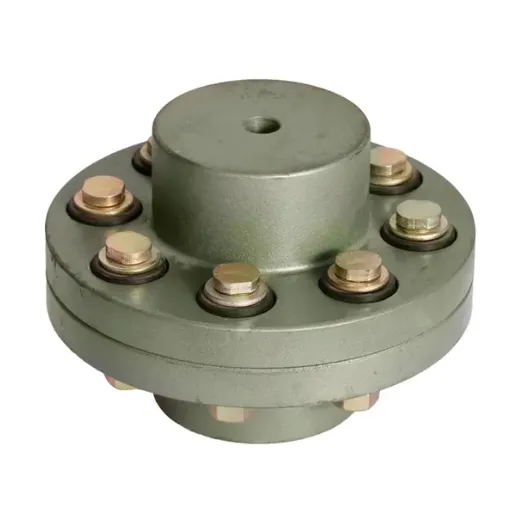
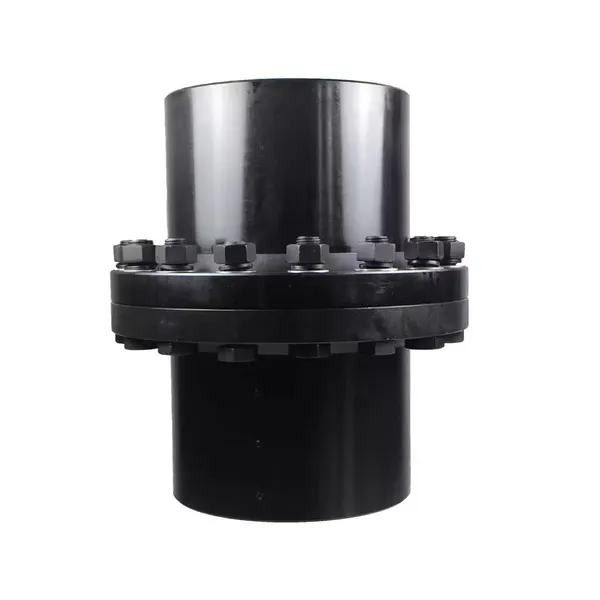
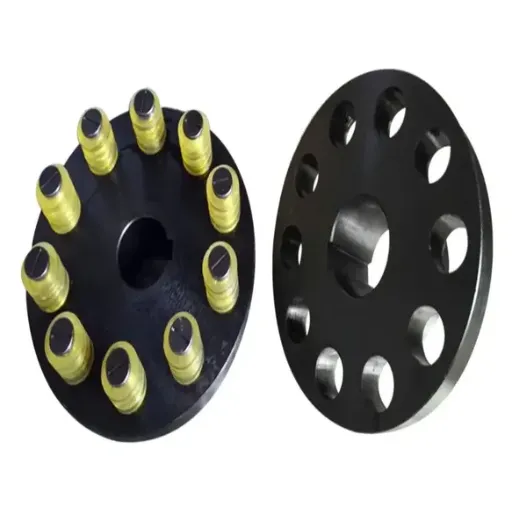
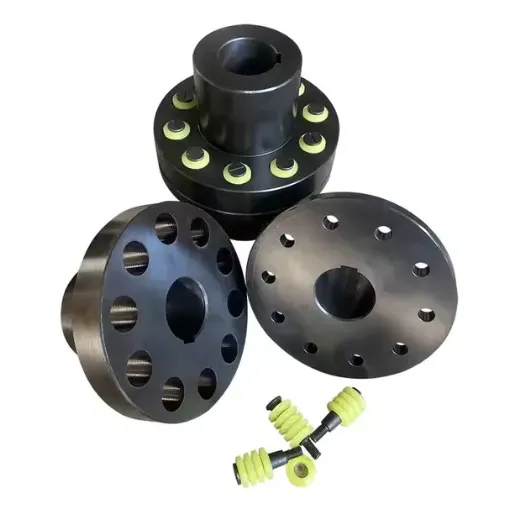
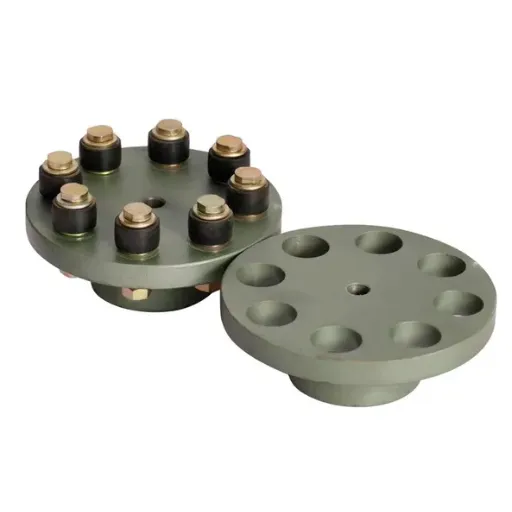
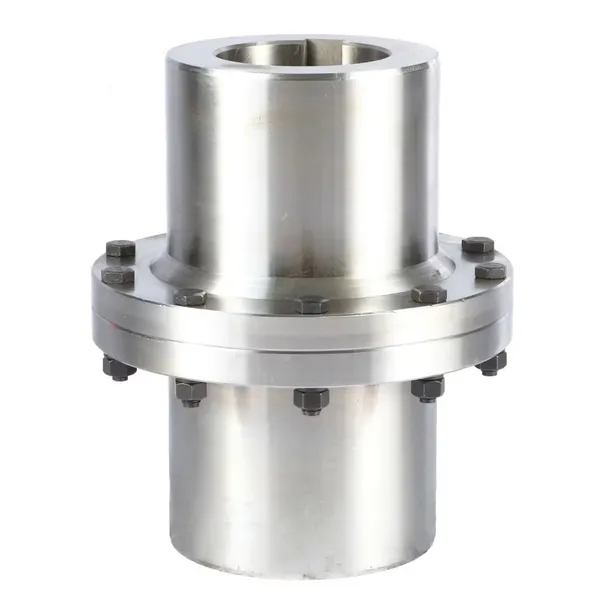
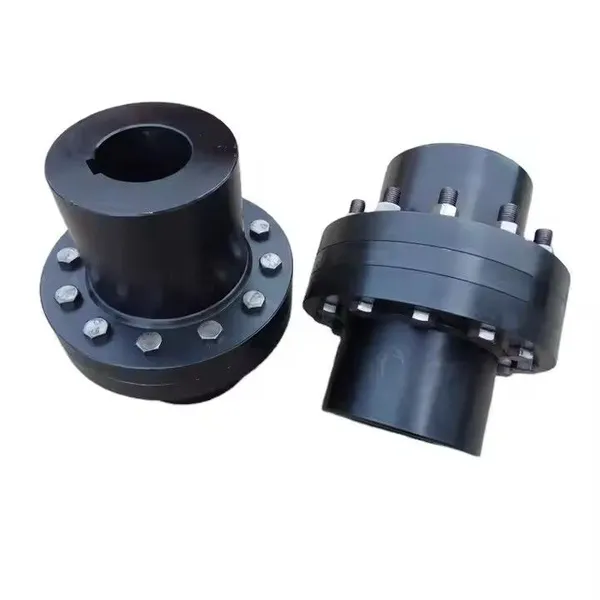
A pin coupling is a flexible shaft connector that transmits torque through a set of pins fitted with rubber or synthetic bushes. Two flanged hubs face each other. One hub carries pins; the other hub has holes that receive the bushed pins.
Torque transfers from the driving hub through the bushes to the driven hub. The elastic bushes absorb shock, dampen vibration, and accommodate small amounts of angular, radial, and axial misalignment.
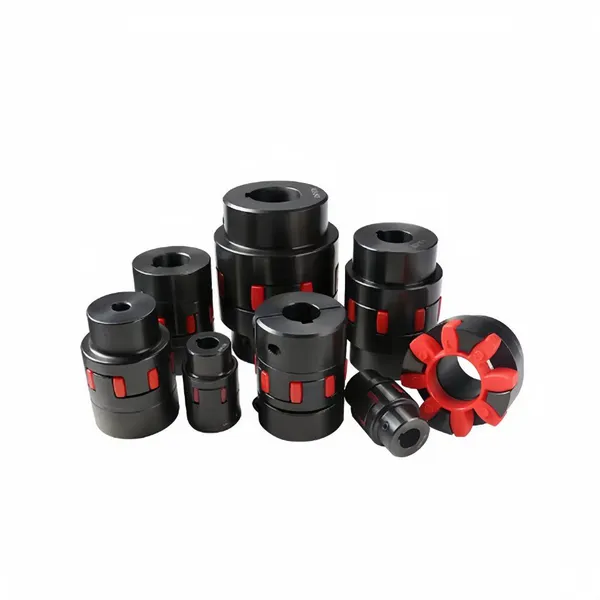
This design is also called a pin and bush coupling. It sits in the same family as jaw and tyre couplings: elastomer-based flexible couplings that protect motors, gearboxes, and driven equipment from torsional shock.
These couplings are popular because they're mechanically simple. There aren't any meshing gear teeth to lubricate, no complex diaphragms to balance, and no wearing metal-to-metal contact under normal load. When the bushes wear, you usually replace only the bushes instead of the whole coupling.
How Does It Work?
The working principle is straightforward. Rotation enters the driving hub. The pins, which are fixed to one flange, press against the rubber bushes seated in the opposite flange. The bushes deform slightly in compression and shear, transmitting torque while cushioning the connection.
This elasticity gives the coupling three useful characteristics.
First, it absorbs shock loads. When a conveyor starts under load or a crusher bites into a large rock, the sudden torque spike is softened by the bushes before it reaches the motor or gearbox.
Second, it dampens torsional vibration. Reciprocating compressors, piston pumps, and crushers create cyclic torque variations. The rubber bushes reduce the amplitude of those vibrations before they travel through the drive train.
Third, it allows limited misalignment. Angular, radial, and axial movement between shafts is accommodated by deformation of the bushes. The exact allowable values depend on the coupling size and bush hardness.
Pro Tip: A flexible pin coupling performs best when the bushes are in good condition. Hardened, cracked, or compressed bushes transfer more shock and vibration to the connected machines.
Pin Coupling Types and Design Variations
Not every design is the same. Hub design, bush material, and pin arrangement vary to match different torque, speed, and environmental conditions.
Standard Pin and Bush Coupling
The most common design has two flanged hubs, a set of pins, and replaceable rubber bushes. It's used in general industrial drives where torque is moderate and shock is present. Standard designs are economical and widely available in cast iron or steel.
Brake Drum Design
Some designs combine this coupling with a brake drum. The drum provides a braking surface for mechanical or electromagnetic brakes. These are common in cranes, hoists, and lifting equipment where controlled stopping matters.
Taper-Bored Hubs
Taper-bored hubs make mounting and removal easier on large shafts. They're useful in maintenance-sensitive applications where shaft removal is difficult or expensive.
Split Bush Designs
Split bushes allow replacement without removing the pins from the hub. This saves time in cramped installations or on equipment where removing the coupling halves is impractical.
Custom Hub and Pin Arrangements
When a standard catalogue coupling doesn't match the shaft spacing, bore size, or torque requirement, a custom design may be needed. At Hebei Suju, we review customer drawings and produce custom couplings from drawing or sample when standard sizes aren't suitable.
Common Bush Materials
| Bush Material | Temperature Range | Oil Resistance | Best Applications |
|---|---|---|---|
| Natural Rubber | -30°C to 70°C | Low | General drives, fans, pumps |
| Nitrile (NBR) | -25°C to 100°C | Good | Oily environments, compressors, gearboxes |
| Neoprene | -30°C to 90°C | Moderate | Outdoor equipment, dust, moisture |
| EPDM | -40°C to 120°C | Low | High temperature, UV exposure |
| Polyurethane | -30°C to 80°C | Good | Abrasion resistance, high load |
Selection Criteria
Selection starts with understanding the load, not just the shaft size. Here are the key factors to consider.
1. Rated Torque and Peak Torque
Start with the normal running torque of the drive. Then multiply by a service factor that accounts for shock, starts and stops, and reverse operation. A smoothly running pump might use a service factor of 1.25. A rock crusher or reciprocating compressor could need 2.0 or higher.
The coupling's rated torque must exceed the adjusted torque. If peak torque from startup or shock is known, check that against the coupling's maximum torque rating as well.
2. Operating Speed
These units are suitable for a wide range of speeds, but very high speeds require attention to balance. An unbalanced coupling at high RPM causes vibration and bearing load. For speeds above 3,000 RPM, consult the manufacturer and consider whether a diaphragm or gear coupling might be more suitable.
3. Shaft Misalignment
Measure or estimate the angular, radial, and axial misalignment between the shafts. These couplings tolerate more misalignment than some other coupling types, but every size has a limit. Operating beyond the rated misalignment shortens bush life and increases vibration.
4. Environmental Conditions
Temperature, oil, ozone, and sunlight affect rubber compounds. Standard natural rubber bushes work well in many industrial environments, but nitrile or neoprene compounds may be needed for oil exposure, high temperatures, or outdoor installations.
5. Service Factor and Duty Cycle
Applications with frequent starts, stops, and reversals need a higher service factor. The same is true for drives with high inertia or shock loads. Be honest about the duty cycle when sizing the coupling. An undersized coupling won't last.
6. Installation Space and Maintenance Access
Check the outside diameter, overall length, and the space needed for bush replacement. If maintenance access is limited, a split-bush design can save hours during service.
Need help sizing a coupling? Send us your motor power, speed, misalignment, and application details, and we'll recommend a suitable coupling. Request a quotation for standard or custom sizes.
Applications
This design is used wherever shock absorption and misalignment tolerance matter more than zero backlash or ultra-high speed. Common applications include crushers, conveyors, pumps, compressors, fans, and cranes.
Crushers and Mills
Jaw crushers, cone crushers, hammer mills, and ball mills create severe shock loads. The coupling absorbs the impact and protects the motor and gearbox. The high torque capacity of large units makes them suitable for these heavy-duty drives.
Conveyors
Belt conveyors, chain conveyors, and bucket elevators often start under load and experience variable feed rates. The coupling cushions the starts and allows for the small misalignments that develop as the structure settles or expands.
Pumps and Compressors
Centrifugal pumps, piston compressors, and vacuum pumps benefit from the vibration damping the coupling provides. As a flexible coupling, it helps protect bearings and seals in the driven machine.
Fans and Blowers
Large fans with high inertia can create starting torque spikes. The coupling softens the start and reduces the shock transmitted back to the motor.
Mining and Cement Equipment
In mining and cement plants, these couplings are found on screens, feeders, crushers, and mills. The combination of shock absorption, misalignment tolerance, and easy maintenance makes them a practical choice in harsh environments.
Cranes and Hoists
Brake drum designs are common in crane and hoist drives because they combine torque transmission with a braking surface. This simplifies the drive layout and reduces the number of separate components.
Pin Coupling Installation Best Practices
A coupling will only perform well if it's installed and maintained correctly. Follow these guidelines.
Align Shafts Within Rated Limits
These couplings forgive misalignment, but they don't eliminate it. Align the shafts as accurately as practical during installation. Check angular, radial, and axial alignment with dial indicators or laser alignment tools.
Check Bolt Torque
Flange bolts must be tightened evenly and to the manufacturer's specification. Uneven torque can distort the hub and cause imbalance. Re-check bolt torque after the first few hours of operation.
Inspect Bushes Regularly
Look for cracks, hardening, chunking, or compression set. These are signs that the bushes are aging or overloaded. Replace them before they fail completely. For critical drives, include coupling inspection in the planned maintenance schedule.
Keep Contaminants Away
Oil, chemicals, and excessive heat accelerate rubber degradation. Install guards if necessary to protect the bushes from direct exposure to contaminants or UV light.
Stock Spare Bushes
For critical equipment, keep spare bushes on site. Replacement is usually fast, but only if the spare part is available. Record the coupling model, bush size, and compound so you order the correct spare.
Pin Coupling Maintenance and Troubleshooting
Regular maintenance extends bush life and prevents unexpected failures. Use this checklist during scheduled inspections.
Visual Inspection
Check the bushes for cracking, tearing, or permanent deformation. Look for signs of oil contamination, heat discoloration, or chemical attack. Inspect the pins for wear, bending, or corrosion.
Vibration and Noise Monitoring
Increased vibration often indicates worn or unevenly loaded bushes. Squealing, knocking, or rattling may mean loose pins, worn bushes, or misalignment.
Bolt Retorquing
Flange bolts can loosen under cyclic loading. Verify torque during scheduled maintenance, especially after the first 50 hours of operation on a new installation.
Common Problems and Causes
| Problem | Likely Cause | Solution |
|---|---|---|
| Excessive vibration | Worn bushes or misalignment | Replace bushes, realign shafts |
| Bush cracking | Overload, high temperature, or chemical attack | Check service factor and environment |
| Loose pins | Insufficient torque or cyclic loading | Retorque or replace pins |
| Heat buildup | Overload or poor alignment | Reduce load or improve alignment |
| Uneven bush wear | Misalignment beyond rating | Realign or select a larger coupling |
A quarry in Brazil learned the value of correct bush material the hard way. The team installed standard rubber bushes in a conveyor drive exposed to fine limestone dust and occasional oil spray. The bushes hardened and cracked within four months. After switching to nitrile rubber bushes and adding a simple guard, the same coupling ran for two years with only minor wear.
Comparison with Gear Couplings
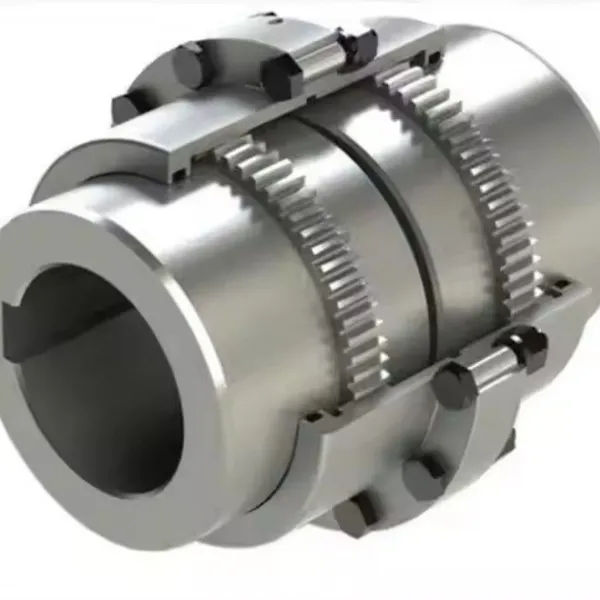
How does this design compare to a gear coupling for heavy machinery? The answer depends on what matters most in your application.
| Feature | Pin and Bush Coupling | Gear Coupling |
|---|---|---|
| Torque capacity | Medium to high | Very high |
| Shock absorption | Excellent | Moderate |
| Misalignment tolerance | Medium to high | Medium |
| Speed capability | Moderate | High |
| Maintenance | Replace bushes | Lubrication and inspection |
| Backlash | Some | Small |
| Cost | Moderate | Higher |
| Best applications | Crushers, conveyors, pumps, fans | Steel mills, mining, cement kilns |
This design is usually the better choice when shock absorption and easy maintenance are priorities. A gear coupling becomes the better choice when torque is very high, speed is high, or precise backlash control is required.
When to Choose This Coupling
You should consider this design when your application has one or more of these characteristics:
Significant shock loads or torque spikes
Moderate to large shaft misalignment
Need for vibration damping
Reciprocating or pulsating loads
Limited maintenance access, making bush replacement preferable to coupling replacement
Moderate speed, not high-speed precision transmission
If your drive is high-speed, requires zero backlash, or operates continuously at the coupling's torque limit, another coupling type may be a better fit.
Materials and Manufacturing Quality
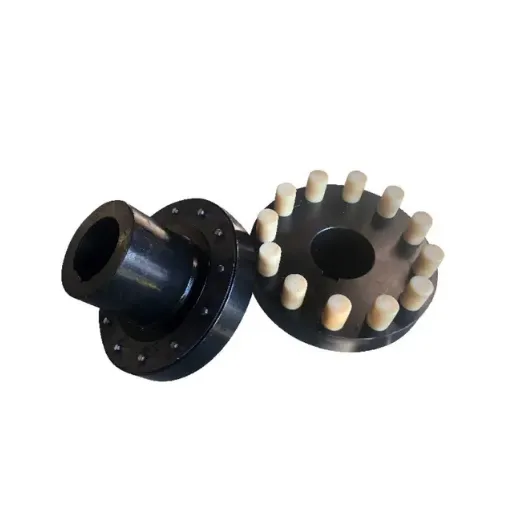
The quality of this design depends on the hub material, pin fit, and bush formulation. Cast iron hubs are common for general industrial use because they're cost-effective and provide good damping. Steel hubs are used when higher strength is needed.
Pin quality is equally important. Loose or undersized pins create backlash and uneven loading. Properly fitted pins should sit securely in the hub bores without movement under normal torque.
Bush formulation matters more than many buyers realize. A poorly formulated bush will harden, crack, or soften prematurely. Reputable manufacturers test bushes for hardness, tensile strength, and temperature resistance against ISO mechanical vibration standards. AGMA guidelines also cover coupling ratings and inspection practices for industrial drives. When sourcing couplings, ask about bush material specifications and expected service life under your operating conditions.
At Hebei Suju, we machine hubs from quality materials and supply bushes matched to common industrial environments. For special conditions, we can recommend or source custom bush materials.
Conclusion
A pin coupling offers a practical balance of shock absorption, misalignment tolerance, and ease of maintenance. It's not the right choice for every drive, but it excels in crushers, conveyors, pumps, compressors, and other machines where shock and vibration are part of normal operation.
Key takeaways:
This design uses elastic bushes on pins to transmit torque between two flanged hubs.
It absorbs shock, dampens vibration, and accommodates angular, radial, and axial misalignment.
Selection must consider torque, speed, misalignment, environment, and service factor.
Regular inspection and correct bush compound selection extend service life.
For high shock and moderate torque, it often outperforms gear coupling alternatives.
If you're selecting a coupling for a new design or replacing a worn coupling on existing equipment, request a quotation from Hebei Suju. Our engineering team can recommend the right size, material, and design for your application. If you have a non-standard requirement, send us your drawing for a custom review.
Recently Posted
-
Jaw Coupling Spider Replacement: A Step-by-Step Maintenance Guide
July 28, 2026A maintenance technician at a packaging plant in Brazil noticed vibration on a motor-pump set during his morning rounds. The motor Read More
 -
Flexible Coupling for Motor Pump Sets: A Selection Guide
July 28, 2026A maintenance manager at a water treatment plant in Southeast Asia called us after replacing motor pump couplings three times in 1 Read More
 -
Flexible Shaft Coupling: Selection Guide for Industrial Drives
July 28, 2026When two rotating shafts are connected directly, even a small amount of misalignment can generate vibration, bearing load, and pre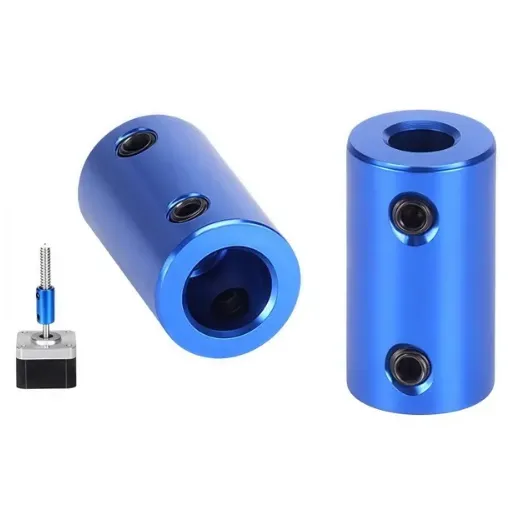 Read More
 -
Elastic Coupling: Vibration Control for Industrial Drives
July 28, 2026When a motor-pump set starts vibrating above acceptable limits, the first checks usually fall on bearing wear, impeller balance, o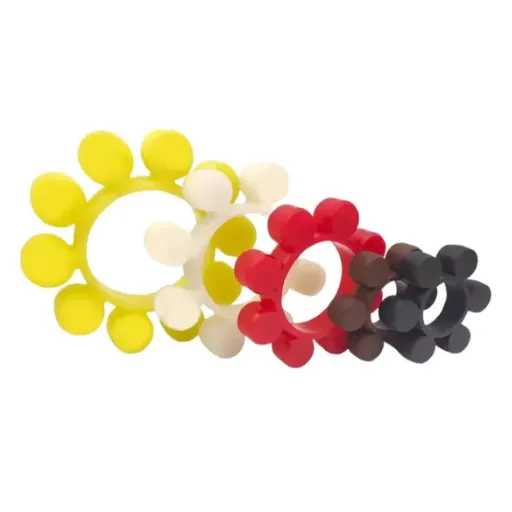 Read More

Contact Us

Recommended Products
-
 OEM Customizable Cardan Shaft Coupling Flexible Rigid Steel for Air Compressor Propeller Universal Construction Printing ShopsNegotiableMOQ: 2 Pieces
 -
Kc Coulpling Roller Chain Coupling Set With Chain and Sprocket for General MachineryNegotiableMOQ: 1 Piece
-
High Transmission Efficiency Drum Gear Coupling Easy Installation Gear Coupler For Heavy MachineryNegotiableMOQ: 10 Pieces
-
High-Torque Roller Chain Coupling Durable Steel Aluminium Construction Customizable Precision Engineering OEM Shaft CouplingsNegotiableMOQ: 2 Pieces
-
Customizable Rigid Iron Steel Aluminium Rubber Tyre Coupling OEM Support for Pumps Industrial Equipment Construction IndustriesNegotiableMOQ: 10 Pieces
-
Jsb Flexible Grid Coupling With Metallic Elastic Element Factory Direct Spider Snake Spring CouplingNegotiableMOQ: 10 Pieces
-
High Torque JQ/JQW Type Clamp Coupling for Motor & Gearbox 45 Steel Jacketed Iron Disc Structure Flexible Rigid OEM SupportedNegotiableMOQ: 2 Pieces
-
SWC Series Flange Universal Joint Coupling Hardened Cross Shaft Heavy Duty TransmissionNegotiableMOQ: 1 Piece
-
Heavy Duty Universal Coupling High Quality Universal Shaft for Machinery and EquipmentNegotiableMOQ: 1 Piece
-
OEM Customized Precision Cast Iron Zinc Aluminum Die Castings New Hydraulic Parts Fittings 1 Year WarrantyNegotiableMOQ: 100 Pieces
-
Yl Series Rigid Flange Coupling Power Transmission PartsNegotiableMOQ: 2 Pieces
-
Flange Coupling for Water Pump and Compressor Applications With Rubber Gasket SealNegotiableMOQ: 2 Pieces
-
Heavy-Duty Telescopic Welding Cardan Shaft for Universal UseNegotiableMOQ: 1 Piece
-
Flexible Universal Shaft Flange Coupling for Marine and Industrial Drive SystemsNegotiableMOQ: 10 Pieces
-
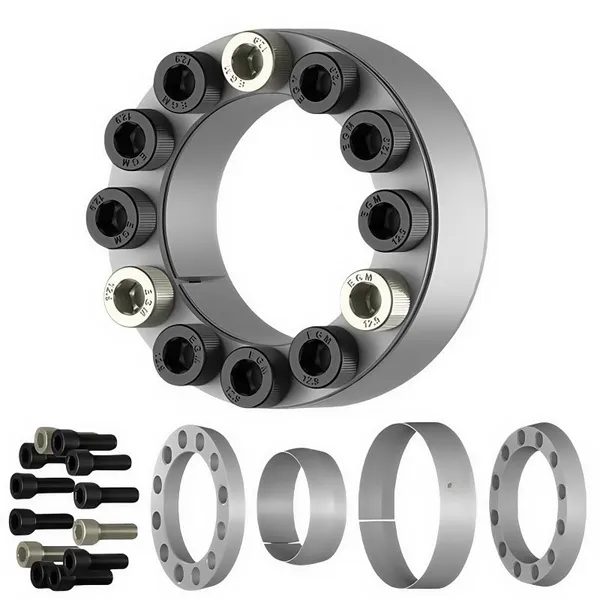
Durable Expansion Sleeve, Locking Assembly & Taper Lock Bushing for Robotic Arm JointsNegotiableMOQ: 1 Piece
-
High Quality Yl Type Rigid Flange Coupling Mechanical Transmission CouplingNegotiableMOQ: 2 Pieces
-
Stainless Steel Flexible Universal Joint Coupling for Motor Flange Gear Pump and Spline ShaftNegotiableMOQ: 1 Piece
-
Compact Drum Gear Coupling for Heavy Industrial Transmission High Torque CapacityNegotiableMOQ: 10 Pieces
-
Standard or Customized Jaw Beam (Helical) Flexible Coupling for General MachineryNegotiableMOQ: 10 Pieces
-
TL Series Elastic Pin Coupling Easy Replace Rubber Bush Coupling With Shaft Misalignment CompensationNegotiableMOQ: 10 Pieces