
 Business License
Gear Coupling Manufacturers: How to Choose the Right Supplier
When a 400-ton overhead crane at a Turkish steel plant lost its main hoist coupling in March 2026, the maintenance director, Emre, had two quotes on his desk within 48 hours. One came from a trading company offering a price 30% below market. The other came from a gear coupling manufacturer that asked for his shaft drawings, duty cycle, and lubrication conditions before quoting.
Emre chose the cheaper option. The replacement failed in five months, and the second unplanned shutdown cost his plant more than the entire original coupling budget.
Stories like this repeat across heavy industry every year. Choosing between gear coupling manufacturers is not a price comparison exercise. It is a decision about who controls the material, the heat treatment, the machining accuracy, and the final inspection of a component your entire drive line depends on.
This guide explains how to evaluate gear coupling manufacturers before you commit. You will learn the seven criteria that separate real manufacturers from resellers, the questions that expose weak suppliers, and the red flags that predict premature coupling failure. Whether you are an OEM engineer sourcing for new equipment or an MRO manager replacing a worn coupling, this framework will help you select a supplier you can trust for the long term.
Why the Manufacturer Matters More Than the Catalog
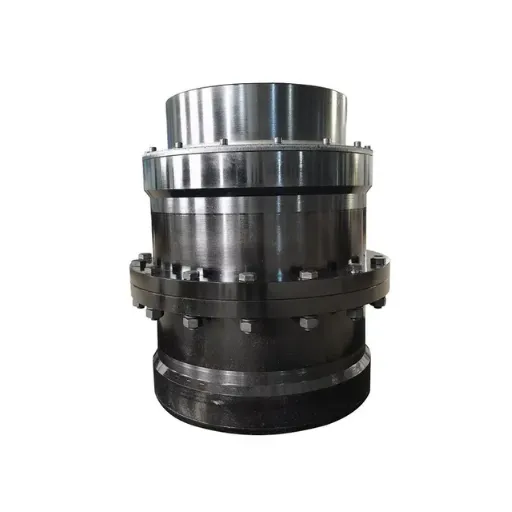
A gear coupling looks simple from the outside: two hubs with external teeth, a sleeve with internal teeth, bolts, seals, and lubricant. What you cannot see is what determines service life. Tooth surface hardness, case depth after heat treatment, crowning accuracy, bore tolerance, and bolt hole position all decide whether the coupling runs for ten years or ten months.
Two couplings with identical catalog ratings can perform very differently because of how they were made. A hub machined from forged 42CrMo alloy steel and induction hardened to the correct depth behaves nothing like a visually identical hub cut from untested bar stock with no hardness verification. The catalog does not tell you which one you received. The manufacturer's process does.
This is why experienced buyers evaluate gear coupling manufacturers, not just gear couplings. If you are still working out the right coupling size and type for your application, start with our guide on how to select a gear coupling for heavy machinery, then return here to qualify the supplier.
Sourcing a coupling for a live project? Request a quotation with your torque, bore, and speed requirements, and our engineers will respond with a technical proposal.
How to Evaluate Gear Coupling Manufacturers: 7 Criteria
The following criteria come from what actually goes wrong in the field: tooth wear, hub cracking, bolt loosening, and misalignment damage. Each criterion maps to a failure mode you can prevent by asking the right questions up front.
1. Confirm They Are a Real Manufacturer, Not a Reseller
The first question is the most basic: does the company machine the coupling in its own factory? Many gear coupling manufacturers listed on B2B platforms are trading companies. They forward your drawing to an unknown workshop, add a margin, and lose control of material quality and delivery.
Ask for the factory address, equipment list, and production photos or video. A genuine manufacturer can show machining centers, gear shaping or hobbing machines, heat treatment capability, and inspection instruments. Hebei Suju, for example, operates a 3,800+ m² factory with more than 80 sets of processing and testing equipment, which allows direct control from raw material to finished coupling.
Why this matters: when a trader's sub-supplier has a quality problem, you have no visibility and no leverage. When you work directly with the factory, engineering questions get answered by the people standing next to the machine.
2. Verify Material and Heat Treatment Capability
Gear coupling teeth live or die by material quality and heat treatment. Reputable gear coupling manufacturers specify alloy steels such as 42CrMo or equivalent, verify incoming material with mill certificates, and harden teeth by induction hardening or carburizing to a defined case depth.
Ask every candidate supplier three questions:
What steel grade do you use for hubs and sleeves, and can you provide material certificates?
What heat treatment process hardens the teeth, and to what surface hardness?
Do you test hardness on every batch, and can I see a sample inspection report?
Vague answers such as "high quality steel" or "standard hardness" are warning signs. A capable manufacturer answers with numbers: steel grade, hardness range in HRC, and inspection method.
3. Audit the Quality Control System
Quality claims are easy to write and hard to prove. The proof is a documented process that starts before machining and ends after assembly. Strong gear coupling manufacturers run full-process quality control: incoming material inspection, in-process dimensional checks, hardness verification after heat treatment, and final inspection of bores, keyways, tooth profile, and surface finish.
Certifications provide a useful first filter. ISO 9001 certification shows the factory operates a documented quality management system, while ISO 14001 and ISO 45001 indicate environmental and safety discipline. You can review our certifications as an example of what documented compliance looks like.
Beyond certificates, ask what inspection reports ship with the product. Dimensional reports, hardness test results, and material traceability should be available on request. Our full-process quality control page describes how each stage is documented and repeatable.
4. Test Their Customization and Engineering Support
Standard catalog sizes cover most applications, but not all of them. Non-standard bores, special spacer lengths, higher torque ratings, and legacy equipment replacements all require a manufacturer with real engineering depth.
Consider what happened to Petra, a distributor in Poland, in late 2025. Her customer, a cement plant, needed a replacement for a discontinued coupling on a 20-year-old ball mill drive. No catalog part matched the bore sizes and flange pattern.
She sent the worn coupling to three gear coupling manufacturers. Two replied with "not available." The third reverse-engineered the sample, confirmed the torque requirement from the mill's motor data, and delivered a matching drum gear coupling in five weeks. That manufacturer earned her entire account.
Before you need a custom part in a crisis, test the supplier with a drawing. A strong manufacturer reviews manufacturability, suggests material or tolerance improvements, and quotes a clear lead time. Hebei Suju produces custom gear couplings from customer drawings for exactly these situations, from single replacement pieces to OEM volume production. Learn more about our drawing-based customization service.
5. Assess Production Capacity and Lead Time Reliability
A coupling that arrives three weeks late can cost far more than the part itself when a production line sits idle. Evaluate whether the manufacturer's capacity matches your demand pattern: steady OEM volumes, urgent one-off replacements, or both.
Ask about typical lead times for standard and custom orders, current equipment utilization, and how they handle urgent shutdown orders. Manufacturers with integrated machining, heat treatment, and assembly under one roof respond faster because no step waits on an outside subcontractor.
Also ask what happens when something goes wrong. A reliable partner tells you early if a delay is coming and proposes a recovery plan, rather than going silent until the ship date passes.
6. Check Export Experience and Documentation
If you buy across borders, the manufacturer's export record matters as much as its machining. Experienced gear coupling manufacturers prepare export-grade packing, handle sea and air freight coordination, and supply the documentation your customs broker and quality system require.
Confirm they have shipped to your region before. Ask which markets they serve regularly, what incoterms they support, and whether they can provide certificates of origin, material certificates, and inspection reports in English. A manufacturer supplying industrial buyers across Europe, Southeast Asia, the Middle East, Africa, and the Americas has already solved the logistics problems a first-time exporter will stumble on.
7. Evaluate After-Sales Technical Support
The relationship does not end at delivery. Installation questions, lubrication intervals, alignment verification, and wear inspection all benefit from direct access to the people who made the coupling.
Test responsiveness before you order. Send a technical question about your application and measure how quickly and how completely the manufacturer answers. Did an engineer reply, or a salesperson reading from a catalog? Did they ask about your torque, speed, and misalignment, or push a part number immediately?
Gear coupling manufacturers who invest in pre-sales engineering almost always provide better after-sales support, because the same team handles both.
The 7 Criteria at a Glance
| Criterion | What to Ask | Strong Answer Looks Like |
|---|---|---|
| 1. Real factory | "Can I see your equipment list and factory?" | Machine list, production video, audit access |
| 2. Material and heat treatment | "Which steel grade and tooth hardness?" | 42CrMo or equivalent, HRC range, batch test reports |
| 3. Quality control | "Which certifications and inspection reports?" | ISO 9001/14001/45001, dimensional and hardness reports |
| 4. Customization | "Can you machine from my drawing or sample?" | Engineering review, clear quote, sample option |
| 5. Capacity and lead time | "What is your lead time for standard and custom orders?" | Specific weeks, urgent-order process, early delay warnings |
| 6. Export experience | "Which markets do you ship to regularly?" | 30+ countries, export packing, English documentation |
| 7. After-sales support | "Who answers technical questions after delivery?" | Direct engineer access, installation and lubrication guidance |
Questions to Ask Before You Commit
Once you have a shortlist, these questions separate confident manufacturers from careful marketers:
Can you machine the bores and keyways to my shaft drawing, with what tolerances?
What is the rated torque and maximum speed of the series you recommend, and how does it compare to my calculated requirement with service factor?
Which coupling standards does your design reference, such as relevant AGMA or ISO dimensional practices?
Can you supply a sample or first article before volume production?
What inspection documentation ships with the order?
What is your process if the coupling fails in service within the warranty period?
Pay attention to how the answers arrive. Specific, numbered, drawing-referenced answers signal engineering depth. Generic reassurances signal a sales layer between you and the factory.
Red Flags When Comparing Gear Coupling Manufacturers
Some warning signs appear early enough to save you from a bad decision:
Prices far below market: Severely underpriced couplings almost always cut cost in material grade, heat treatment, or inspection. The savings disappear with the first premature failure.
No factory verification: Refusal to share production photos, equipment lists, or factory audit access usually means there is no factory.
No questions about your application: A supplier who quotes without asking about torque, speed, misalignment, or environment is selling a part number, not solving your problem.
Missing documentation: If material certificates and inspection reports are "not available," assume the inspections did not happen.
Slow or vague technical replies: Communication quality before the order is the best predictor of support quality after it.
Why Industrial Buyers Choose Hebei Suju
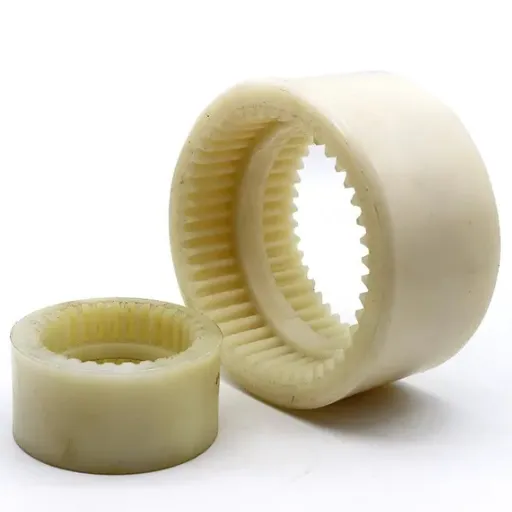
Hebei Suju Transmission Technology Co., Ltd. is a gear coupling manufacturer based in Botou City, in the North China mechanical manufacturing base. Since 2017, we have supplied couplings, gears, chains, bearings, and aluminum castings to industrial buyers in more than 30 countries.
Our GIICL drum gear couplings are machined from forged alloy steel, heat-treated to specified hardness, and inspected for dimensional accuracy before packing. Dynamic balancing is available for high-speed applications. For applications beyond catalog range, our engineers manufacture from your drawing or a worn sample, including non-standard bores, spacer lengths, and materials.
Every order follows our documented quality process under ISO 9001, ISO 14001, and ISO 45001 certified management systems, with inspection reports and material certificates available on request.
Conclusion
Selecting between gear coupling manufacturers comes down to proof, not promises. Remember these takeaways:
Verify the company is a real manufacturer with its own machining and heat treatment.
Demand specifics on material grade, tooth hardness, and inspection scope.
Test customization capability with a drawing before you need it urgently.
Confirm export experience, documentation, and after-sales engineering support.
Treat prices far below market as a risk, not a bargain.
The cheapest quote often carries the most expensive hidden costs, as Emre's plant discovered. A qualified manufacturer costs less over the coupling's service life because the part simply lasts longer.
Ready to evaluate us against these criteria? Request a quotation for standard couplings, or send us your drawing for a free engineering review and custom quotation. Our team responds to standard inquiries within 24 hours, so your project stays on schedule.
Recently Posted
-
Jaw Coupling Spider Replacement: A Step-by-Step Maintenance Guide
July 28, 2026A maintenance technician at a packaging plant in Brazil noticed vibration on a motor-pump set during his morning rounds. The motor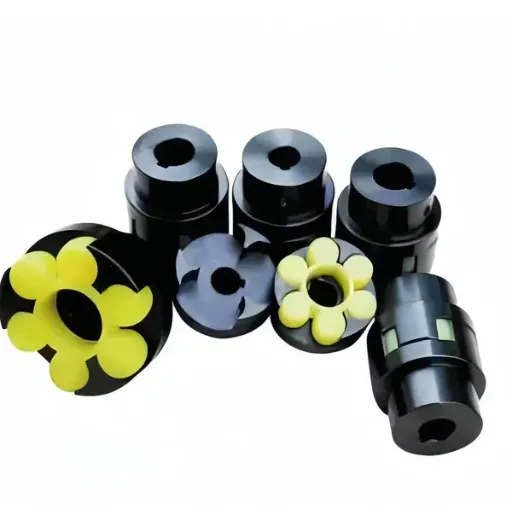 Read More
 -
Flexible Coupling for Motor Pump Sets: A Selection Guide
July 28, 2026A maintenance manager at a water treatment plant in Southeast Asia called us after replacing motor pump couplings three times in 1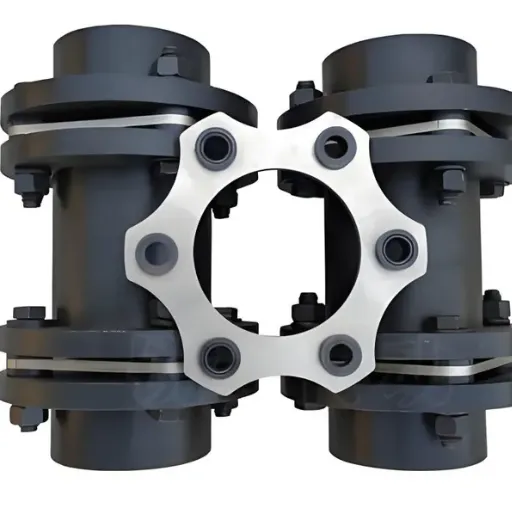 Read More
 -
Flexible Shaft Coupling: Selection Guide for Industrial Drives
July 28, 2026When two rotating shafts are connected directly, even a small amount of misalignment can generate vibration, bearing load, and pre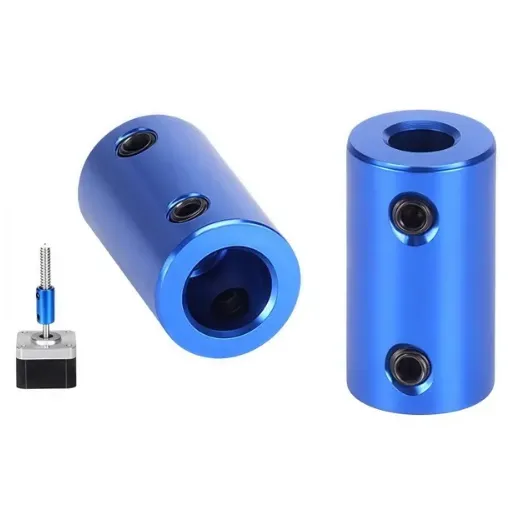 Read More
 -
Elastic Coupling: Vibration Control for Industrial Drives
July 28, 2026When a motor-pump set starts vibrating above acceptable limits, the first checks usually fall on bearing wear, impeller balance, o Read More

Contact Us
Recommended Products
-
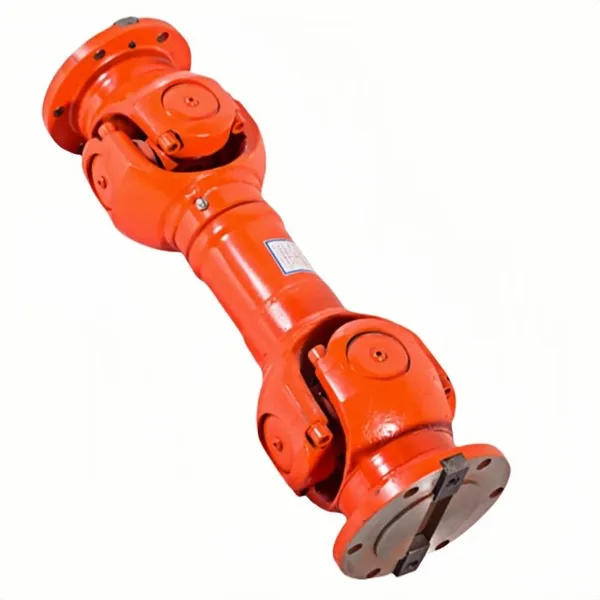
 OEM Customizable Cardan Shaft Coupling Flexible Rigid Steel for Air Compressor Propeller Universal Construction Printing ShopsNegotiableMOQ: 2 Pieces
 -
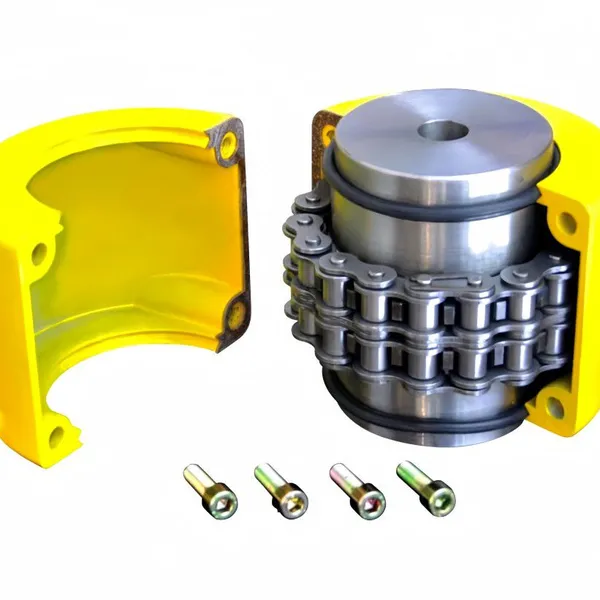
Kc Coulpling Roller Chain Coupling Set With Chain and Sprocket for General MachineryNegotiableMOQ: 1 Piece
-
High Transmission Efficiency Drum Gear Coupling Easy Installation Gear Coupler For Heavy MachineryNegotiableMOQ: 10 Pieces
-
High-Torque Roller Chain Coupling Durable Steel Aluminium Construction Customizable Precision Engineering OEM Shaft CouplingsNegotiableMOQ: 2 Pieces
-
Customizable Rigid Iron Steel Aluminium Rubber Tyre Coupling OEM Support for Pumps Industrial Equipment Construction IndustriesNegotiableMOQ: 10 Pieces
-
Jsb Flexible Grid Coupling With Metallic Elastic Element Factory Direct Spider Snake Spring CouplingNegotiableMOQ: 10 Pieces
-
High Torque JQ/JQW Type Clamp Coupling for Motor & Gearbox 45 Steel Jacketed Iron Disc Structure Flexible Rigid OEM SupportedNegotiableMOQ: 2 Pieces
-
SWC Series Flange Universal Joint Coupling Hardened Cross Shaft Heavy Duty TransmissionNegotiableMOQ: 1 Piece
-
Heavy Duty Universal Coupling High Quality Universal Shaft for Machinery and EquipmentNegotiableMOQ: 1 Piece
-
OEM Customized Precision Cast Iron Zinc Aluminum Die Castings New Hydraulic Parts Fittings 1 Year WarrantyNegotiableMOQ: 100 Pieces
-
Yl Series Rigid Flange Coupling Power Transmission PartsNegotiableMOQ: 2 Pieces
-
Flange Coupling for Water Pump and Compressor Applications With Rubber Gasket SealNegotiableMOQ: 2 Pieces
-
Heavy-Duty Telescopic Welding Cardan Shaft for Universal UseNegotiableMOQ: 1 Piece
-
Flexible Universal Shaft Flange Coupling for Marine and Industrial Drive SystemsNegotiableMOQ: 10 Pieces
-
Durable Expansion Sleeve, Locking Assembly & Taper Lock Bushing for Robotic Arm JointsNegotiableMOQ: 1 Piece
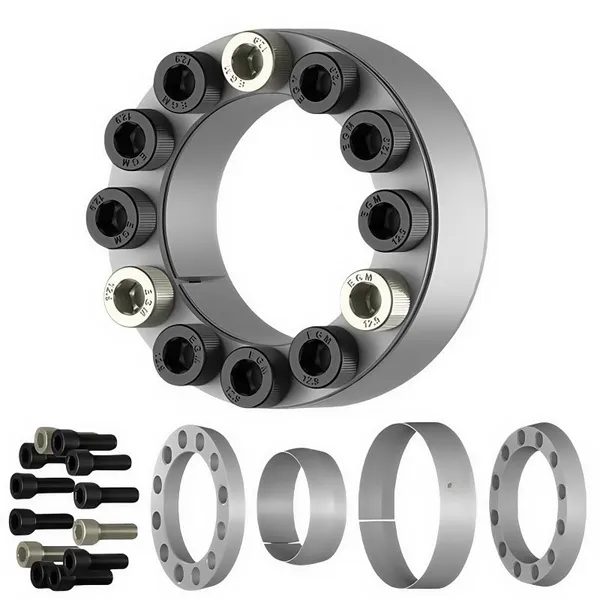
-
High Quality Yl Type Rigid Flange Coupling Mechanical Transmission CouplingNegotiableMOQ: 2 Pieces
-
Stainless Steel Flexible Universal Joint Coupling for Motor Flange Gear Pump and Spline ShaftNegotiableMOQ: 1 Piece
-
Compact Drum Gear Coupling for Heavy Industrial Transmission High Torque CapacityNegotiableMOQ: 10 Pieces
-
Standard or Customized Jaw Beam (Helical) Flexible Coupling for General MachineryNegotiableMOQ: 10 Pieces
-
TL Series Elastic Pin Coupling Easy Replace Rubber Bush Coupling With Shaft Misalignment CompensationNegotiableMOQ: 10 Pieces