
 Business License
NGCL Drum Gear Coupling Dimensions: A Complete Guide
In March 2026, Ahmed, a maintenance supervisor at a container terminal in Alexandria, ordered a replacement brake wheel coupling for a 40-ton overhead crane. The bore matched perfectly. The brake wheel did not. The new coupling's brake wheel was 50 mm smaller than the original, the caliper could not grip it, and the crane sat idle for nine days while the terminal lost an estimated $120,000 in berth productivity.
Reading NGCL drum gear coupling dimensions correctly would have prevented every hour of that downtime. If you maintain cranes, hoists, or winches, you already know that a coupling is never just a coupling when a brake wheel is involved. The bore is only one of five dimension groups that decide whether the replacement fits and stops the load safely.
This guide explains how to read NGCL drum gear coupling dimensions, from bore and keyway to brake wheel diameter and width. You will get a representative dimension table, a five-step selection workflow, and the mistakes that cause most NGCL ordering errors. As a manufacturer of drum gear couplings for crane and hoist drives, Hebei Suju works with these dimensions daily, and this guide reflects that experience.
What Is an NGCL Drum Gear Coupling?
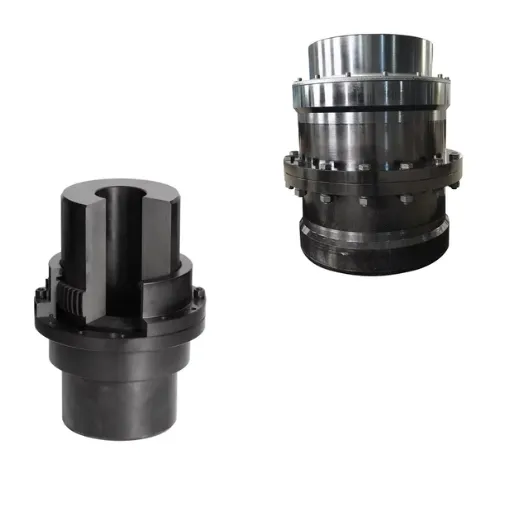
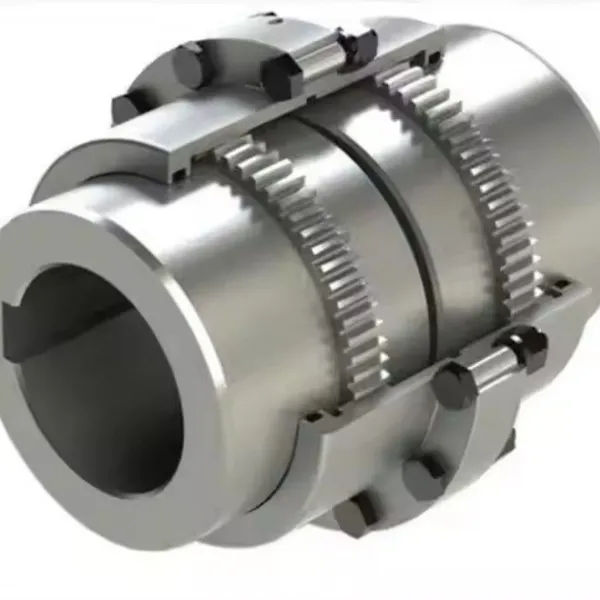
An NGCL drum gear coupling is a flexible shaft coupling that transmits torque through crowned external and internal gear teeth while providing an integrated brake wheel on the outer sleeve. The brake wheel gives the crane's service or emergency brake a surface to grip, so the coupling performs two jobs at once: torque transmission and braking. The series is defined under the Chinese mechanical industry standard JB/T 8854.3.
Because the brake wheel sits between the motor and gearbox, an NGCL coupling must satisfy both the drive dimensions and the brake dimensions. That dual role is why reading NGCL drum gear coupling dimensions takes more care than reading a standard GIICL table.
Typical applications include:
Overhead traveling cranes and gantry cranes
Hoists, winches, and lifting mechanisms
Port and shipyard handling equipment
Steel mill charging and ladle cranes
Mining and cement plant hoisting drives
Hebei Suju manufactures NGCL drum gear couplings for exactly these duties, machined from forged alloy steel and inspected to drawing tolerances before shipment.
NGCL vs GIICL: How the Brake Wheel Changes the Dimensions
The NGCL and GIICL series share the same drum-shaped, crowned tooth principle. Both transmit high torque and compensate for angular, radial, and axial misalignment. The structural difference is the brake wheel.
A GIICL coupling uses a compact outer sleeve with no braking surface. An NGCL coupling extends that sleeve into a brake wheel with a defined diameter, width, and surface finish. This single change affects three dimension groups.
First, the overall length and outer diameter grow, so the space required around the coupling increases. Second, the brake wheel diameter and width must match the brake caliper or shoe geometry of the crane. Third, the added mass raises the coupling's weight and moment of inertia, which matters for high-speed hoist drives.
If you already know the GIICL series, our guide to GIICL drum gear coupling specifications covers the shared torque and misalignment ratings in detail. Treat this article as the next step: everything GIICL covers, plus the brake wheel dimensions that crane drives require.
NGCL Drum Gear Coupling Dimensions Explained
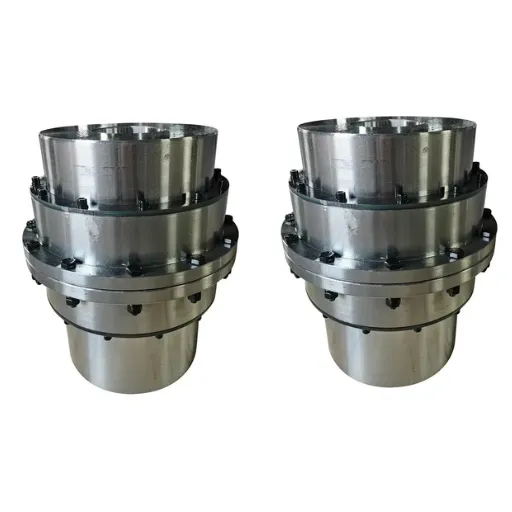
An NGCL dimension table contains more columns than a standard gear coupling table. Each column protects against a different failure mode. Here are the five dimension groups to check, in the order that prevents the most ordering mistakes.
1. Bore Diameter and Keyway
The bore connects the coupling to the motor shaft and the gearbox input shaft. NGCL bores are usually supplied with a keyway cut to standard tolerances, and the two bores on one coupling can be different diameters. Confirm both shaft diameters, the keyway width and depth, and the required fit before ordering.
A bore that is correct for the shaft can still sit on a coupling whose other dimensions are wrong, which is exactly what happened in Alexandria. Bore-first ordering is the single most common NGCL mistake.
2. Brake Wheel Diameter and Width
The brake wheel diameter determines the braking torque the wheel can develop with a given brake force. The width must match the contact width of the brake shoes or caliper pads. Both values are fixed by the crane's brake, not chosen freely by the coupling buyer.
Measure the original wheel, or take the values from the crane's brake documentation. A wheel that is too small reduces braking torque and may not reach the caliper at all. A wheel that is too large can foul surrounding structures and adds unnecessary inertia.
3. Rated Torque and Service Factor
The rated torque is the maximum continuous torque the coupling can transmit. Crane and hoist duties involve frequent starts, stops, and reversing, so the application service factor is high. Guidance from bodies such as the American Gear Manufacturers Association recommends selecting couplings with a service factor matched to drive severity, typically 2.0 or higher for hoist duty.
Calculate nominal torque from motor power and speed, multiply by the service factor, and choose an NGCL size whose rated torque meets or exceeds the result.
4. Maximum Speed
Every NGCL size has a maximum allowable speed. Hoist motors commonly run at 750 to 1,500 RPM, well inside most NGCL limits, but high-speed test stands and special drives can approach the limit. Beyond the rated speed, centrifugal effects on the brake wheel and deteriorating lubrication become unsafe.
For speeds near the limit, ask about dynamic balancing to the appropriate ISO grade. An unbalanced brake wheel at speed causes vibration that accelerates bearing and tooth wear.
5. Overall Dimensions, Weight, and Inertia
The outer diameter, total length, and spacer dimensions decide whether the coupling fits the available envelope between motor and gearbox. Weight and moment of inertia influence startup behavior and brake response. On retrofits, compare these values against the original coupling, not just against the available space.
Also verify shaft misalignment before assuming the envelope is the only constraint. Angular, radial, and axial offsets all consume part of the coupling's compensation capacity.
Representative NGCL Drum Gear Coupling Dimensions Table
The table below shows representative dimensions for common NGCL sizes. Values are illustrative and vary by manufacturer and design revision. Always confirm against the current Hebei Suju datasheet and the JB/T 8854.3 standard before finalizing an order.
| Size | Rated Torque (N·m) | Bore Range (mm) | Brake Wheel Dia. (mm) | Max Speed (RPM) |
|---|---|---|---|---|
| NGCL1 | 355 | 20-35 | 160 | 4,000 |
| NGCL2 | 630 | 25-45 | 200 | 4,000 |
| NGCL3 | 1,000 | 30-55 | 250 | 3,800 |
| NGCL4 | 1,600 | 35-65 | 315 | 3,400 |
| NGCL5 | 2,800 | 40-75 | 355 | 3,000 |
| NGCL6 | 4,500 | 45-90 | 400 | 2,600 |
| NGCL7 | 6,300 | 50-100 | 450 | 2,400 |
| NGCL8 | 9,000 | 55-110 | 500 | 2,100 |
| NGCL9 | 12,500 | 60-130 | 560 | 1,900 |
| NGCL10 | 18,000 | 65-150 | 630 | 1,700 |
Two practical notes on this table. First, the bore range is the permissible range for one hub, and each hub can be machined anywhere within it. Second, brake wheel diameter is usually determined by the crane brake model, so confirm that value first when replacing a worn coupling.
If your required combination of bore, torque, and brake wheel does not appear here, request a quotation with your values. Hebei Suju regularly produces NGCL sizes and intermediate dimensions to order.
How to Select an NGCL Coupling Size in Five Steps
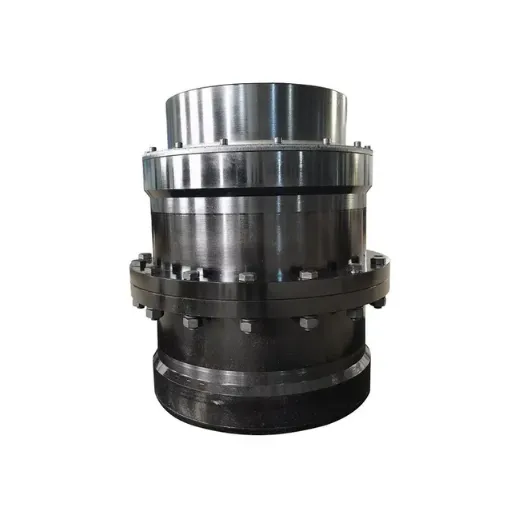
Selection follows the same logic as any gear coupling, with the brake wheel added as a hard constraint. Work through these five steps in order.
Fix the brake wheel dimensions first. Take the required brake wheel diameter and width from the crane's brake documentation or by measuring the original coupling. This value is non-negotiable because the brake is already installed.
Calculate the required torque. Multiply nominal motor torque by the service factor for hoist duty. Our guide on how to select a gear coupling for heavy machinery walks through the calculation in detail.
Match the bores. Confirm both shaft diameters and keyway sizes against the bore range of the candidate NGCL size.
Check speed and misalignment. Verify that operating speed stays below the size limit and that expected misalignment stays within the rated compensation.
Verify the envelope. Compare outer diameter, length, weight, and inertia against the installation space and the original part.
Rosa, an engineer at a crane builder in Monterrey, followed this sequence while replacing couplings on a 20-ton foundry crane. Her brake documentation required a 400 mm wheel, and her torque calculation with a service factor of 2.25 pointed to NGCL6. Steps three and four confirmed the bores and speed.
Step five caught a problem: the standard NGCL6 length left only 8 mm of clearance to a guard plate. A shortened spacer version, produced to her drawing, solved the fit without changing the brake wheel or torque rating.
That story illustrates the value of the five-step order. Fixing the brake wheel and torque first prevents wasted effort. Checking the envelope last catches surprises while there is still time to adjust the design.
Common Mistakes When Reading NGCL Dimensions
Most NGCL ordering errors come from treating the dimension table as optional reading. Avoid these mistakes.
Ordering by bore alone. The bore can match while the brake wheel, torque rating, or length does not.
Ignoring brake wheel width. Diameter is not enough; shoe contact width must also match.
Skipping the service factor. Hoist duty is severe, and nominal torque sizing leads to tooth wear and fatigue.
Forgetting inertia. A heavier brake wheel changes startup and braking response, especially on retrofits.
Replacing like-for-like without measuring. A European crane service company recently replaced a worn NGCL with the "same size," only to find the original wheel had been machined down during an earlier repair. The replacement wheel, at full new diameter, fouled the brake bracket. Ten minutes with a caliper would have prevented the rework.
Each of these mistakes has the same root cause: treating one dimension as the whole specification. The table is a system, and the columns work together.
When You Need Custom NGCL Dimensions
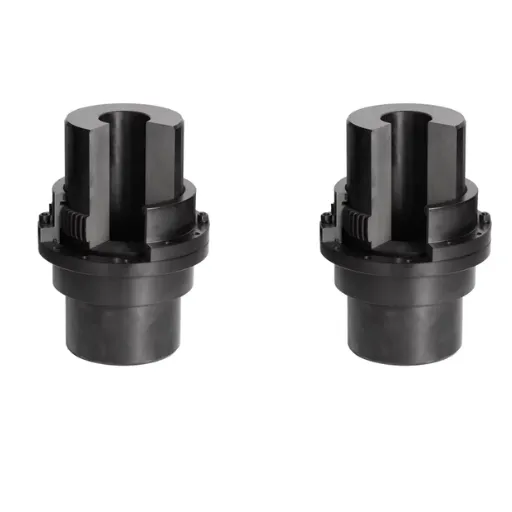
Catalog NGCL sizes cover most crane and hoist drives, but custom dimensions are common in three situations: legacy cranes whose original coupling maker no longer exists, brakes with non-standard wheel dimensions, and envelopes that require special spacer lengths or reduced outer diameters.
At Hebei Suju, drawing-based customization is a core service. Send the original drawing or a worn sample, and our engineers verify every dimension group, recommend materials and heat treatment, and quote a coupling that matches your brake, shafts, and space. NGCL couplings are typically machined from 42CrMo or equivalent alloy steel, with gear teeth induction hardened or carburized for wear resistance. Dimensional inspection and hardness testing follow our documented quality process, and reports are available with shipment.
Conclusion
NGCL drum gear coupling dimensions only protect your crane when you read them together. The key points:
The brake wheel diameter and width are fixed by the crane brake, so confirm them first.
Rated torque must cover nominal torque multiplied by the hoist service factor.
Bores, keyways, speed, misalignment, envelope, weight, and inertia all deserve a check.
Representative tables guide selection, but the manufacturer's current datasheet is the final authority.
Whether you are replacing a worn coupling or specifying a new crane drive, Hebei Suju can help you confirm every dimension before production. Request a quotation with your requirement, or send us your drawing for a free engineering review of a custom NGCL coupling.
Recently Posted
-
Jaw Coupling Spider Replacement: A Step-by-Step Maintenance Guide
July 28, 2026A maintenance technician at a packaging plant in Brazil noticed vibration on a motor-pump set during his morning rounds. The motor Read More
 -
Flexible Coupling for Motor Pump Sets: A Selection Guide
July 28, 2026A maintenance manager at a water treatment plant in Southeast Asia called us after replacing motor pump couplings three times in 1 Read More
 -
Flexible Shaft Coupling: Selection Guide for Industrial Drives
July 28, 2026When two rotating shafts are connected directly, even a small amount of misalignment can generate vibration, bearing load, and pre Read More
 -
Elastic Coupling: Vibration Control for Industrial Drives
July 28, 2026When a motor-pump set starts vibrating above acceptable limits, the first checks usually fall on bearing wear, impeller balance, o Read More

Contact Us

Recommended Products
-
 OEM Customizable Cardan Shaft Coupling Flexible Rigid Steel for Air Compressor Propeller Universal Construction Printing ShopsNegotiableMOQ: 2 Pieces
 -
Kc Coulpling Roller Chain Coupling Set With Chain and Sprocket for General MachineryNegotiableMOQ: 1 Piece
-
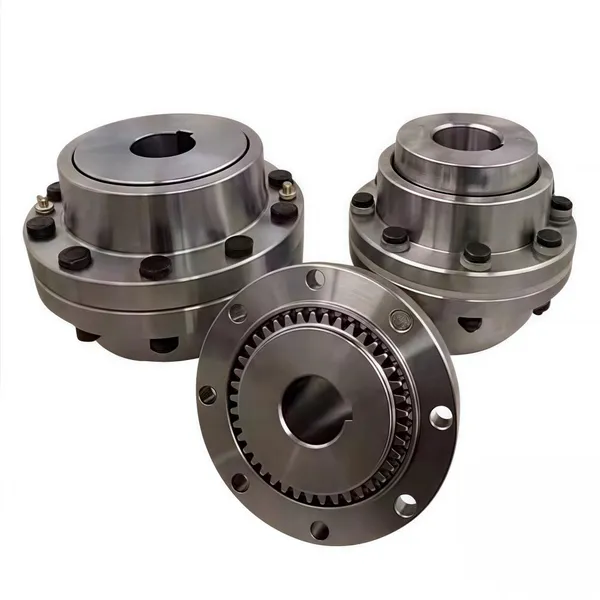
High Transmission Efficiency Drum Gear Coupling Easy Installation Gear Coupler For Heavy MachineryNegotiableMOQ: 10 Pieces
-
High-Torque Roller Chain Coupling Durable Steel Aluminium Construction Customizable Precision Engineering OEM Shaft CouplingsNegotiableMOQ: 2 Pieces
-
Customizable Rigid Iron Steel Aluminium Rubber Tyre Coupling OEM Support for Pumps Industrial Equipment Construction IndustriesNegotiableMOQ: 10 Pieces
-
Jsb Flexible Grid Coupling With Metallic Elastic Element Factory Direct Spider Snake Spring CouplingNegotiableMOQ: 10 Pieces
-
High Torque JQ/JQW Type Clamp Coupling for Motor & Gearbox 45 Steel Jacketed Iron Disc Structure Flexible Rigid OEM SupportedNegotiableMOQ: 2 Pieces
-
SWC Series Flange Universal Joint Coupling Hardened Cross Shaft Heavy Duty TransmissionNegotiableMOQ: 1 Piece
-
Heavy Duty Universal Coupling High Quality Universal Shaft for Machinery and EquipmentNegotiableMOQ: 1 Piece
-
OEM Customized Precision Cast Iron Zinc Aluminum Die Castings New Hydraulic Parts Fittings 1 Year WarrantyNegotiableMOQ: 100 Pieces
-
Yl Series Rigid Flange Coupling Power Transmission PartsNegotiableMOQ: 2 Pieces
-
Flange Coupling for Water Pump and Compressor Applications With Rubber Gasket SealNegotiableMOQ: 2 Pieces
-
Heavy-Duty Telescopic Welding Cardan Shaft for Universal UseNegotiableMOQ: 1 Piece
-
Flexible Universal Shaft Flange Coupling for Marine and Industrial Drive SystemsNegotiableMOQ: 10 Pieces
-
Durable Expansion Sleeve, Locking Assembly & Taper Lock Bushing for Robotic Arm JointsNegotiableMOQ: 1 Piece
-
High Quality Yl Type Rigid Flange Coupling Mechanical Transmission CouplingNegotiableMOQ: 2 Pieces
-
Stainless Steel Flexible Universal Joint Coupling for Motor Flange Gear Pump and Spline ShaftNegotiableMOQ: 1 Piece
-
Compact Drum Gear Coupling for Heavy Industrial Transmission High Torque CapacityNegotiableMOQ: 10 Pieces
-
Standard or Customized Jaw Beam (Helical) Flexible Coupling for General MachineryNegotiableMOQ: 10 Pieces
-
TL Series Elastic Pin Coupling Easy Replace Rubber Bush Coupling With Shaft Misalignment CompensationNegotiableMOQ: 10 Pieces