
 Business License
Gear Coupling Maintenance: Lubrication, Inspection, and Wear Limits
At 6:40 a.m. on a Tuesday, a vibration technician named Jana stopped her route at the raw mill drive of a cement plant and frowned at the reading. The coupling position had doubled its vibration level in three weeks, yet nobody could remember the last time that coupling had been regreased. When the crew opened the sleeve at the next shift change, the grease had separated into a dry paste and the crowned teeth were galled at the contact zone.
The coupling had not failed yet, but it was weeks away from stripping. Jana's discovery turned into a simple question for the whole maintenance team: what does gear coupling maintenance actually require, and how often?
If you have ever torn down a gear coupling and found dry, galled teeth inside a sleeve that "looked fine from the outside," you already know the uncomfortable truth. A gear coupling hides its condition behind seals and metal, so it fails quietly before it fails loudly. Gear coupling maintenance is what keeps the quiet phase long and the loud phase theoretical.
In this guide, you will learn what gear coupling maintenance covers, how to set lubrication intervals, what to inspect and when, how to build a workable schedule, and how to tell the difference between a coupling worth keeping and one worth replacing. We will also cover the early warning signs that let you act during a planned shutdown instead of an unplanned one.
Why Gear Coupling Maintenance Decides Service Life
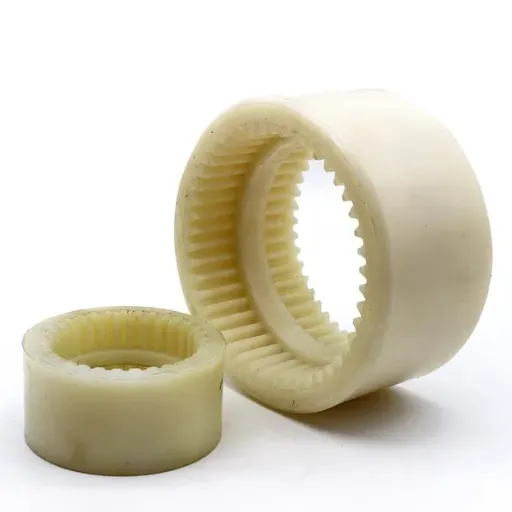
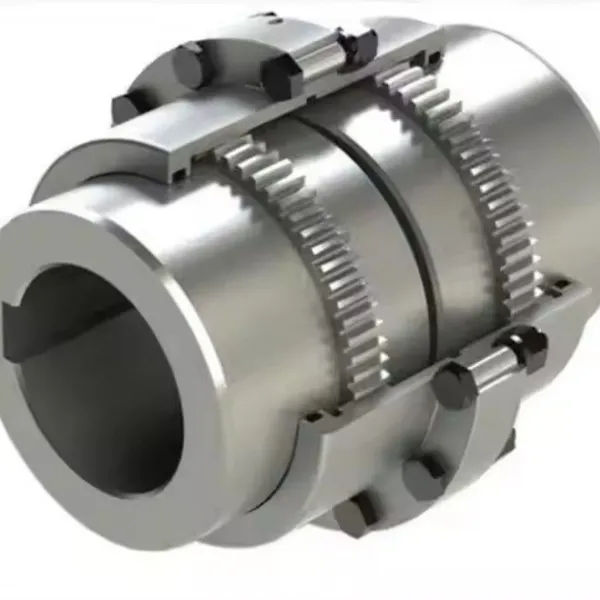
A gear coupling is a lubricated wear interface. The crowned hub teeth slide slightly against the straight sleeve teeth every time the shafts flex, and that microscopic sliding is what lets the coupling absorb misalignment. It is also what wears the teeth.
Lubricant separates the surfaces, seals keep the lubricant in and the grit out, and alignment keeps the sliding within the design's assumptions. Maintenance is simply the discipline of protecting those three conditions.
Neglect any one of them and the failure sequence is predictable:
Lubricant degrades or escapes, and metal-to-metal contact galls the teeth
Seals harden or tear, and dust turns the remaining grease into grinding paste
Alignment drifts, and contact moves to the tooth tips where stress is highest
Fasteners relax, and runout grows into vibration that loads every bearing nearby
The economics favor prevention by a wide margin. A grease charge and an hour of inspection cost almost nothing. A stripped coupling on a mill drive costs the part, the crane time, the fitters' weekend, and the production that did not happen. Plants that treat gear coupling maintenance as a scheduled task rather than a response to vibration readings routinely get years of extra service from the same hardware.
Chasing repeat coupling failures on the same drive? Send our engineers your drive data and we will help you work out whether maintenance, sizing, or alignment is the real culprit.
What Gear Coupling Maintenance Covers
Good gear coupling maintenance rests on four pillars. Skip one and the other three can't compensate.
Lubrication: The right grease or oil, in the right quantity, renewed on schedule
Inspection: Regular checks of seals, fasteners, vibration, temperature, and tooth condition
Alignment and fit: Shaft alignment within the coupling's rated values, hub fit on the shaft, and bolt torque to specification
Records: A maintenance history per coupling, so trends are visible before failures are
The fourth pillar is the one most teams skip, and it is the one that would have told Jana's plant the coupling was overdue months earlier. A coupling with a recorded regrease date, a vibration baseline, and a last-inspection note rarely surprises anyone. A coupling without records is a guess with teeth.
At Hebei Suju, every drum gear coupling we ship includes lubrication and installation guidance, because we know the part's service life is decided as much in your maintenance plan as in our machining.
Lubrication: The Heart of Gear Coupling Maintenance
Most gear coupling failures trace back to lubrication, which is why gear coupling lubrication deserves more attention than any other maintenance task. The teeth need a lubricant that clings under centrifugal load, resists separation, and carries wear particles away from the contact zone.
Three decisions matter most:
Grease type: Use the lubricant grade the manufacturer specifies, typically a high-quality gear coupling grease with the right base oil viscosity and additive package. General-purpose bearing grease often separates under the centrifugal forces inside a spinning sleeve.
Quantity: Fill to the specified level. Under-filling starves the teeth; over-filling builds pressure that pushes grease past the seals.
Interval: Set the regreasing interval by duty, not by habit. A steady, clean pump drive might run six to twelve months between charges. A hot, dusty, reversing mill drive may need attention every one to three months. Standards bodies such as AGMA and manufacturer catalogs publish starting points, but the coupling's own grease condition at teardown is the best evidence.
A fitter named Osei at an open-pit mine learned the interval lesson the expensive way. His team regreased every coupling on the same annual schedule, including a conveyor drive that reversed under load twice an hour. When that coupling failed, the teardown showed grease that had cooked into varnish within four months of each charge.
Moving the severe drives to a quarterly interval, and the steady drives to annual, cut his coupling replacements by more than half the following year. The schedule had been the problem, not the hardware.
When you regrease, do it properly:
Clean the grease fittings and the area around the seals first, so you don't pump dirt in with the fresh grease.
Add grease slowly while rotating the coupling by hand where possible, so the new charge distributes across the teeth.
Watch for purged grease at the seals and stop before pressure builds.
Record the date, the lubricant used, and any contamination you noticed.
If the old grease comes out dry, separated, or full of metal particles, treat it as a warning, not a routine finding. That coupling needs an inspection now and a shorter interval going forward.
Gear Coupling Inspection: What to Check and How Often
Gear coupling inspection is where most gear coupling maintenance value is created, and it splits into two tiers: the checks you do while the machine runs, and the checks you do with the sleeve open during a shutdown.
Running checks, weekly to monthly depending on duty:
Vibration trend: A rising trend at coupling frequency, assessed against standards such as ISO 10816, usually means wear, looseness, or alignment drift
Temperature: A coupling running hotter than its neighbors is working harder than it should, often from misalignment or dry teeth
Visual sweep: Look for grease weeping past seals, rust streaks from bolted joints, and dust accumulation around the sleeve
Sound: A dry coupling talks. Rattling or grinding at the drive end deserves a planned stop
Shutdown checks are where gear coupling maintenance pays for itself. At every planned stop:
Seal condition: Hardened, cracked, or torn seals get replaced, not noted for later
Tooth wear: Measure or visually compare the crowned teeth against a new-part profile; look for contact patterns that sit at the tips instead of the face
Backlash: Excessive and growing backlash between hub and sleeve teeth is the clearest wear indicator you have
Bolt torque: Re-check flange bolts to specification; loosening shows up as fretting rust around the joint faces
Hub fit: Any sign the hub has moved on the shaft, such as fretting marks or a shifted key, demands immediate attention
The contact pattern deserves a special mention. On a healthy crowned tooth coupling, the polish mark sits centered on the tooth face. A mark crowded to the tip says the coupling is running beyond its misalignment allowance, and no amount of grease will fix a geometry problem.
Alignment, Bolt Torque, and Installation Checks
Lubrication failures kill couplings slowly. Alignment failures kill them fast. Every major maintenance stop on a coupled machine should include an alignment check, because foundations settle, bearings wear, and thermal growth moves shafts over time.
Verify three values against the coupling's rated allowances:
Angular misalignment: The angle between the shaft centerlines
Radial misalignment: The parallel offset between centerlines
Axial position: End float and gap, including thermal movement at operating temperature
If any value exceeds the coupling's rating, correct the alignment rather than accepting accelerated wear. No gear coupling maintenance plan survives chronic misalignment. The heavy duty gear coupling designs tolerate generous misalignment, but "tolerate" means reduced wear, not zero wear.
Bolt torque is the second silent killer. Flange bolts should be torqued evenly to specification with a calibrated wrench, and re-checked after the first hours of operation on any new installation. A hub shrunk or pressed onto a shaft should be verified for position and fit at installation, because a hub that walks later will show up as runout, vibration, and a mysterious "coupling problem" that is actually a fit problem.
A Gear Coupling Maintenance Schedule That Works
A gear coupling maintenance schedule fails when it treats every coupling the same. Group your couplings by duty severity, then assign intervals. The table below is a practical starting point; adjust it against your own teardown findings.
| Task | Light Duty (steady, clean) | Heavy Duty (shock, dust, heat) |
|---|---|---|
| Visual check for leaks and damage | Monthly | Weekly |
| Vibration and temperature reading | Monthly | Weekly to bi-weekly |
| Regrease or oil renewal | 6-12 months | 1-3 months |
| Seal inspection and replacement | Annually | Every 3-6 months |
| Bolt torque verification | Annually | Every 3-6 months |
| Alignment check | Annually or after any nearby work | Every 3-6 months |
| Full teardown and tooth wear check | Every 2-3 years | Annually |
Two rules make any gear coupling maintenance schedule work better. First, let teardown evidence override the calendar: if a coupling's grease is degraded at six months, its interval is four months, whatever the spreadsheet says. Second, schedule coupling tasks to coincide with other planned work on the same machine, so the maintenance costs no extra downtime.
Gear Coupling Maintenance Checklist
Use this coupling maintenance checklist at every planned stop:
Record the last regrease date and lubricant grade for every coupling
Check seals for hardening, cracks, and grease weeping
Measure vibration and temperature against the baseline
Verify flange bolt torque with a calibrated wrench
Confirm alignment against the coupling's rated allowances
Inspect tooth wear, backlash, and contact pattern at teardown
Log every finding, so trends are visible before failures are
For help building the schedule around your specific drives, our coupling selection guide covers the duty factors that decide severity grouping, and our selection guide for heavy machinery explains how the same factors drive sizing.
Gear Coupling Failure Analysis: What Maintenance Catches Early
Every gear coupling failure mode has an early stage that routine gear coupling maintenance can catch. Knowing the pairs is what turns inspections into savings.
Tooth wear and galling: Caught as rising vibration, metal particles in purged grease, or contact polish moving to the tooth tips. Response: verify lubricant and interval, then check alignment.
Lubricant breakdown: Caught as separated, varnished, or contaminated grease at teardown. Response: shorten the interval and confirm the grease grade suits the temperature and speed.
Seal failure: Caught as grease weeping or dust caking around the sleeve. Response: replace seals before contamination reaches the teeth.
Loosening and fretting: Caught as rust streaks at bolted joints or fretting marks at the hub bore. Response: re-torque to specification and investigate the fit.
Fatigue from chronic overload: Caught as fine cracks at tooth roots during teardown, often on drives with frequent shock. Response: review the service factor; the coupling may be under-sized rather than under-maintained. Our notes on steel mill drives and mining and cement applications cover how shock duty changes both sizing and intervals.
Brake-equipped drives add one more item to the gear coupling maintenance list. On an NGCL coupling, maintenance includes brake drum wear and runout checks, since a scored or wobbling drum destroys pads and masks coupling vibration.
When to Repair, Reorder, or Upgrade
Gear coupling maintenance extends service life; it doesn't grant immortality. Replace a gear coupling when teardown shows any of the following:
Tooth thickness worn beyond the manufacturer's limit, or backlash well above the original value
Pitting, spalling, or cracks at the tooth roots
A hub bore or keyway damaged by fretting
Sleeve teeth worn enough that a new hub would still run loose
When the replacement time comes, don't just reorder the same part number and repeat the cycle. Jana's plant did this right. After her vibration catch, the team reviewed the raw mill drive with our engineers and found two issues: the regreasing interval was fantasy for that duty, and the coupling itself was a light design for a reversing mill.
The plant moved to a GIICL drum gear coupling size with the margin the duty demanded, set a quarterly lubrication interval, and added the coupling to the vibration route with alarm limits. Two years later, that position holds its baseline.
If your worn coupling is a legacy part with no available drawing, a manufacturer with reverse-engineering capability can measure the sample and produce a matching or upgraded replacement through custom coupling manufacturing. Our full-process quality control documents material, hardness, and dimensions for every replacement, and our ISO certifications support the paperwork your quality system needs.
Frequently Asked Questions
How often should gear coupling maintenance be performed?
It depends on duty. Light, clean, steady drives need visual and vibration checks monthly and regreasing every 6-12 months. Heavy duty drives with shock, dust, or heat need weekly checks and regreasing every 1-3 months, with full teardowns annually.
What grease should I use for gear coupling lubrication?
Use the grade the coupling manufacturer specifies, typically a dedicated gear coupling grease that resists centrifugal separation. General-purpose bearing grease often breaks down inside a spinning sleeve. Confirm the grade for your temperature and speed before substituting.
What are the signs that a gear coupling needs maintenance now?
Rising vibration at coupling frequency, higher temperature than neighboring drives, grease weeping past seals, rust streaks at bolted joints, rattling sounds, or dry and contaminated grease found at teardown all call for prompt attention.
Can I extend the regreasing interval if the coupling looks fine?
You can, but only with evidence. Extend intervals based on grease condition and wear measurements from teardowns, not on the absence of external symptoms. A gear coupling hides its condition behind the seals, so "looks fine" is not data.
How do I know when to replace a gear coupling instead of maintaining it?
Replace it when tooth wear or backlash exceeds the manufacturer's limits, when tooth roots show pitting or cracks, or when the hub bore is damaged by fretting. At that point gear coupling maintenance can't restore the geometry, and running on invites a sudden failure.
Does maintenance differ for drum gear couplings like GIICL or NGCL?
The core tasks of drum gear coupling maintenance are the same: lubrication, inspection, alignment, and fasteners. NGCL couplings add brake drum wear and runout checks, and severe-duty sizes generally justify shorter intervals because the cost of a surprise failure is higher.
Conclusion
Gear coupling maintenance comes down to protecting three conditions: clean lubricant on the teeth, sound seals and fasteners around them, and alignment within the coupling's rated values. Build a schedule that matches duty severity, record what you find at every teardown, and let the evidence adjust your intervals. Do that, and most gear couplings will outlast the machines they connect.
When a coupling does reach the end of its life, treat the replacement as an engineering decision rather than a reorder. Confirm the size, the service factor, and the lubrication plan, so the new coupling starts life on a better footing than the old one.
At Hebei Suju, we manufacture GIICL, NGCL, and custom drum gear couplings for plants that run on planned maintenance, and we support MRO teams with reverse-engineered replacements, inspection documentation, and the lubrication guidance that keeps couplings alive.
Recently Posted
-
Jaw Coupling Spider Replacement: A Step-by-Step Maintenance Guide
July 28, 2026A maintenance technician at a packaging plant in Brazil noticed vibration on a motor-pump set during his morning rounds. The motor Read More
 -
Flexible Coupling for Motor Pump Sets: A Selection Guide
July 28, 2026A maintenance manager at a water treatment plant in Southeast Asia called us after replacing motor pump couplings three times in 1 Read More
 -
Flexible Shaft Coupling: Selection Guide for Industrial Drives
July 28, 2026When two rotating shafts are connected directly, even a small amount of misalignment can generate vibration, bearing load, and pre Read More
 -
Elastic Coupling: Vibration Control for Industrial Drives
July 28, 2026When a motor-pump set starts vibrating above acceptable limits, the first checks usually fall on bearing wear, impeller balance, o Read More

Contact Us

Recommended Products
-
 OEM Customizable Cardan Shaft Coupling Flexible Rigid Steel for Air Compressor Propeller Universal Construction Printing ShopsNegotiableMOQ: 2 Pieces
 -
Kc Coulpling Roller Chain Coupling Set With Chain and Sprocket for General MachineryNegotiableMOQ: 1 Piece
-
High Transmission Efficiency Drum Gear Coupling Easy Installation Gear Coupler For Heavy MachineryNegotiableMOQ: 10 Pieces
-
High-Torque Roller Chain Coupling Durable Steel Aluminium Construction Customizable Precision Engineering OEM Shaft CouplingsNegotiableMOQ: 2 Pieces
-
Customizable Rigid Iron Steel Aluminium Rubber Tyre Coupling OEM Support for Pumps Industrial Equipment Construction IndustriesNegotiableMOQ: 10 Pieces
-
Jsb Flexible Grid Coupling With Metallic Elastic Element Factory Direct Spider Snake Spring CouplingNegotiableMOQ: 10 Pieces
-
High Torque JQ/JQW Type Clamp Coupling for Motor & Gearbox 45 Steel Jacketed Iron Disc Structure Flexible Rigid OEM SupportedNegotiableMOQ: 2 Pieces
-
SWC Series Flange Universal Joint Coupling Hardened Cross Shaft Heavy Duty TransmissionNegotiableMOQ: 1 Piece
-
Heavy Duty Universal Coupling High Quality Universal Shaft for Machinery and EquipmentNegotiableMOQ: 1 Piece
-
OEM Customized Precision Cast Iron Zinc Aluminum Die Castings New Hydraulic Parts Fittings 1 Year WarrantyNegotiableMOQ: 100 Pieces
-
Yl Series Rigid Flange Coupling Power Transmission PartsNegotiableMOQ: 2 Pieces
-
Flange Coupling for Water Pump and Compressor Applications With Rubber Gasket SealNegotiableMOQ: 2 Pieces
-
Heavy-Duty Telescopic Welding Cardan Shaft for Universal UseNegotiableMOQ: 1 Piece
-
Flexible Universal Shaft Flange Coupling for Marine and Industrial Drive SystemsNegotiableMOQ: 10 Pieces
-
Durable Expansion Sleeve, Locking Assembly & Taper Lock Bushing for Robotic Arm JointsNegotiableMOQ: 1 Piece
-
High Quality Yl Type Rigid Flange Coupling Mechanical Transmission CouplingNegotiableMOQ: 2 Pieces
-
Stainless Steel Flexible Universal Joint Coupling for Motor Flange Gear Pump and Spline ShaftNegotiableMOQ: 1 Piece
-
Compact Drum Gear Coupling for Heavy Industrial Transmission High Torque CapacityNegotiableMOQ: 10 Pieces
-
Standard or Customized Jaw Beam (Helical) Flexible Coupling for General MachineryNegotiableMOQ: 10 Pieces
-
TL Series Elastic Pin Coupling Easy Replace Rubber Bush Coupling With Shaft Misalignment CompensationNegotiableMOQ: 10 Pieces