
 Business License
Coupling for Pump Motor: Selection and Applications
A maintenance engineer at a municipal water plant noticed that one of his centrifugal pumps was running hot. The bearings had been replaced six months earlier, and the motor current was normal. The problem turned out to be a coupling for pump motor duty that was too rigid for the pipe strain pushing against the pump casing. Within a year, both motor and pump bearings were showing wear again.
If you maintain or specify pump-motor sets, the coupling is easy to overlook. It's small compared to the motor and casing. Yet it determines how much vibration travels between the two machines, how well they tolerate misalignment, and how long the bearings last.
This guide explains how a coupling for pump motor duty works, which types fit common pump applications, and how to size one correctly. For a broader view of selection methods, see our coupling selection guide. By the end, you'll know what to check before ordering your next pump coupling.
At Hebei Suju, we manufacture industrial couplings for pump manufacturers, water treatment plants, chemical processors, and HVAC contractors worldwide. Our range includes flexible couplings and drum gear couplings for motor-pump and motor-gearbox drives.
If you need a standard catalog part or a custom design, you can request a quotation here.
What Is a Coupling for Pump Motor?
A coupling for pump motor duty connects the motor shaft to the pump shaft so torque can pass from the driver to the impeller or rotor. This type of motor pump coupling also allows for a small amount of misalignment and movement. It isolates some vibration and compensates for thermal expansion as the pump and motor heat up.
Motor-pump sets usually run at fixed speeds for long periods. The coupling must transmit steady torque without introducing imbalance. It must also tolerate the misalignment that comes from foundation settling, pipe strain, and assembly tolerances.
When a coupling for pump motor sets is specified correctly, bearing life improves and vibration levels stay low. When it's wrong, the first symptoms are often bearing heat, seal leaks, or noise.
Most pump applications don't need the extreme torque capacity of a rolling mill coupling. They do need reliable operation, corrosion resistance, and easy maintenance. That changes the selection priorities.
Why the Right Coupling Matters for Pump-Motor Sets
Pumps and motors are precision machines. Their bearings and seals are designed for a narrow range of loads. A coupling that transmits too much vibration or forces the shafts out of alignment will shorten the life of both machines.
The right coupling for pump motor duty does three things. It transmits torque efficiently. It absorbs or isolates torsional vibration from the motor and pump. And it allows for the small shaft movements that occur during startup, thermal expansion, and operation.
In many pump installations, pipe strain is the hidden enemy. When flanges are pulled into place, the pump casing shifts slightly. Without a flexible coupling, that shift loads the bearings. A coupling with adequate misalignment capacity prevents the load from reaching them.
Types of Couplings for Pump Motors
Not every coupling is suitable for a pump. Below are the main types used between motors and pumps when selecting a coupling for pump motor duty. For a broader comparison, see our complete guide to flexible coupling types.
Flexible Couplings for Pump Motors
A flexible coupling for pump motor sets uses an elastic element or movable joint to absorb vibration and compensate for misalignment. These are the most common choice for centrifugal pumps, booster pumps, and circulating pumps.
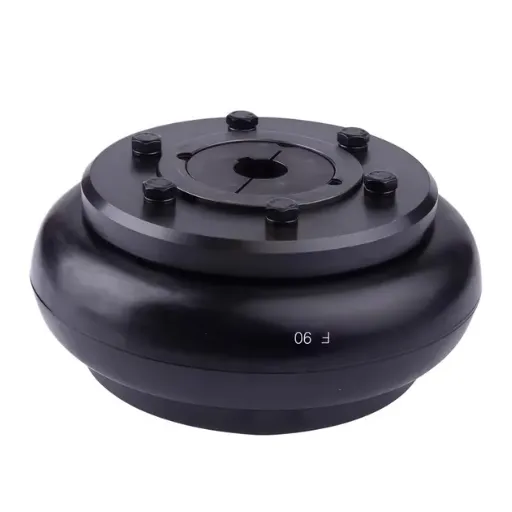
Flexible couplings include jaw, tyre, pin/bush, grid, and disc designs. They protect pump and motor bearings by reducing the transmission of vibration. They also tolerate small angular and radial misalignments. For most general pump applications, therefore, a flexible coupling is the right starting point.
Hebei Suju supplies flexible couplings in a range of sizes and elastomer options for water, chemical, and HVAC pump drives.
Jaw and Spider Couplings
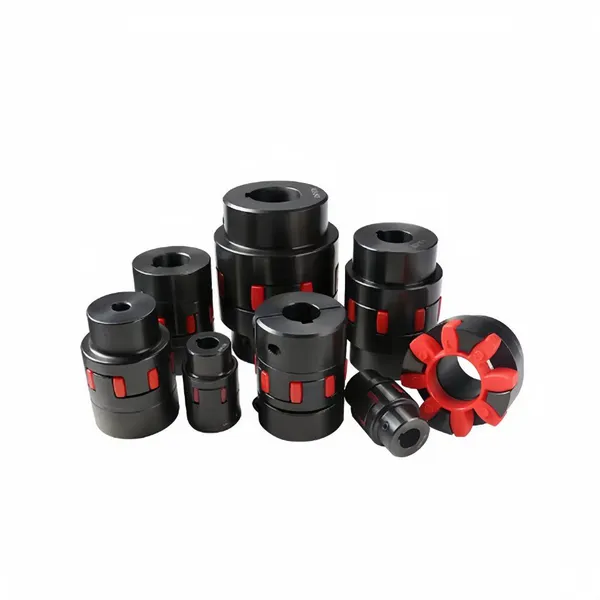
Jaw couplings use two hubs with interlocking jaws and an elastomer insert called a spider. They are simple, low cost, and easy to install. They work well on small-to-medium pump motors where torque is moderate and misalignment is small. For these sizes, a jaw pump shaft coupling is often the most economical choice.
The spider element absorbs vibration and allows for quick replacement. However, jaw couplings have limited torque and misalignment capacity. They are not the best choice for large pumps or applications with high shock loads.
Pin and Bush Couplings
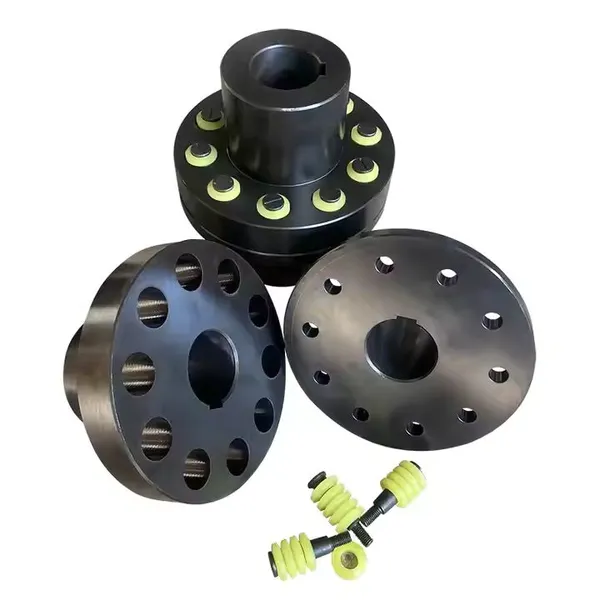
Pin couplings use rubber bushes mounted on pins to transmit torque. They are robust and tolerate moderate shock and misalignment. Pin and bush couplings are common on medium-duty pump and compressor drives where the load varies.
They require periodic inspection of the bushes, but replacement is straightforward. Their cost and performance sit between simple jaw couplings and heavier gear couplings.
Gear Couplings for Pumps
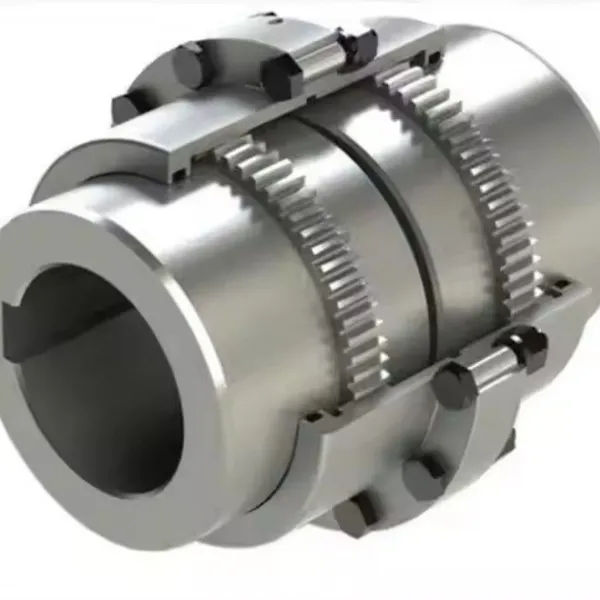
Gear couplings aren't always the first choice for ordinary pumps, but they fit large, high-torque pump drives such as boiler feed pumps, slurry pumps, and large cooling water pumps. They tolerate angular, radial, and axial misalignment and can handle very high torque.
The trade-off is lubrication and maintenance. A gear coupling for pump motor duty needs correct lubrication and periodic inspection. For critical high-power pumps, the reliability of a well-maintained gear coupling can outweigh the maintenance burden.
Diaphragm and Disc Couplings
Diaphragm couplings use thin metal discs to transmit torque with zero backlash. They are best for high-speed pump drives such as boiler feed pumps and turbo pumps where precision and balance matter. They do not need lubrication and run cleanly.
Their misalignment capacity is lower than gear couplings. They also cost more than elastomer couplings. Use them when speed, precision, and cleanliness are priorities.
Coupling Types for Pump Motors at a Glance
| Coupling Type | Torque Capacity | Misalignment Tolerance | Best For | Maintenance |
|---|---|---|---|---|
| Jaw/Spider | Low to medium | Low to medium | Small pumps, HVAC, clean water | Spider replacement |
| Pin/Bush | Medium | Medium | General industrial pumps | Bush inspection |
| Flexible Disc | Medium to high | Low to medium | High-speed, precision pumps | Visual inspection |
| Gear Coupling | High to very high | Angular, radial, axial | Large, high-torque pumps | Lubrication, inspection |
| Diaphragm | Medium to high | Low to medium | High-speed turbo pumps | Visual inspection |
Table 1: Coupling types for pump motor sets compared by torque capacity, misalignment tolerance, and maintenance.
This table gives a starting point. Your final choice depends on pump size, speed, duty cycle, and environment.
How to Select a Coupling for Pump Motor Sets
Choosing the right coupling for pump motor duty means looking at the whole drive system. Our coupling selection guide walks through the full process. These five factors are especially important when you size a coupling for pump motor sets.
1. Rated Torque and Service Factor
Calculate the nominal torque from motor power and speed. Then apply a service factor for the pump duty. Centrifugal pumps running at steady load usually use a service factor of 1.25 to 1.5. Positive displacement pumps, reciprocating pumps, and pumps with frequent starts may need 1.5 to 2.5.
For example, a 75 kW motor running at 1,500 RPM produces roughly 477 N·m of nominal torque. With a service factor of 1.5, the coupling should be rated for at least 716 N·m.
2. Operating Speed and Balance
Pump motors often run at 1,450 or 2,900 RPM. High-speed pumps may run above 3,000 RPM. At higher speeds, coupling balance becomes more important. An unbalanced coupling causes vibration, which damages bearings and seals.
For speeds above 3,000 RPM, specify dynamic balancing to the appropriate ISO grade. At Hebei Suju, we can supply dynamically balanced couplings when the application demands it.
3. Shaft Misalignment
Measure or estimate angular, radial, and axial misalignment in your installation. Pipe strain, foundation settling, and thermal expansion all contribute. Choose a coupling whose allowable values exceed the real conditions.
If the pump and motor are close-coupled, a spacer-type coupling can make maintenance easier. It allows the pump to be removed without moving the motor. For guidance on alignment, see our article on measuring shaft misalignment.
4. Operating Environment
Pumps handle water, chemicals, oils, and slurries. The coupling environment may include moisture, corrosive vapors, dust, or temperature extremes. These conditions affect material and seal selection.
For outdoor or wet environments, choose corrosion-resistant materials and appropriate sealing. In chemical plants, check elastomer compatibility with process fluids. High temperatures reduce elastomer life and may require metal disc or gear couplings.
5. Installation and Maintenance Access
Some pump rooms have limited space. A coupling that allows element replacement without moving the motor or pump saves hours during maintenance. Consider the overall diameter, the required axial spacing, and whether a spacer is needed.
Selection Factors Summary
| Factor | What to Check | Why It Matters |
|---|---|---|
| Torque | Motor power, speed, service factor | Prevents overload and fatigue |
| Speed | RPM and balancing requirement | Avoids vibration and bearing damage |
| Misalignment | Angular, radial, axial values | Protects bearings from pipe strain |
| Environment | Fluids, temperature, corrosion | Determines materials and seals |
| Access | Space, spacer, element replacement | Reduces maintenance downtime |
Common Pump Motor Coupling Applications
The following applications show where a coupling for pump motor duty must handle specific operating conditions.
| Application | Pump Type | Typical Coupling | Key Requirement |
|---|---|---|---|
| Water and wastewater | Centrifugal, booster, irrigation | Flexible jaw or pin/bush | Moisture and chlorinated water resistance |
| Chemical and process | Transfer, circulation, dosing | Pin/bush, gear, or disc | Chemical compatibility and sealing |
| HVAC and building services | Chilled water, condenser, circulating | Flexible jaw or pin/bush | Vibration isolation and quiet running |
| Boiler feed and high-pressure | Boiler feed, multi-stage | Disc, diaphragm, or gear | High speed balance and torque capacity |
| Oil and gas pipelines | Pipeline, transfer, crude | Gear or flexible disc | Outdoor reliability and inspection access |
Table 2: Common pump motor coupling applications and key selection drivers.
Water and wastewater pumps use flexible couplings to handle minor misalignment and dampen vibration. The coupling must resist moisture and, in some cases, chlorinated water. A reliable coupling for water pump duty usually combines corrosion-resistant hubs with an elastomer suited to wet conditions.
Chemical pumps often handle corrosive or variable-density fluids. Couplings must tolerate load variation and resist chemical exposure. Material compatibility and sealing are critical.
HVAC pumps run quietly for long hours. Flexible jaw or pin/bush couplings are common because they isolate vibration and prevent noise transmission into building structures.
Boiler feed pumps run at high speed and pressure. They need couplings with precise balance and high torque capacity. Disc, diaphragm, or gear couplings are often used in these critical services.
Pipeline pumps move products over long distances. Couplings must be reliable, easy to inspect, and tolerant of outdoor conditions. Large pump trains may use gear couplings for torque and flexible disc couplings for balance.
Materials and Manufacturing
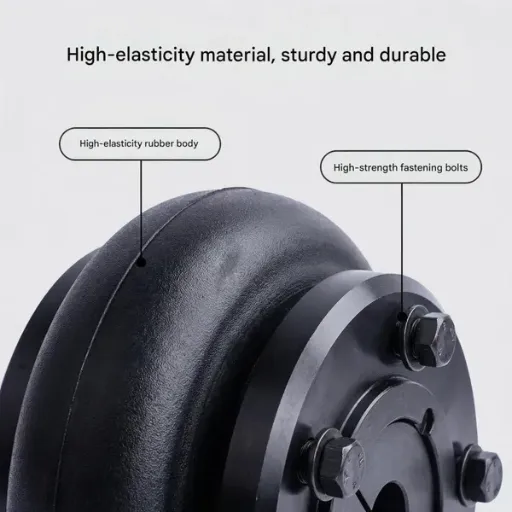
The performance of a coupling for pump motor duty depends on material quality and machining accuracy. At Hebei Suju, coupling hubs are typically manufactured from steel or cast iron depending on the type and size. Flexible elements use selected elastomers or rubber compounds suited to the application temperature and chemical exposure.
Key manufacturing steps include:
Material selection: Matching hub material and elastomer to the duty.
Machining: Achieving accurate bores, keyways, and hub profiles.
Heat treatment: Hardening wear surfaces where needed.
Balancing: Dynamic balancing for high-speed applications.
Inspection: Dimensional checks, hardness testing, and visual inspection.
Preservation: Corrosion protection and packaging for shipment.
Our full-process quality control ensures each step is documented and repeatable. We can provide inspection reports and material certificates on request.
Common Coupling Selection Mistakes for Pump Motors
Even experienced engineers can make selection errors. Avoid these common mistakes when you choose a coupling for pump motor duty:
Under-sizing the coupling: Using nominal torque without a service factor leads to fatigue and early failure.
Ignoring pipe strain: Assuming perfect alignment causes bearing load and seal wear.
Wrong elastomer: Using a rubber element that degrades in the pumped fluid or temperature range.
Neglecting balance: Running an unbalanced coupling at high speed causes vibration.
Poor installation: Improper bolt tightening or hub fit causes loosening and runout.
If you're replacing a failed pump coupling, investigate why it failed. The root cause may be misalignment, overloading, chemical attack, or contamination. The replacement must address it.
Pump Motor Alignment and Installation Tips
Proper installation extends coupling and bearing life. Follow these guidelines for a reliable coupling for pump motor sets:
Align shafts within the coupling's rated limits. Even flexible couplings wear faster when operated near their limit.
Check for pipe strain before final alignment. Disconnect the piping and verify that the pump flanges sit naturally. Good pump motor alignment starts with eliminating external forces on the casing.
Use the correct element. Match the spider, bush, or disc material to the temperature and chemical environment.
Torque bolts to specification. Uneven torque causes hub runout and vibration.
Monitor vibration and temperature. Unusual readings can indicate misalignment, element wear, or bearing problems.
For critical pump sets, schedule coupling inspection during planned maintenance. Early wear detection prevents unexpected failures and costly downtime.
When to Choose a Custom Coupling for Pump Motor Duty
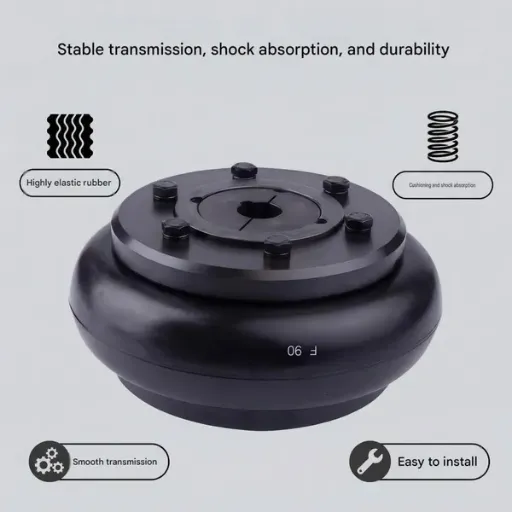
Catalog couplings fit many pump applications, but some situations require a custom pump coupling design. Consider a custom coupling when:
The shaft bores are non-standard sizes.
The space between shafts requires a special spacer length.
The torque or speed falls outside standard catalog ranges.
The coupling must match a legacy part that's no longer available from the original manufacturer.
The environment requires special materials, seals, or coatings.
If any of these apply, a custom coupling is the right path. At Hebei Suju, we specialize in custom coupling from drawing to delivery. Send us your drawing or a worn sample, and our engineers will review manufacturability and provide a quotation.
Mini-Scenarios: Coupling for Pump Motor Choices in Real Pump Rooms
The wastewater plant retrofit. A municipal wastewater station replaced the spiders in a jaw coupling every four months. The maintenance team assumed the couplings were poor quality. Inspection showed that pipe strain was pushing the pump shaft 0.4 mm off the motor centerline, beyond the coupling's radial limit.
After realigning the pump and adding a more tolerant pin/bush coupling, replacement intervals stretched to two years. The real fix was not a better spider; it was addressing the misalignment.
The chemical pump failure. A chemical plant installed a standard elastomer coupling on a pump handling solvents at 80°C. Within eight months, the spider had hardened and cracked. Vibration increased, and the pump bearings began to fail.
Switching to a high-temperature elastomer and adding a corrosion-resistant coating on the hubs solved the problem. The replacement coupling ran for three years without element failure.
The boiler feed pump balance issue. A power plant auxiliary boiler feed pump ran at 2,900 RPM and developed high vibration after a coupling change. The new coupling was the correct size but had not been dynamically balanced.
After sending the coupling back for ISO-grade balancing, vibration levels dropped by 60%. The case showed that size is not the only specification that matters on high-speed pumps.
Coupling Standards for Pump Motors
A coupling for pump motor duty is often selected or inspected against international standards. Common references include ISO standards for quality management and ISO 21940-11 for rotor balancing procedures. AGMA guidelines also provide gear coupling ratings and service factors.
At Hebei Suju, our quality system is certified to ISO 9001, ISO 14001, and ISO 45001. We can balance couplings to ISO grades and provide material certificates, inspection reports, and dimensional records on request.
Quick Coupling Selection Checklist for Pump Motors
Use this checklist when specifying a coupling for pump motor duty:
Confirm motor power, speed, and nominal torque.
Apply the correct service factor for pump type and duty.
Measure angular, radial, and axial misalignment.
Check pipe strain and foundation movement.
Check maximum operating speed and balancing requirements.
Evaluate temperature, moisture, and chemical exposure.
Verify bore diameters, keyway sizes, and spacer length.
Choose an element material compatible with the environment.
Plan inspection and element replacement intervals.
Following this checklist will help you specify the right coupling for pump motor duty and avoid rework.
Frequently Asked Questions
What is the best coupling for a pump motor?
There is no single best coupling for pump motor sets. The right choice depends on pump type, torque, speed, misalignment, and environment. Flexible couplings such as jaw, pin/bush, and disc types are common for general pumps. Gear couplings fit large, high-torque pumps.
Can a gear coupling be used for a pump motor?
Yes. Gear couplings are used on large, high-torque pumps such as boiler feed pumps, slurry pumps, and cooling water pumps. They require lubrication but handle high torque and multi-direction misalignment well.
How do I size a coupling for a pump motor?
Calculate nominal torque from motor power and speed. Apply a service factor based on pump type and duty. Then select a coupling whose rated torque equals or exceeds the adjusted value. Also verify speed, misalignment, and bore capacity.
What causes a pump motor coupling to fail early?
Common causes include under-sizing, excessive misalignment, pipe strain, chemical or temperature damage to the element, poor lubrication on gear couplings, and improper installation.
How often should a pump coupling be inspected?
Inspect pump couplings during scheduled maintenance, typically annually or according to the pump manufacturer's recommendation. High-speed or critical pumps may need more frequent inspection. Check the element, bolts, alignment, and vibration levels.
Conclusion
A coupling for pump motor duty is more than a mechanical connection. It protects the motor, pump, bearings, and seals from vibration, misalignment, and load variation. Choosing the right one means balancing torque, speed, misalignment, environment, and maintenance access.
At Hebei Suju, we help engineers and buyers select and manufacture couplings for water treatment, chemical processing, HVAC, power generation, and general industrial pump sets. Whether you need a standard flexible coupling or a custom design from your drawing, our team can guide you through the specification for your coupling for pump motor application.
Recently Posted
-
Jaw Coupling Spider Replacement: A Step-by-Step Maintenance Guide
July 28, 2026A maintenance technician at a packaging plant in Brazil noticed vibration on a motor-pump set during his morning rounds. The motor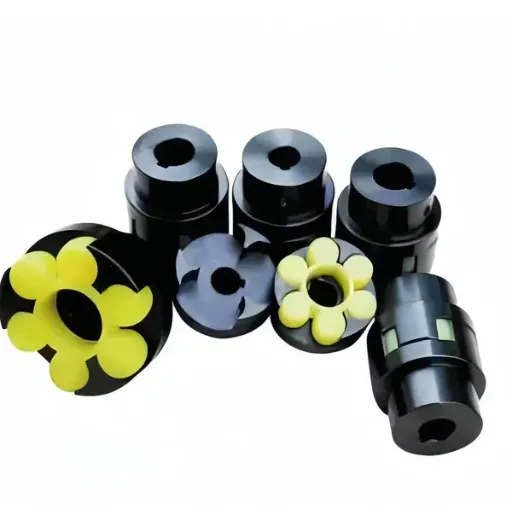 Read More
 -
Flexible Coupling for Motor Pump Sets: A Selection Guide
July 28, 2026A maintenance manager at a water treatment plant in Southeast Asia called us after replacing motor pump couplings three times in 1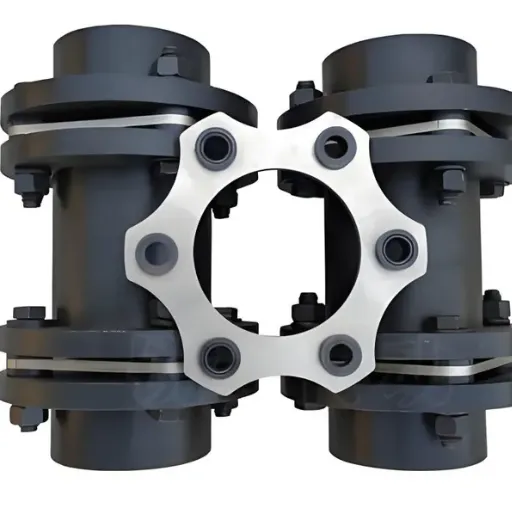 Read More
 -
Flexible Shaft Coupling: Selection Guide for Industrial Drives
July 28, 2026When two rotating shafts are connected directly, even a small amount of misalignment can generate vibration, bearing load, and pre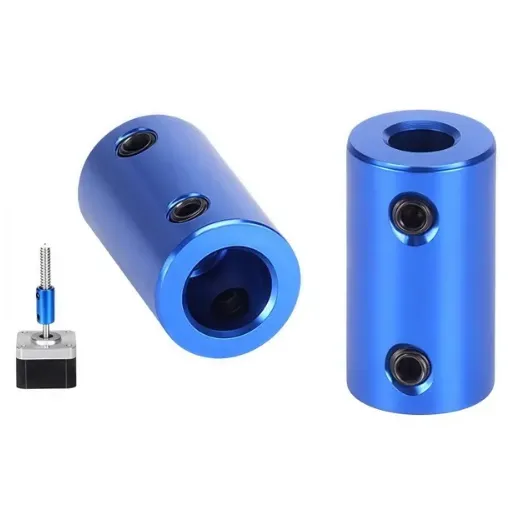 Read More
 -
Elastic Coupling: Vibration Control for Industrial Drives
July 28, 2026When a motor-pump set starts vibrating above acceptable limits, the first checks usually fall on bearing wear, impeller balance, o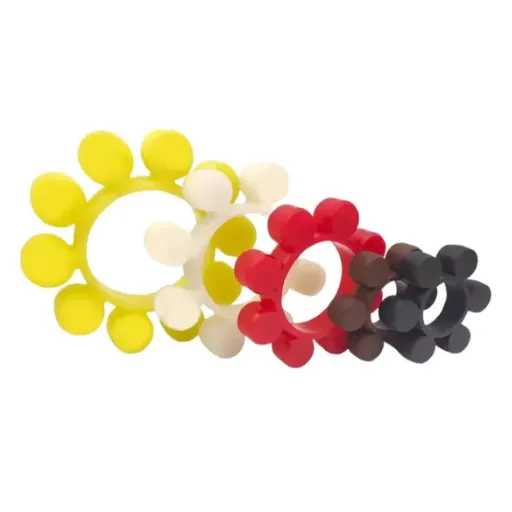 Read More

Contact Us

Recommended Products
-
 OEM Customizable Cardan Shaft Coupling Flexible Rigid Steel for Air Compressor Propeller Universal Construction Printing ShopsNegotiableMOQ: 2 Pieces
 -
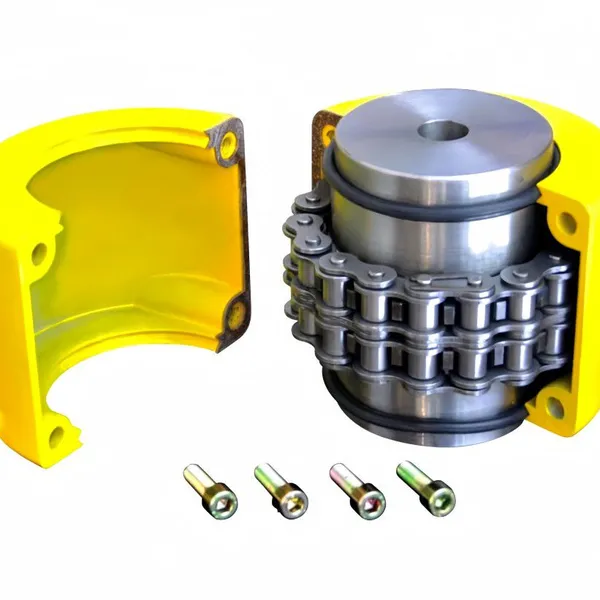
Kc Coulpling Roller Chain Coupling Set With Chain and Sprocket for General MachineryNegotiableMOQ: 1 Piece
-
High Transmission Efficiency Drum Gear Coupling Easy Installation Gear Coupler For Heavy MachineryNegotiableMOQ: 10 Pieces
-
High-Torque Roller Chain Coupling Durable Steel Aluminium Construction Customizable Precision Engineering OEM Shaft CouplingsNegotiableMOQ: 2 Pieces
-
Customizable Rigid Iron Steel Aluminium Rubber Tyre Coupling OEM Support for Pumps Industrial Equipment Construction IndustriesNegotiableMOQ: 10 Pieces
-
Jsb Flexible Grid Coupling With Metallic Elastic Element Factory Direct Spider Snake Spring CouplingNegotiableMOQ: 10 Pieces
-
High Torque JQ/JQW Type Clamp Coupling for Motor & Gearbox 45 Steel Jacketed Iron Disc Structure Flexible Rigid OEM SupportedNegotiableMOQ: 2 Pieces
-
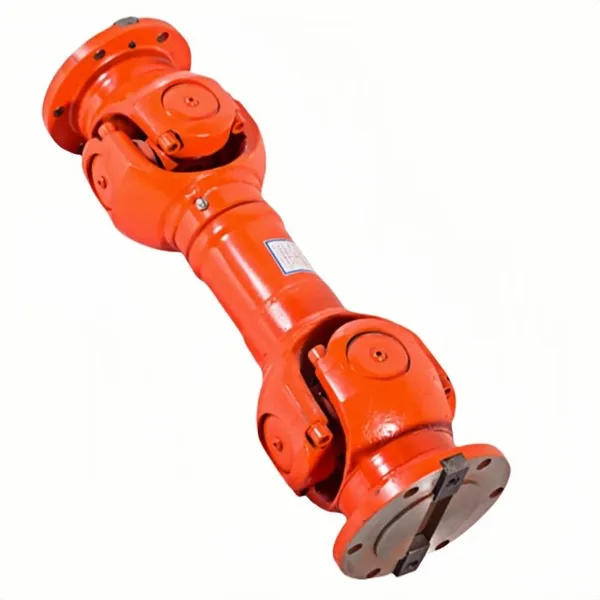
SWC Series Flange Universal Joint Coupling Hardened Cross Shaft Heavy Duty TransmissionNegotiableMOQ: 1 Piece
-
Heavy Duty Universal Coupling High Quality Universal Shaft for Machinery and EquipmentNegotiableMOQ: 1 Piece
-
OEM Customized Precision Cast Iron Zinc Aluminum Die Castings New Hydraulic Parts Fittings 1 Year WarrantyNegotiableMOQ: 100 Pieces
-
Yl Series Rigid Flange Coupling Power Transmission PartsNegotiableMOQ: 2 Pieces
-
Flange Coupling for Water Pump and Compressor Applications With Rubber Gasket SealNegotiableMOQ: 2 Pieces
-
Heavy-Duty Telescopic Welding Cardan Shaft for Universal UseNegotiableMOQ: 1 Piece
-
Flexible Universal Shaft Flange Coupling for Marine and Industrial Drive SystemsNegotiableMOQ: 10 Pieces
-
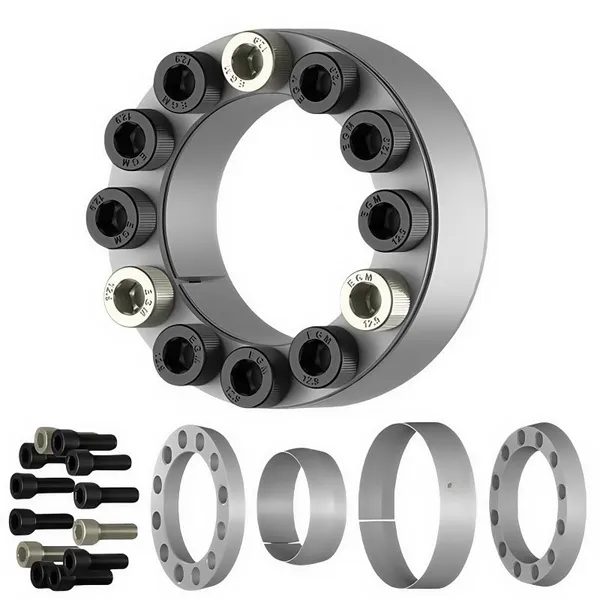
Durable Expansion Sleeve, Locking Assembly & Taper Lock Bushing for Robotic Arm JointsNegotiableMOQ: 1 Piece
-
High Quality Yl Type Rigid Flange Coupling Mechanical Transmission CouplingNegotiableMOQ: 2 Pieces
-
Stainless Steel Flexible Universal Joint Coupling for Motor Flange Gear Pump and Spline ShaftNegotiableMOQ: 1 Piece
-
Compact Drum Gear Coupling for Heavy Industrial Transmission High Torque CapacityNegotiableMOQ: 10 Pieces
-
Standard or Customized Jaw Beam (Helical) Flexible Coupling for General MachineryNegotiableMOQ: 10 Pieces
-
TL Series Elastic Pin Coupling Easy Replace Rubber Bush Coupling With Shaft Misalignment CompensationNegotiableMOQ: 10 Pieces